

Key Takeaways
Summer heat can push a healthy cooling system harder, but overheating often points to a fault that needs attention. Acting early protects both your safety and your engine.
- Pull over safely if the temperature gauge enters the red zone or steam appears.
- Never remove a hot radiator cap because pressurized coolant can cause severe burns.
- Low coolant, leaks, thermostats, water pumps, fans, and radiators are common causes.
- Let the engine cool before checking fluids or deciding whether to continue.
- Regular inspections are the best defense against summer overheating.
How summer heat causes engine overheating
An engine constantly creates heat, and its cooling system must carry that heat away at a controlled rate. High outdoor temperatures reduce the radiator’s ability to release heat, especially when the car is working hard. If you are wondering, “Why is my car engine overheating in summer heat,” the answer may be a combination of weather, driving conditions, and an existing mechanical weakness.

The role of high outdoor temperatures
Coolant absorbs heat from the engine and carries it to the radiator, where airflow helps disperse it. On a very hot day, the difference between the coolant and surrounding air is smaller, so heat leaves the radiator less easily. A system that is slightly low on coolant or partly blocked may cope in mild weather but run too hot during a heat wave.
Why stop-and-go traffic raises engine temperatures
At highway speed, air naturally moves through the radiator. In slow traffic, that airflow drops sharply, so the cooling fan becomes much more important. Repeated acceleration, idling, and braking also leave the engine producing heat while the vehicle has little movement to help remove it.
A few simple habits can reduce the load while you wait in traffic:
- Leave extra space so you can avoid needless rapid acceleration.
- Watch the temperature gauge instead of relying only on warning lights.
- Move to a safe shoulder or parking area if the gauge keeps climbing.
- Turn off the air conditioning if the engine temperature begins rising.
These steps do not repair a failed component, but they can give you time to reach a safe place before the situation worsens.
How air conditioning adds extra strain
The air-conditioning compressor takes power from the engine, and the condenser releases additional heat near the radiator. That extra demand is usually manageable in a properly maintained vehicle. When coolant is low or a fan is failing, however, running the A/C in hot traffic can make the temperature rise faster.
When heat exposes an existing cooling problem
Summer weather is often the trigger rather than the true cause. A small hose leak, weak water pump, sticking thermostat, or restricted radiator may have been present for weeks without obvious symptoms. A useful summer overheating guide can help you recognize the pattern, but a recurring temperature problem deserves a proper inspection rather than repeated top-ups.
Common reasons your engine is overheating
Overheating can begin with a simple fluid shortage or result from a component that has stopped circulating or releasing heat properly. The visible symptom is similar, but the repair is not. Mechanics usually work through the cooling system one part at a time instead of guessing from the gauge alone.
The most common possibilities can be grouped like this:
| Possible cause | What goes wrong | Typical clue |
|---|---|---|
| Low coolant or a leak | Too little coolant absorbs and carries away heat | A low reservoir or wet residue |
| Failed thermostat or water pump | Coolant does not circulate correctly | Rapid temperature rise or poor circulation |
| Restricted radiator airflow | Heat cannot leave the radiator efficiently | Overheating in traffic |
| Faulty fan, belt, or hose | Airflow or coolant movement is interrupted | Fan noise, damaged belt, or collapsed hose |
This table is a starting point, not a diagnosis. The same overheating pattern can come from several faults, so avoid replacing parts solely because one cause seems familiar.
Low coolant levels or coolant leaks
Coolant may escape through a hose, radiator, water pump seal, reservoir, or other connection. A low level leaves less fluid available to absorb engine heat, while an active leak can quickly turn a manageable issue into an emergency. Check only when the engine is cool, and look for puddles or dried residue without putting your hands near hot components.
A failing thermostat or water pump
The thermostat regulates when coolant begins flowing through the radiator. If it sticks closed, heat can build in the engine even though the radiator itself is not blocked. The water pump provides circulation, so a worn impeller, damaged bearing, or leaking seal can also leave the engine running too hot.
Blocked radiator airflow or a damaged radiator
Leaves, dirt, insects, and bent fins can restrict airflow across the radiator. Internal deposits or physical damage may reduce coolant flow or the radiator’s ability to release heat. Overheating that is worst in traffic often points toward airflow, although a technician still needs to check the fan and the rest of the system.
Broken cooling fans, belts, or hoses
Electric fans may fail because of a motor, fuse, relay, wiring, or temperature-control problem. A belt that slips or breaks can stop a belt-driven water pump, while a soft, cracked, or collapsed hose can restrict circulation or leak coolant. Do not continue driving if a belt has failed or coolant is visibly pouring out.
Warning signs of an overheating engine
The first warning may be subtle: a gauge that sits higher than usual, an unfamiliar smell, or air conditioning that suddenly feels weak. These clues can appear before steam or a warning light. Recognizing them early gives you a better chance of stopping safely before the engine suffers serious damage.
Temperature gauge readings to watch
Most temperature gauges sit near the middle once the engine reaches normal operating temperature. A needle that steadily moves toward hot, fluctuates unusually, or enters the red zone should be treated as a serious warning. Do not wait for the gauge to reach its maximum if the trend is clearly upward.
Dashboard warning lights and unusual smells
A temperature warning light or engine warning light may accompany an overheating event. You might also smell sweet coolant, hot rubber, burning oil, or overheated metal. These smells are not interchangeable, but each is a reason to reduce the load and assess the vehicle rather than dismissing the odor as ordinary summer heat.
Steam, smoke, or coolant leaking under the car
Steam from beneath the hood often means hot coolant is escaping or contacting a hot surface. Smoke can indicate a more serious fluid leak or overheated component. A puddle under the car, especially with colored or sweet-smelling fluid, is another reason to shut down and arrange an inspection.
Reduced performance and unusual engine noises
An overheating engine may lose power, run roughly, or respond poorly to the accelerator. You may hear knocking, ticking, squealing, or a bubbling sound from the cooling system. Continuing to drive through these symptoms can turn a cooling-system repair into internal engine damage.
What to do when your car overheats
Your first priority is to get people away from traffic and reduce the engine’s heat load. Do not try to reach your destination if the gauge is in the red or steam is escaping. A practical overheated car action guide can reinforce the basics, but the safest response is to stop as soon as conditions allow.
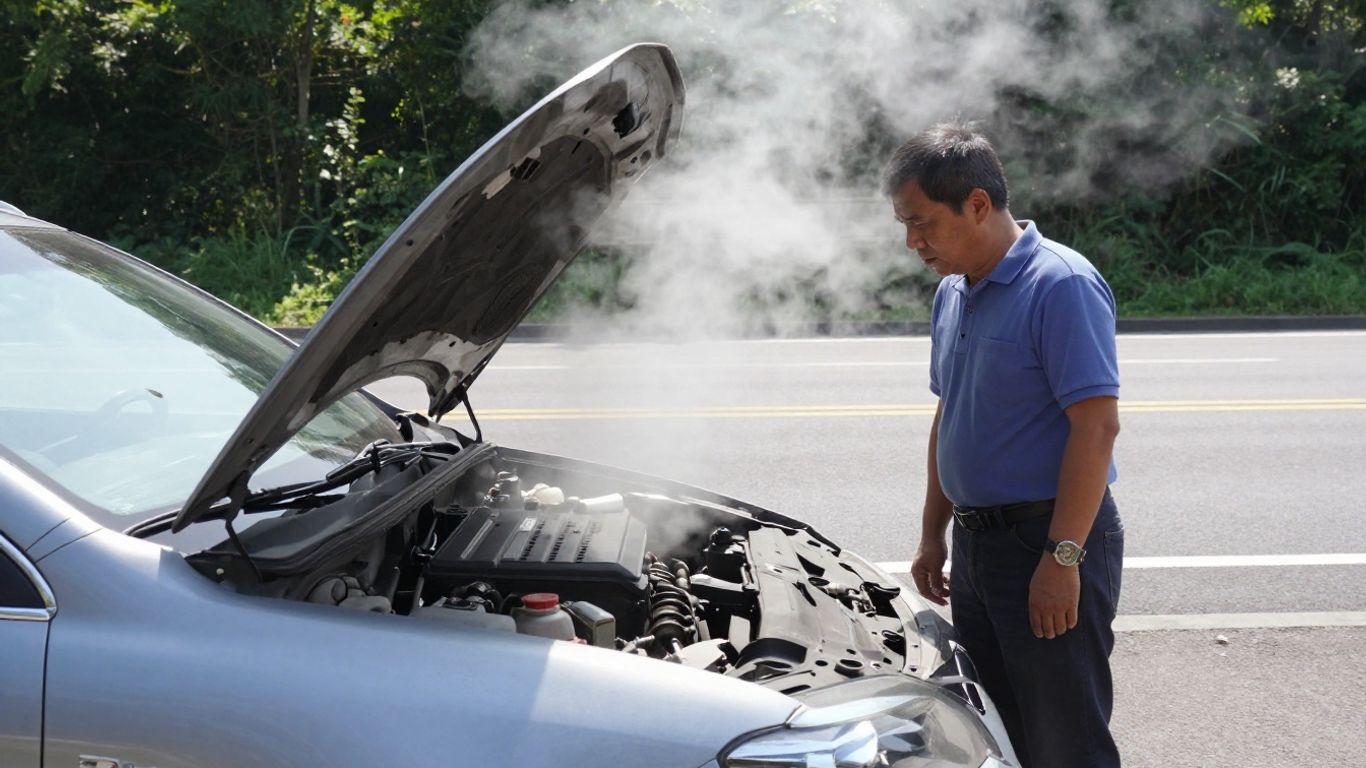
Safely pull over and shut off the engine
Signal, move away from traffic, and stop on a stable surface when it is safe. Turn off the engine and keep clear of steam, belts, fans, and leaking fluid. If you cannot leave the vehicle safely, call emergency services; otherwise, wait in a safe location away from moving traffic.
Why you should not open the radiator cap while hot
The cooling system may be pressurized even after the engine is switched off. Removing the cap can release boiling coolant and steam with enough force to cause severe burns. Let the engine cool substantially, and never test it by touching the radiator cap, hose, or coolant reservoir.
When adding coolant or water may help temporarily
Only check the reservoir after the engine has cooled. If the level is low and there is no obvious active leak, the correct coolant may provide a temporary way to restore the level, but it does not fix the underlying problem. Water may be an emergency short-term measure in some situations, yet it should be replaced with the correct coolant mixture as soon as possible.
When to call for roadside assistance
Roadside help is the right choice when the gauge remains hot, steam continues, coolant is leaking, the engine has lost power, or a belt has failed. It is also sensible when you cannot identify the cause or cannot add fluid safely. Even if the vehicle restarts after cooling, repeated overheating should not be treated as a normal summer inconvenience.
How mechanics diagnose an overheating problem
A diagnosis begins with the symptom’s timing: whether overheating occurs at idle, at speed, under load, or immediately after startup. The technician then checks for obvious leaks and verifies that coolant can circulate and that heat can leave the radiator. This measured process helps avoid replacing unrelated parts.
Checking coolant levels, leaks, and hose condition
The engine must be cool before coolant levels and hoses are inspected. A mechanic may pressure-test the system to find leaks that are not visible while the vehicle is parked. Hoses, clamps, the reservoir, radiator, and water pump area are checked for cracks, swelling, residue, or loss of pressure.
Testing the thermostat, radiator, and water pump
A technician can compare temperatures at different points in the system and observe whether coolant begins flowing as expected. The thermostat is assessed for correct opening, while the radiator is checked for blockage, damage, and uneven temperature distribution. Water-pump operation, belt condition, and signs of bearing or seal failure are also considered.
Inspecting cooling fans and electrical components
The cooling fan should operate when the engine reaches the required temperature or when the air conditioning calls for it, depending on the vehicle design. Fuses, relays, wiring, sensors, and the fan motor may all be tested. A fan that works intermittently can be difficult to catch without reproducing the conditions under which the car overheats.
Identifying head gasket and internal engine damage
If the cooling system appears sound but the engine still overheats, the mechanic may investigate internal damage. Persistent coolant loss, combustion gases in the cooling system, white exhaust, milky oil, or compression problems can point toward a head-gasket issue. These findings require prompt attention because continued driving may worsen the damage.
How to prevent overheating during summer driving
Prevention is mostly routine care, not a special trick for one hot afternoon. Keeping the cooling system filled, sealed, and clean gives it the best chance of managing heavy summer loads. Before a long trip, a short inspection can reveal a weak hose or low fluid before you are far from help.
Maintaining the coolant system on schedule
Follow the vehicle manufacturer’s schedule for coolant checks, replacement, and system service. Use the specified coolant and mixture rather than combining products casually. Repair leaks promptly, because a small loss can become significant when the car is idling in hot weather.
Checking fluids, tires, belts, and hoses before trips
A pre-trip check should include more than the coolant reservoir. Look over the following items when the vehicle is parked and cool:
- Coolant level and visible signs of leakage.
- Engine oil and other accessible fluid levels.
- Belts and hoses for cracks, fraying, swelling, or looseness.
- Tire inflation and overall condition.
These checks do not replace professional maintenance, but they can catch obvious problems before a long drive. For general vehicle documentation, drivers may also need a DVLA check code in some UK-related situations, although that record is separate from mechanical condition.
Improving airflow and reducing heat stress in traffic
Avoid blocking the radiator opening with debris, and remove accumulated dirt carefully during routine cleaning. In slow traffic, leave room to move gradually rather than making repeated hard starts. If the gauge rises, switch off the A/C, turn on the heater only as a temporary way to draw heat from the engine, and pull over if the temperature does not settle.
Knowing when seasonal maintenance is not enough
If the vehicle overheats more than once, loses coolant, or produces warning signs after a recent repair, schedule a diagnosis before the next trip. Weather can expose a weak system, but it does not make repeated overheating harmless. Also keep unrelated online safety topics separate from car repair: Anoman concerns guardrails for AI workflows, not vehicle diagnostics, while thyroid fatigue and stress management address health topics rather than engine temperature.
Conclusion
Summer heat can reveal problems that were already developing, so a rising gauge, steam, unusual smell, or coolant leak deserves immediate attention. Pull over safely, let the engine cool without opening the radiator cap, and arrange a professional diagnosis when the cause is uncertain. Regular coolant-system maintenance remains the simplest way to keep a hot-weather drive from becoming a dangerous roadside stop.
Frequently Asked Questions
Why is my car engine overheating in summer heat?
Hot outdoor temperatures, traffic, air-conditioning load, low coolant, leaks, or a failing cooling-system component can all contribute. Summer often exposes a fault that was less noticeable in cooler conditions.
Can I keep driving if the temperature gauge is high?
No. A gauge moving toward hot or the red zone means you should reduce the load and pull over safely as soon as possible. Continuing to drive can cause severe engine damage.
Is it safe to add coolant to a hot engine?
Do not open the radiator cap while the engine is hot. Pressurized steam and coolant can cause serious burns. Wait for the engine to cool before checking the reservoir or adding fluid.
Can low coolant cause overheating?
Yes. Low coolant reduces the system’s ability to absorb and carry away engine heat. The level may be low because of a leak, so topping it up without finding the cause is only a temporary measure.
Why does my car overheat in traffic but not on the highway?
Slow traffic provides less natural airflow through the radiator, making the cooling fan more important. A faulty fan, restricted radiator, or low coolant level can become most obvious at idle.
Can air conditioning make an overheating problem worse?
Yes. Air conditioning adds engine load and releases extra heat near the radiator. A healthy cooling system should normally manage that load, but an existing fault may cause the temperature to rise faster.
When should I call a mechanic after an overheating event?
Call when the gauge reaches the red zone, steam appears, coolant leaks, the engine loses power, or the cause is unclear. Even if the car cools and restarts, repeated overheating should be professionally checked.