

Key Takeaways
Common engine problems in Australian cars often begin with small changes that are easy to dismiss. Paying attention early can prevent a roadside breakdown and limit repair costs.
- Watch warning lights, temperature changes, unusual noises, and new smells.
- Treat overheating, low oil pressure, and severe misfires as urgent problems.
- Australian heat, long distances, towing, and short trips can place extra stress on engines.
- A diagnostic scan is useful, but it cannot replace physical inspection and testing.
- Repair decisions should consider the engine’s condition, vehicle value, maintenance history, and likely future costs.
How to recognize early engine trouble
Engines rarely fail without giving some indication first. A dashboard message, rough idle, faint tapping sound, or gradual loss of power may be the first clue. The phrase engine warning signs is often used broadly, but the useful question is what changed, when it changed, and whether the symptom is getting worse.
Warning lights and dashboard messages
The check-engine light can relate to ignition, fuel, emissions, airflow, or sensor faults, so it does not identify one failed part by itself. A flashing light is generally more urgent than a steady light, particularly when the engine is shaking or losing power. Red oil-pressure and temperature warnings deserve immediate attention because continued driving can cause severe internal damage.
Write down the exact message, note whether the vehicle starts normally, and avoid clearing the warning before it is investigated. Fault codes are clues rather than a final diagnosis; several different faults can produce similar codes.
Unusual noises, vibrations, and odors
A light ticking noise on start-up may have a different cause from a deep knock that follows engine speed. Squealing can point to a belt or pulley, while rattling may involve loose heat shields, timing components, or internal wear. Strong fuel, burning-oil, or sweet coolant smells also deserve attention, especially if they enter the cabin.
A vibration at idle can come from a misfire, worn engine mount, intake leak, or another drivetrain issue. Try to describe the sound in plain terms and record when it occurs: cold start, acceleration, braking, turning, or sustained highway speed.
Changes in power, fuel economy, or exhaust smoke
A gradual drop in fuel economy may reflect under-inflated tyres or driving conditions, but it can also accompany a dirty air system, weak ignition, restricted exhaust, or fuel-delivery problem. Hesitation under load is particularly useful information because it may not appear when the engine is stationary. Blue smoke commonly suggests oil entering the combustion process, while persistent white or black smoke needs prompt diagnosis.
Do not rely on smoke colour alone. A mechanic will also consider coolant level, oil condition, stored codes, fuel trims, compression, and the engine’s operating temperature.
When a minor symptom requires immediate attention
Some symptoms should not be monitored casually. Stop in a safe place and arrange assistance if the temperature gauge enters the hot zone, the oil-pressure warning illuminates, the engine produces a heavy knocking sound, or thick smoke appears. Continuing for a few kilometres can turn a manageable cooling or lubrication fault into an engine replacement.
If the car is running roughly but remains drivable, reduce load, avoid hard acceleration, and arrange an inspection soon. Early diagnosis saves damage when a small fault is still confined to a hose, sensor, plug, or belt.
Cooling system problems in Australian driving conditions
Cooling systems work hard in hot weather, traffic, steep terrain, and while towing. A vehicle may appear normal on a cool morning yet struggle during a long climb or a slow urban crawl. Cooling faults can progress quickly, so the temperature gauge and coolant level should never be treated as minor details.
Overheating and rising temperature gauges
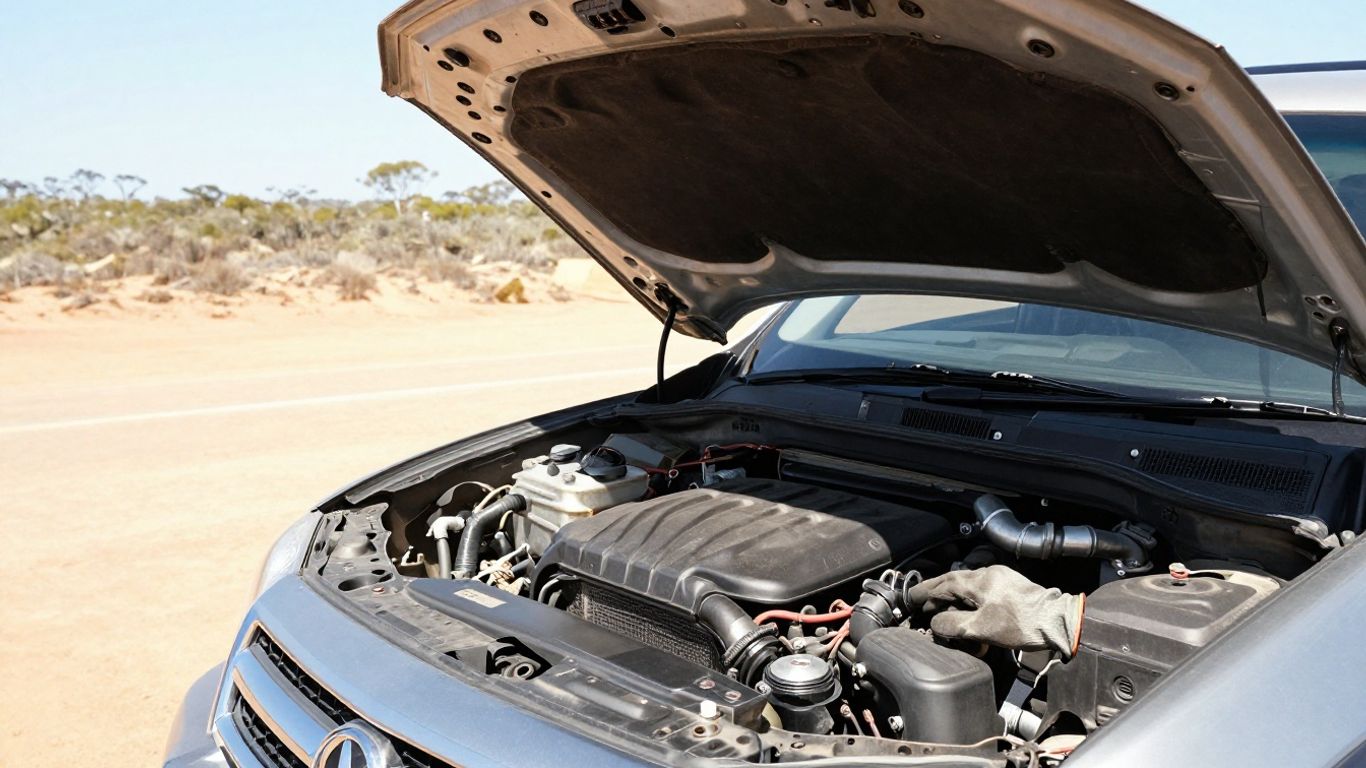
A rising gauge may indicate low coolant, poor circulation, a blocked radiator, a failed thermostat, a slipping water-pump belt, or an inoperative fan. Steam from under the bonnet is a warning to stop rather than open the radiator cap. Let the engine cool fully before checking levels, and never pour cold water into a severely overheated engine.
An intermittent temperature rise is still a fault. It may only occur under load, which is why a short test drive around the block can fail to reproduce it.
Coolant leaks from hoses, radiators, and water pumps
Coolant can escape through ageing hoses, clamps, radiator seams, expansion tanks, water-pump seals, or less visible engine connections. A sweet smell, a coloured deposit, a wet patch, or a falling reservoir level can all be clues. The absence of a puddle does not rule out a leak; coolant may land on hot components and evaporate.
A pressure test helps locate leaks when the engine is cold. Replacing only the visible hose may not solve the problem if nearby rubber components are similarly aged.
Failed thermostats and radiator fans
A thermostat that remains closed can restrict circulation and cause overheating, while one stuck open can keep the engine too cool and reduce efficient operation. Radiator fans are equally important in stationary traffic because natural airflow is limited. A failed relay, fuse, motor, wiring connection, or temperature sensor can stop a fan from operating.
Do not assume that replacing the thermostat alone will cure every temperature problem. The cooling system should be checked as a complete circuit, including circulation, pressure, fan control, and coolant condition.
How heat, long distances, and towing increase cooling stress
High ambient temperatures leave less margin for a marginal cooling system. Long highway runs expose weak components continuously, while towing adds engine load and heat, especially on grades or in slow traffic. Dust, mud, blocked fins, and neglected coolant can further reduce heat transfer.
Before a demanding trip, check the coolant level when cold, inspect belts and hoses, and confirm that the radiator area is not obstructed. If the gauge moves above its usual position, stop safely and investigate rather than hoping airflow will bring it back down.
Oil, lubrication, and timing-related failures
Oil protects moving parts, carries heat away, and helps hydraulic components operate correctly. A low level or neglected service interval can therefore affect far more than the dipstick reading. Timing components add another layer of risk because a failure can stop the engine or cause internal contact between valves and pistons.
Low oil levels and oil pressure warnings
Check the oil on level ground after allowing the engine to sit, following the vehicle maker’s procedure. A low level may result from a leak, oil consumption, or an overdue service. The oil-pressure warning is different: it indicates that circulation or pressure may be inadequate, and the engine should generally be switched off as soon as it is safe.
Adding oil may be necessary, but it does not explain why the level fell or confirm that pressure has recovered. A workshop may test pressure mechanically and inspect the filter, pump, pickup, and internal clearances.
Oil leaks from seals, gaskets, and filters
Small leaks often leave dampness around a rocker cover, oil pan, filter housing, front seal, or rear seal. Oil reaching a hot exhaust component can create smoke or a sharp burning smell. A leak can also spread along the underside of the engine, making its original source difficult to identify.
Cleaning the area and using a short observation period can help locate the source. The right repair depends on access, seal condition, fastener torque, and whether another component is forcing oil past the seal.
Sludge buildup and neglected oil changes
Sludge forms when oil degrades, becomes contaminated, or remains in service too long for the vehicle’s conditions. It can restrict small oil passages and affect variable valve timing or hydraulic tensioners. Short trips, extended idling, heavy traffic, and high temperatures can be harder on oil than steady-distance driving.
Service records matter because a single late change is not the same as years of neglect. If sludge is suspected, aggressive cleaning without inspection can dislodge deposits or hide a deeper wear problem, so the approach should be planned by a mechanic.
Timing belt and timing chain problems
Timing belts have scheduled replacement intervals and can fail through age, contamination, tensioner wear, or skipped maintenance. Chains are not necessarily maintenance-free; they can stretch, rattle, or suffer from worn guides and tensioners. A rattle on start-up, poor running, or a sudden no-start condition warrants prompt testing.
The correct interval varies by engine and operating conditions, so use the vehicle’s service information rather than a universal mileage rule. If a belt has failed, avoid repeated starting attempts until the engine has been assessed for internal damage.
Fuel, ignition, and air intake issues
Combustion depends on the right mixture, a strong spark where applicable, and accurate airflow measurement. Problems in one area can imitate faults in another, producing hesitation, rough running, hard starting, or a warning light. Diagnosis is more reliable when the whole intake, ignition, and fuel system is considered together.
Worn spark plugs and failing ignition coils
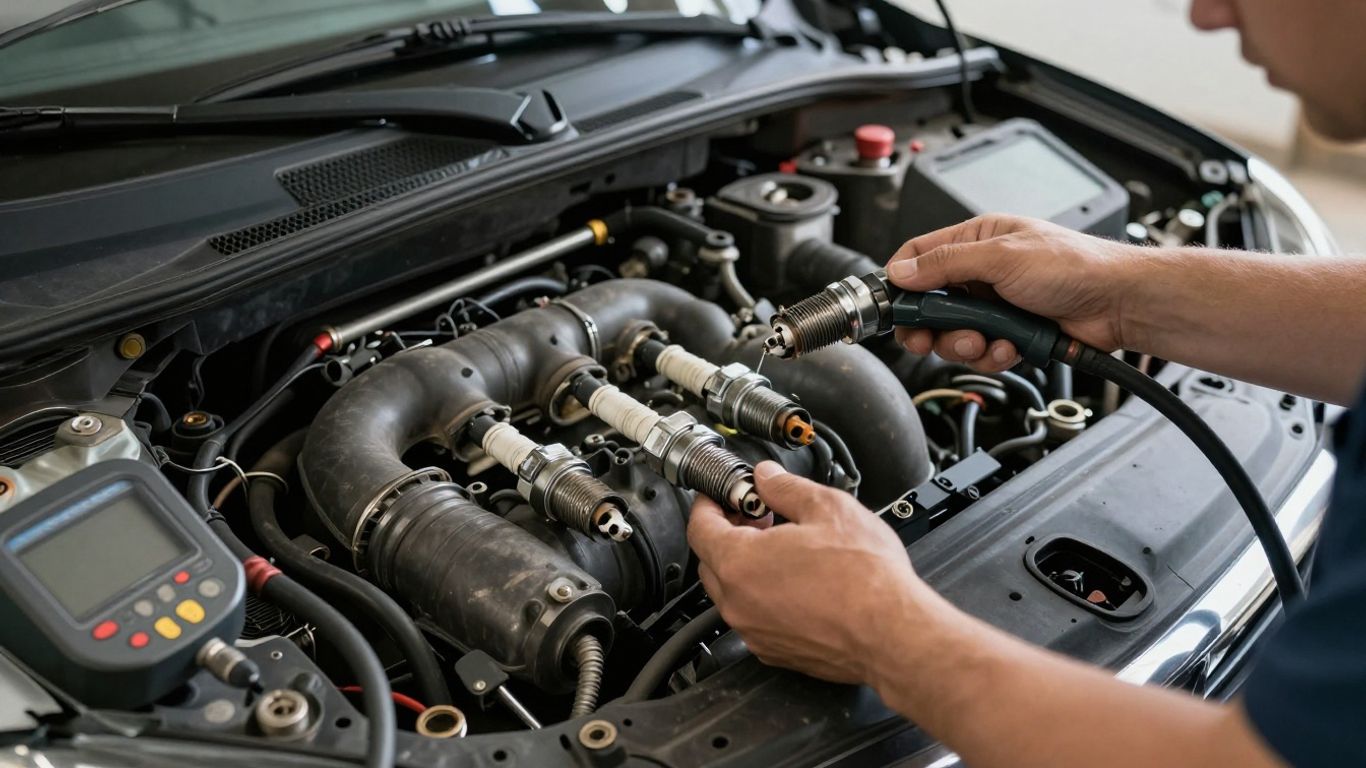
Worn plugs can make an engine difficult to start, less responsive, or prone to misfire under load. A failing coil may work when cold and break down as it heats up, which explains why some faults appear only after a longer drive. Continued misfiring can damage the catalytic converter and increase fuel use.
Spark-plug condition, gap, coil performance, wiring, and stored misfire data should be checked together. Replacing every coil without testing may be unnecessary, while replacing one failed coil may not address worn plugs or an underlying mixture problem.
Clogged fuel injectors and fuel filters
Restricted injectors can create uneven fuelling, poor acceleration, or a rough idle. A blocked filter can reduce fuel flow, particularly when the engine is under load, although modern systems differ in filter location and service requirements. Contamination or water in fuel can make symptoms appear suddenly.
Fuel-pressure testing helps separate a supply problem from an ignition or airflow fault. Injector cleaning is not a universal cure, and severe contamination may require tank and line inspection rather than an additive alone.
Dirty throttle bodies and faulty mass airflow sensors
Deposits around a throttle body can affect idle control and throttle response. A mass airflow sensor can also provide incorrect readings if contaminated, damaged, or affected by an intake leak. These faults may produce similar symptoms, including surging, hesitation, and an engine that stalls when the accelerator is released.
Before replacing a sensor, inspect the air filter, intake ducting, clamps, wiring, and vacuum lines. The diagnostic method should follow the sensor design; cleaning a component that is not intended to be cleaned can make it worse.
How poor fuel quality and short trips affect engine performance
Poor-quality or contaminated fuel may cause knocking, hesitation, hard starting, or a sudden loss of power. Short trips prevent the engine and exhaust system from reaching stable operating temperature for long enough to evaporate moisture and complete normal checks. Frequent cold starts also increase wear and fuel dilution in some conditions.
Use the fuel grade specified for the vehicle and keep receipts if symptoms begin immediately after refuelling. If the problem persists, stop experimenting with additives and have fuel quality, pressure, ignition, and intake systems tested.
Common engine problems in popular Australian vehicle types
There is no single list of faults that applies to every Australian car. A small hatchback used for short city trips has a different duty cycle from a diesel ute towing on unsealed roads. Model year, engine design, maintenance history, modifications, and how the vehicle is used usually matter more than the badge on the bonnet.
Issues affecting small hatchbacks and city cars
Small cars often spend much of their lives idling in traffic, making short trips, and repeatedly starting from cold. That pattern can expose weak batteries, ignition faults, carbon deposits, cooling issues, and oil contamination sooner than steady-distance use. Automatic stop-start systems add another layer of demand to the battery and starting system.
A rough idle or hesitation should not automatically be blamed on a small engine being underpowered. Basic checks of plugs, coils, air leaks, throttle operation, and service history can reveal a straightforward fault.
Diesel problems in utes and four-wheel drives
Diesel engines in utes and four-wheel drives may face heavy loads, dust, water crossings, towing, and extended idling. Fuel contamination, turbocharger issues, blocked exhaust after-treatment components, intake restrictions, and cooling stress can all become significant. Driving pattern matters: a vehicle used only for short urban trips may not suit systems designed for regular longer runs.
Watch for loss of boost, unusual smoke, difficult starting, rising oil level, or a warning message. Modifications and accessory loads can also change thermal and mechanical demands, so the vehicle should be assessed in its actual working configuration.
Reliability concerns in turbocharged engines
Turbocharged engines deliver useful power from a smaller capacity, but the turbocharger operates with high heat and speed. Oil quality, warm-up and cool-down habits, intake leaks, boost-control faults, and cooling performance can affect reliability. A new whine, smoke, sluggish acceleration, or oil use should be investigated before the turbocharger is assumed to be the only cause.
A turbo fault may be a symptom of a blocked intake, lubrication issue, exhaust restriction, or control problem. Replacing the turbo without finding the original cause can lead to another failure.
Differences between older vehicles and modern engines
Older engines may be easier to inspect mechanically but can suffer from aged hoses, seals, wiring, sensors, and cooling components. Modern engines monitor more systems and can provide useful data, yet diagnosis may require scan tools, live data, specialised procedures, and software information. Neither age group is automatically trouble-free.
Maintenance history is often the strongest guide. A well-serviced older car can be a better repair prospect than a newer vehicle with missed services, harsh use, or poorly installed modifications.
Diagnosing and repairing engine problems
Good diagnosis separates the observed symptom from the failed component. A scan, road test, inspection, and targeted measurement should build a consistent explanation. Before authorising major work, ask what has been tested, what evidence supports the proposed repair, and what risks remain if the work is postponed.
What a diagnostic scan can and cannot reveal
A scan tool can retrieve stored fault codes, view some live data, and help identify which system needs investigation. It cannot, by itself, prove that a named sensor or component has failed. A code may be caused by damaged wiring, an air leak, low voltage, mechanical wear, or another fault upstream.
The scan is most useful when paired with a physical inspection and a clear symptom history. This broader European-car engine guide also illustrates why similar warning signs can have different causes across engine designs.
Checks to perform before visiting a mechanic
Simple observations can save time, provided they are safe. Do not work around a hot engine, moving belts, pressurised coolant, or exposed wiring. Before booking the car in, note the following:
- When the symptom began and whether it is getting worse.
- Whether it occurs during cold starts, idling, acceleration, hills, or towing.
- Any warning lights, messages, smoke, smells, fluid loss, or unusual noises.
- Recent servicing, refuelling, repairs, modifications, or battery replacement.
These details give a mechanic a starting point without encouraging guesswork. Avoid deleting codes or replacing several parts before the vehicle has been tested, since that can remove useful evidence and increase cost.
Typical repair costs and factors that change the price
Engine repair prices vary widely with the failed component, vehicle access, parts availability, labour time, and whether related items are replaced at the same time. A hose, plug, sensor, or belt service is a very different job from cylinder-head work or internal engine repair. Diagnosis itself may be chargeable, particularly when fault-finding requires extended testing.
A written estimate should identify parts, labour, fluids, taxes, diagnostic time, and any assumptions. A useful repair documentation checklist is a reminder that clear records and defined steps reduce confusion, even though workshop processes differ from manufacturing procedures.
When comparing options, consider the vehicle’s age, condition, service history, resale value, and how long you plan to keep it. A low initial quote is not always the lowest total cost if it leaves the cause unresolved.
When to repair, rebuild, or replace an engine
Repair is usually sensible when the fault is localised and the rest of the engine has good compression, oil pressure, cooling performance, and maintenance history. A rebuild may suit an engine with significant internal wear but a sound block and a vehicle worth keeping. Replacement can be more practical when damage is extensive, parts are scarce, or a verified used or remanufactured unit is available.
Ask for evidence such as compression or leak-down results, oil-pressure readings, coolant checks, and photographs of internal damage where appropriate. Repair decisions should be based on measured condition rather than fear created by a single warning light.
For owners managing a long repair process, organised records are useful. The same habit applies to unrelated planning tasks, from choosing travel accommodation to comparing premium printed packaging, although neither topic changes the mechanical diagnosis. Even a hiking safety guide and advice on data-driven advertising illustrate the broader value of preparing information before making a decision; keep those references separate from the vehicle’s actual service evidence.
Conclusion
Common engine problems in Australian cars are easier to manage when warning signs are recorded early, fluids and temperatures are monitored, and diagnosis is based on testing rather than assumptions. Heat, towing, short trips, age, and neglected maintenance can all shift the odds, but a careful inspection can usually narrow the cause and clarify whether repair is worthwhile.
Frequently Asked Questions
What is the most common early sign of engine trouble?
A change from normal behaviour is often the earliest clue: a new warning light, rough idle, unusual noise, reduced power, increased fuel use, or fluid loss. One symptom is not enough to identify the fault, but it is enough to justify closer attention.
Can I drive with the check-engine light on?
A steady light with normal operation may allow a short, gentle trip to a workshop, but it should not be ignored. A flashing light, severe shaking, loss of power, smoke, or overheating calls for stopping safely and arranging assistance.
Why does my car overheat only in traffic?
Low road speed reduces natural airflow through the radiator, making the electric fan and cooling system more important. A weak fan, blocked radiator, low coolant level, thermostat fault, or poor circulation may therefore appear in traffic before it appears on the open road.
How often should engine oil be checked?
Check it at intervals recommended for the vehicle and more often when the engine uses oil, leaks, tows, travels long distances, or operates in demanding conditions. Check it on level ground using the vehicle maker’s procedure.
Are timing chains maintenance-free?
No. Timing chains can stretch, and guides or tensioners can wear. A rattle, difficult starting, poor running, or timing-related warning code should be investigated before the chain system suffers more damage.
Is a diagnostic scan a complete engine test?
No. It can reveal stored codes and some live data, but it cannot prove that a particular component has failed. Physical inspection, electrical testing, pressure checks, and road testing may still be required.
When is an engine replacement better than a repair?
Replacement may make sense when internal damage is extensive, rebuilding is uneconomical, or a suitable verified replacement is available. The decision should compare the total repair cost with the vehicle’s condition, value, future needs, and remaining maintenance risks.