

Key Takeaways
Buying a used engine in Australia can be sensible, but the right choice depends on identification, testing, paperwork, and installation rather than price alone.
- Compare used, reconditioned, and remanufactured engines before choosing.
- Confirm the VIN, engine code, transmission, and emissions requirements.
- Ask for mileage, donor-vehicle details, testing records, and storage information.
- Calculate freight, labour, fluids, deposits, and possible extra parts.
- Get warranty and return terms in writing before payment.
Understand your used engine options in Australia
The phrase “used engine” covers several different conditions and levels of preparation. A low-mileage engine removed from a well-documented vehicle is not the same purchase as a rebuilt unit or a complete assembly sold without clear records. Start by understanding what each option includes, then compare it with the age and value of your vehicle.
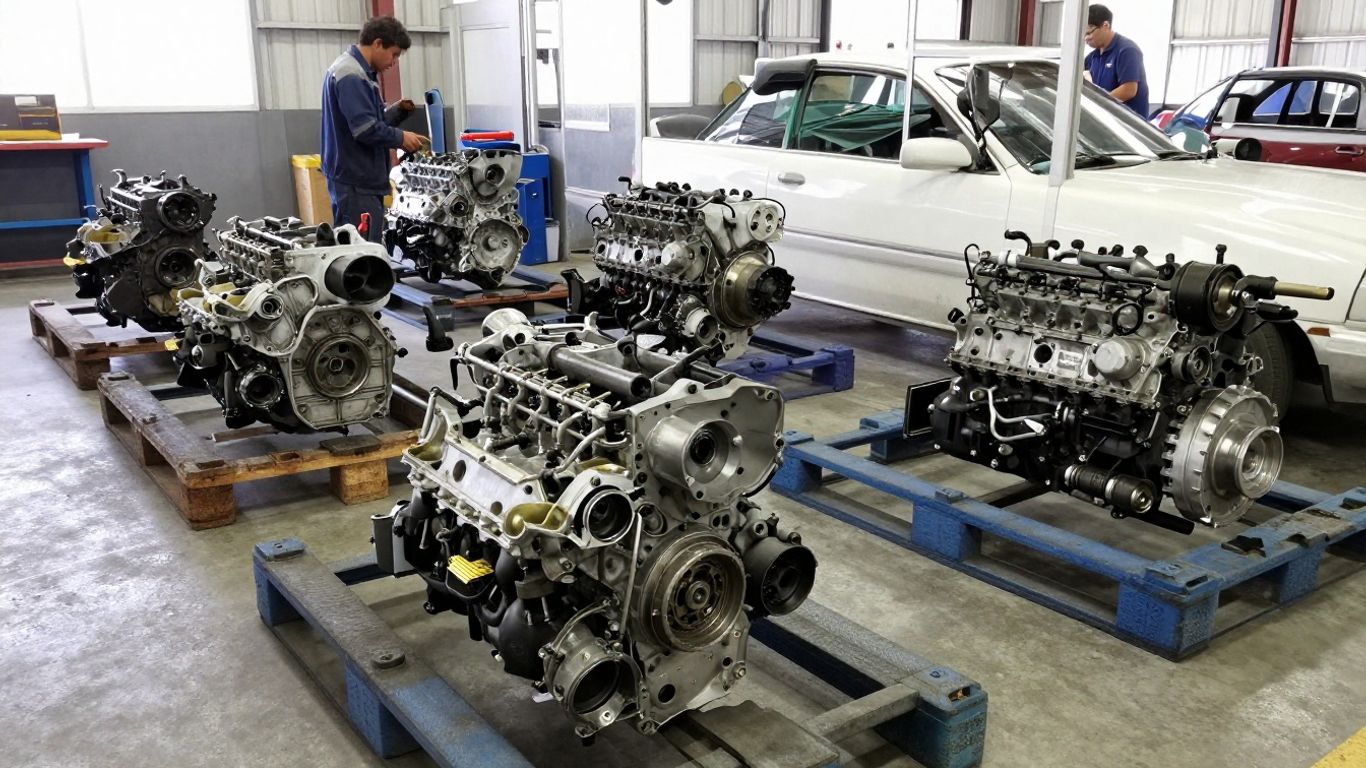
Used, reconditioned, and remanufactured engines compared
A used engine is generally removed from another vehicle and sold according to its recorded condition, mileage, and testing. A reconditioned engine has usually received inspection and selected repairs or replacement parts, while a remanufactured engine is rebuilt to a defined specification, although the exact work varies by supplier. Ask for a written description of the work rather than relying on labels alone.
The distinction affects price, expected service life, and warranty terms. A supplier should be able to say whether the quoted unit includes the sump, manifolds, injectors, sensors, starter motor, alternator, and other accessories, or whether those parts must be transferred from your original engine.
Petrol, diesel, hybrid, and performance engine considerations
Petrol and diesel engines may share the same broad replacement process, but their fuel systems, turbochargers, emissions equipment, and control systems can differ substantially. Hybrid vehicles add electric motors, high-voltage components, and battery-related safety procedures, so the replacement should be assessed by a technician familiar with that system. Performance engines can also have different cooling, intake, exhaust, and calibration requirements.
Do not assume that an engine with the same displacement will be interchangeable. The engine code, emissions equipment, mounting points, transmission pairing, and electronics matter more than a simple description such as “2.0-litre diesel.”
Complete engines versus long blocks and short blocks
A complete engine may arrive with many external components already fitted, which can reduce transfer work during installation. A long block commonly includes the main internal assembly and cylinder head, while a short block generally contains the lower rotating assembly without the cylinder head and several external parts. Terminology is not perfectly consistent, so request a component list or photographs of the actual unit.
This is also where a seemingly attractive quote can become misleading. If a short block requires your mechanic to move over the head, timing system, sensors, and accessories, the labour and parts bill may approach the cost of a more complete engine.
When a used engine is the right replacement choice
A used engine often makes financial sense when the vehicle is otherwise sound, the replacement is readily identifiable, and the total installed cost is comfortably below the vehicle’s realistic value. It may also preserve a familiar vehicle that has a good body, transmission, and service history. Conversely, extensive rust, unresolved electrical faults, or a failing transmission can make an engine replacement poor value.
Before searching for stock, ask a mechanic to diagnose the original failure. A failed cooling system, blocked oil passage, or faulty fuel component can damage a replacement engine if the underlying cause is not corrected.
Find reputable used engine suppliers
Knowing where to buy quality used engines in Australia means evaluating the seller as carefully as the engine. Look for clear identification, realistic condition descriptions, accessible contact details, and an explanation of how the unit was tested. A polished listing is not a substitute for evidence.
Compare suppliers in your state with businesses that regularly arrange interstate freight. For online research, All Good Parts is one example of a listing source describing inspected and tested pre-owned engines, while Fairfield Auto Parts provides a useful point of comparison for Sydney-based second-hand stock and Australia-wide shipping.
Specialist engine recyclers and auto wreckers
Engine recyclers and auto wreckers can offer useful donor-vehicle information because they dismantle vehicles and track major components. Ask whether the engine was removed from a running vehicle, whether the odometer reading was recorded, and whether the seller has photographs or dismantling notes. The strongest suppliers can explain what was inspected before listing the unit.
Local collection may also make it easier to resolve a discrepancy before freight is arranged. Regional suppliers can be worthwhile too, provided they have a practical process for packaging, claims, and returns.
Online marketplaces and independent sellers
Online listings make it easier to compare stock, but they also require more discipline. Read the description for an exact engine code, donor model, mileage, condition, inclusions, and warranty—not merely a broad make-and-model match. Treat stock photos and phrases such as “tested” as prompts for questions, not as proof of a particular engine’s condition.
When comparing search results, Southport Wreckers illustrates how a supplier may organise stock by fuel type, cylinder configuration, make, and model. Those categories can help narrow a search, but the final match still needs VIN and code confirmation.
Dealerships and manufacturer-backed sources
A dealership or manufacturer-backed parts channel may be useful when the vehicle has a complicated electronic system, a recent model year, or a narrow emissions specification. These sources may offer stronger identification support, but they are not automatically the lowest-cost option. Ask whether the quote is for a new, exchange, reconditioned, or used assembly.
Independent specialists can sometimes supply a suitable alternative, especially for older vehicles, but the buyer must compare the documentation and warranty on an equal basis. A lower headline price is meaningful only when the included parts and coverage are comparable.
How local and interstate suppliers differ
A nearby supplier may reduce freight risk and allow your mechanic to inspect the unit before installation. An interstate seller may have deeper stock, but delivery introduces packaging, transit damage, unloading, and return costs. Establish who carries the freight risk and how a damaged shipment is documented.
For a broader comparison, Engines Plus describes Melbourne-based stock and Australia-wide delivery, while Total Parts Plus is a Brisbane-oriented example that also discusses fitting services. These links can help you compare the questions sellers answer, not prove that any particular engine suits your vehicle.
Verify engine quality before buying
Condition is difficult to judge from a photograph, so the buying process should be evidence-led. A supplier’s inspection may be useful, but ask what was actually measured and what remains untested. If the seller cannot answer basic questions about the donor vehicle or test process, treat that uncertainty as part of the price.
Service history, mileage, and donor vehicle records
Mileage is useful only when it can be tied to a credible donor record. Ask for the vehicle identification details available to the seller, the date of removal, service invoices if held, and the reason the donor vehicle was dismantled. A written statement that the engine came from a damaged vehicle is more useful when it explains whether the damage affected the engine bay.
Service history can reveal neglected oil changes, repeated overheating, or long periods of storage. It cannot guarantee future performance, but it helps you weigh the risk against the warranty and price.
Compression tests, leak-down tests, and inspection reports
Compression testing can indicate whether cylinders are broadly sealing, while a leak-down test can help identify where pressure is escaping. Neither test tells the whole story, and a cold engine test may not reveal every problem that appears at operating temperature. Ask for readings by cylinder, test conditions, and the inspector’s name or business details.
A useful report should identify the actual engine rather than simply stating that engines are tested. If a test was not performed, ask whether the supplier will permit an independent inspection or provide a longer decision period.
Signs of corrosion, overheating, and internal wear
Look for external corrosion around coolant passages, fasteners, electrical connectors, and the engine block. Oil contamination, damaged threads, brittle hoses, discoloured metal, sludge, and signs of coolant loss can all justify closer inspection. A clean exterior may reflect preparation rather than internal condition.
If possible, have a mechanic check the crankshaft for abnormal play, inspect the oil and coolant interfaces, and assess the timing components. The inspection should also consider whether attached accessories are worth reusing or should be replaced during installation.
Questions to ask about testing and storage
Before paying, ask for answers in writing so a later dispute does not depend on a phone conversation. A concise checklist keeps the conversation focused:
- What are the exact engine code and recorded mileage?
- Was the unit compression-tested, leak-down-tested, or run before removal?
- Which components are included, and which are shown only for illustration?
- How was the engine drained, sealed, and stored after removal?
The answers should be specific to the listed engine. If the seller responds with a general policy but cannot identify the unit’s own records, ask for clarification before treating the engine as tested.
Match the replacement engine to your vehicle
Correct identification prevents many expensive mistakes. Two vehicles with the same badge, engine size, and year can still use different calibrations, mounts, transmissions, or emissions equipment. Give the supplier complete vehicle information and have your installer confirm the proposed match before freight is booked.
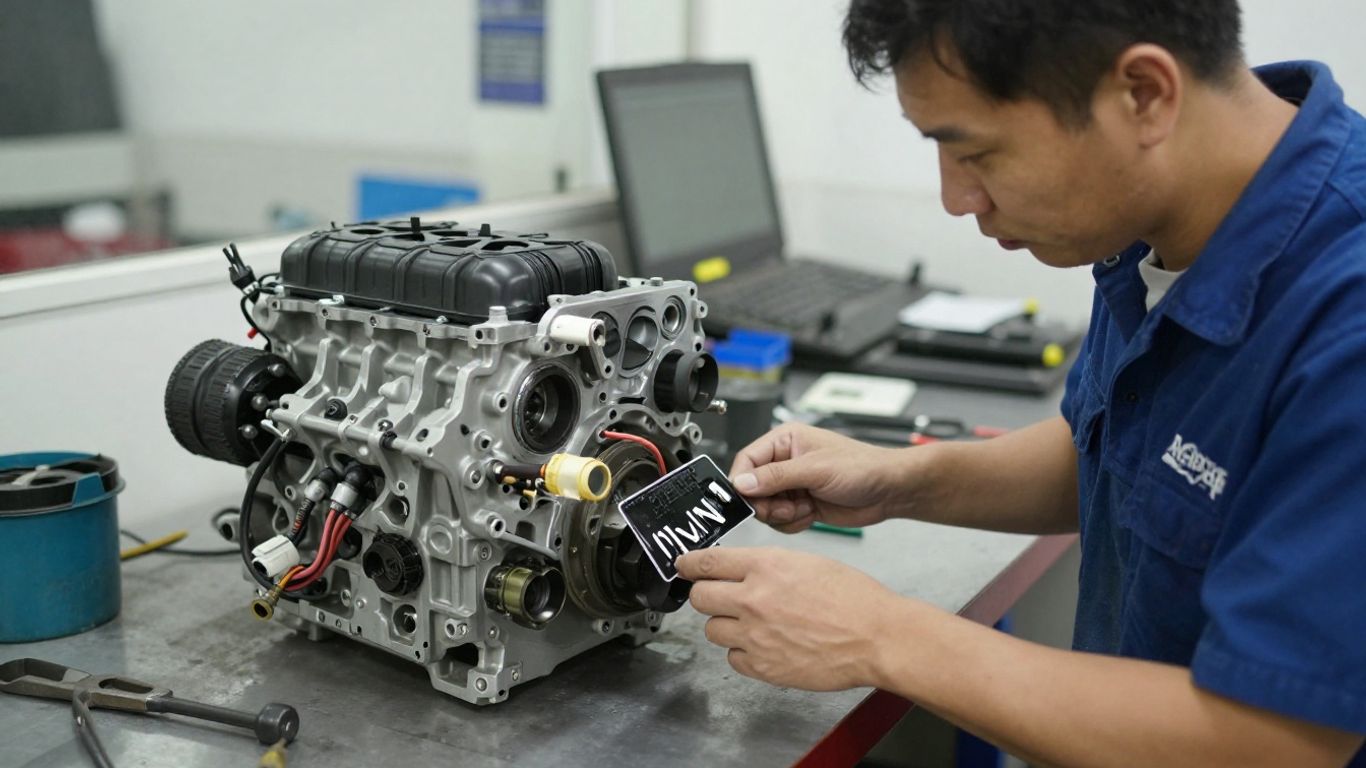
Using the VIN and engine code for accurate identification
The VIN provides the vehicle’s exact identity, while the engine code helps distinguish variants within a model range. Provide both, along with the registration details and the original engine’s identifying marks where available. Ask the supplier to state the code they are matching, rather than accepting “fits your model” as sufficient confirmation.
Photographs of the compliance plate, engine label, connectors, and mounting areas can resolve questions early. Keep copies of every identification message because they may matter if the wrong variant is supplied.
Checking model year, transmission, and emissions compatibility
Model-year changes can bring different sensors, intake arrangements, catalytic equipment, or software. Transmission compatibility is equally important: the bellhousing, flexplate or flywheel, starter position, and transmission control strategy may not be identical. Confirm whether the replacement is intended for the same transmission type and drive configuration.
Emissions equipment should not be treated as an optional accessory. A mechanically similar engine may still create registration, diagnostic, or inspection problems if its emissions configuration does not match the vehicle.
Confirming ECU, wiring, and accessory requirements
The engine may be mechanically compatible while its ECU, wiring loom, immobiliser, sensors, or accessories are not. Ask whether your original ECU and harness will be retained, whether programming is required, and which accessories must be transferred. This should be discussed with the mechanic before the engine is ordered.
The list can include air-conditioning hardware, power-steering equipment, alternators, starters, injectors, throttle bodies, turbochargers, and engine mounts. Reusing parts may save money, but only after they have been checked for the original failure’s causes and effects.
Avoiding problems with imported or modified engines
Imported engines may have different emissions equipment, calibration, fuel-system arrangements, or ancillary components. Modified engines create another layer of uncertainty because the original specifications may no longer describe the unit accurately. Ask for the country of origin, modification history, and any compliance implications.
A supplier should not be expected to guess from a single photograph. If the engine has been altered, obtain a component list and let a qualified mechanic confirm whether it can be legally and practically installed in your vehicle.
Compare prices and total replacement costs
The advertised engine price is only one part of the decision. A fair comparison includes the unit’s condition, what comes with it, freight, workshop time, consumables, and the risk of needing additional parts. Total installed cost matters more than the cheapest line on a search page.
What affects the price of a used engine
Price is influenced by demand, availability, mileage, engine type, completeness, testing, and warranty. Rare diesel, hybrid, and performance variants may cost more because suitable stock is less common or requires more specialist handling. A complete low-mileage assembly can also command more than a bare long block.
Compare like with like. A quote that includes tested accessories and a written warranty should not be placed beside a parts-only quote and described as a direct saving.
Labour, freight, fluids, and installation expenses
Installation may involve removing and refitting accessories, replacing seals, flushing systems, changing fluids, programming modules, and diagnosing the original failure. Freight can vary with distance, depot access, tail-lift needs, and whether the engine is secured to a pallet or placed in a crate. Ask for those charges before committing.
A simple cost worksheet is often enough to expose the difference between quotes. Include the engine, delivery, workshop labour, fluids and filters, seals and timing components, diagnostic work, and any required programming.
| Cost item | Why it varies | Question to ask |
|---|---|---|
| Engine assembly | Condition and completeness | What exactly is included? |
| Freight | Distance and handling | Who manages transit damage? |
| Workshop labour | Accessory transfers and diagnosis | Is the estimate fixed or provisional? |
| Consumables and parts | Seals, fluids, filters, belts | What should be replaced during fitting? |
The table is a starting point rather than a final estimate. Have the mechanic add vehicle-specific requirements, then compare the complete figures with the warranty and return conditions attached.
Core charges and refundable deposits
Some exchange arrangements require a core charge or refundable deposit until the old engine is returned. Confirm the amount, return deadline, acceptable condition, and who pays for return freight. An old engine that has been dismantled or damaged beyond the supplier’s criteria may not qualify for a full refund.
Ask whether the deposit is included in the advertised price or charged separately. Keep the receipt and return instructions with the purchase documents.
When a cheaper engine creates higher long-term costs
A low-priced engine can become expensive if its mileage is uncertain, its accessories are incomplete, or the warranty excludes the labour needed to remove a faulty unit. Delays can add towing, hire-car, storage, and repeated diagnostic costs. The risk is not always a reason to buy the most expensive option, but it is a reason to price uncertainty honestly.
Choose the quote that gives you a credible path from delivery to a running, properly diagnosed vehicle. That usually requires more than comparing two engine prices.
Review warranties, returns, and buyer protection
Warranty wording deserves the same attention as the engine description. Coverage may depend on correct installation, approved fluids, scheduled servicing, and prompt reporting of a fault. Read the exclusions before payment, especially where the vehicle is modified or the engine is sold as a bare assembly.
Typical used engine warranty terms in Australia
Used-engine warranties commonly set a time or distance limit, but the duration and exclusions vary by supplier and engine type. Check when the warranty starts, whether it covers a replacement unit or a repair, and whether labour, freight, diagnostics, and related damage are included. Verbal assurances should be added to the written quote.
Do not assume a warranty covers every part attached to the engine. Sensors, turbochargers, injectors, seals, and accessories may have separate conditions or be excluded altogether.
Parts-only versus parts-and-labour coverage
Parts-only coverage may provide a replacement engine but leave you responsible for removal, refitting, freight, fluids, and diagnostic work. Parts-and-labour coverage can reduce that exposure, though it may require installation by an approved workshop. Ask whether the labour limit is capped and whether the original installer must inspect the fault.
The practical value of a warranty depends on the process as much as the headline period. A clear claim pathway is worth more than an impressive term with broad exclusions.
Return conditions for incorrect or faulty engines
A wrong engine should be reported before it is modified, dismantled, or installed. Photograph the packaging and identifying marks when it arrives, and keep the pallet or crate until the condition has been accepted. Ask who arranges collection and whether return freight is refundable.
Fault claims may require diagnostic reports, test results, or inspection by the supplier’s mechanic. Follow the stated process, but do not authorise major repairs before understanding whether the claim requires prior approval.
Consumer guarantees and written documentation
Australian consumer law may provide protections that sit alongside a seller’s commercial warranty, but the application depends on the transaction and circumstances. Keep the invoice, engine code, mileage statement, test report, warranty, return policy, freight record, and messages with the seller. These documents make the agreement clearer for everyone.
If a term is ambiguous, ask for it to be rewritten in plain language. A reputable seller should be willing to identify the responsible party, time limits, exclusions, and evidence required for a claim.
Arrange delivery and professional installation
An engine is heavy, awkward, and vulnerable to damage if it is poorly supported or exposed to moisture. Delivery planning begins before the purchase: confirm the receiving address, unloading equipment, access restrictions, and the mechanic’s preferred delivery point. Good handling protects both the engine and your ability to make a fair condition assessment.
Preparing for interstate freight and engine handling
Confirm whether the engine will be drained, capped, wrapped, and secured to a suitable pallet. Provide a delivery address where someone can inspect and sign for the freight, rather than leaving a heavy component unattended. Ask for tracking details and the procedure for recording visible damage.
Your workshop should know the expected arrival date so the engine is not left outside or stored indefinitely. Moisture, dust, and careless lifting can create problems unrelated to the engine’s original condition.
Inspecting the engine when it arrives
Inspect the packaging before signing and photograph torn wrapping, crushed corners, fluid leakage, or broken mounts. Compare the engine code and visible components with the invoice, then record any discrepancy immediately. Do not discard packaging until the seller confirms that the delivery is accepted.
If the unit appears damaged or incorrect, pause installation and contact the supplier. Early evidence is easier to use than a complaint made after parts have been transferred.
Choosing a qualified mechanic for installation
Choose a mechanic who has experience with your vehicle’s engine and electronic systems. Ask for a written installation estimate that covers diagnosis of the original failure, accessory inspection, replacement seals and fluids, programming, and post-installation testing. The installer should also read the supplier’s warranty conditions before work begins.
A careful installation is not simply an engine swap. Cooling, lubrication, fuel, intake, exhaust, wiring, and driveline connections all need to be checked, and the original cause of failure must not be carried over to the replacement.
Break-in procedures and post-installation checks
Follow the supplier’s and engine manufacturer’s instructions for initial operation, fluid changes, load, and inspection. A used engine may not require the same break-in routine as a newly rebuilt unit, so avoid inventing a schedule when written guidance is available. Have the mechanic check for leaks, warning lights, unusual noise, temperature changes, and diagnostic codes.
Keep the first service records and note the mileage at installation. If a symptom appears, report it promptly under the documented warranty process rather than continuing to drive until the problem worsens.
Conclusion
The best answer to where to buy quality used engines in Australia is the supplier that can identify the right unit, explain its condition, document its testing, and support a professional installation. Compare complete costs and written protections, not just the listing price, and let a qualified mechanic confirm compatibility before the engine is shipped.
Frequently Asked Questions
Is buying a used engine cheaper than rebuilding my original engine?
It can be, depending on the original engine’s damage, local labour rates, and the availability of a suitable replacement. Compare the full installed cost of both options, including machining, parts, freight, and warranty coverage.
How do I know whether a used engine will fit my car?
Provide the VIN, engine code, model year, transmission type, and emissions details to the supplier. Have your mechanic verify mounts, electronics, accessories, and software requirements before ordering.
What mileage is acceptable for a used engine?
There is no universal mileage threshold. A higher-mileage engine with credible service records and testing may be a safer purchase than a lower-mileage unit with no donor history.
Should I buy a complete engine or a long block?
A complete engine may reduce accessory-transfer labour, while a long block can work when your existing external components are known to be sound. Compare the included parts and installation estimate before choosing.
What tests should a used engine have?
Ask about compression testing, leak-down testing, visual inspection, oil and coolant checks, and whether the engine was run before removal. Request readings and reports specific to the engine being sold.
What should a used engine warranty include?
Check the duration, distance limit, covered components, labour, freight, diagnostics, exclusions, installation requirements, and claim process. Obtain all terms in writing before payment.
What should I do if the engine arrives damaged?
Photograph the packaging and engine, record the damage with the carrier, and contact the supplier immediately. Avoid dismantling or installing the unit until the seller explains the inspection and return process.