

Key Takeaways
A reliable supplier makes the buying process clearer before any money changes hands. Match the part carefully, check the business, and judge the complete cost rather than the advertised price alone.
- Confirm your vehicle details, part numbers, and intended use before requesting prices.
- Compare genuine, aftermarket, used, and refurbished options on quality as well as cost.
- Check independent reviews, business details, warranties, returns, and Australian Consumer Law rights.
- Confirm stock, dispatch timing, delivery coverage, and packaging for the part you need.
- Keep written records and compare shortlisted suppliers using the same practical criteria.
Define your vehicle and part requirements
The first step in learning How to choose a reliable auto parts supplier in Australia is to define the job precisely. A supplier can only confirm fitment when you provide useful information, rather than simply saying you need a part for a particular model. Gather the vehicle identification number, registration details, build date, engine code, and any relevant transmission or trim information before you start comparing options.
Match the part to the exact vehicle specifications
Vehicle names can cover several engines, body styles, and production years, so a model name alone may not be enough. Check the build month and year, engine capacity, drivetrain, and any facelift or series designation. If the old component is available, photograph its label, connectors, mounting points, and overall shape before contacting a supplier.
Ask the supplier to confirm the fitment in writing. This is especially useful for electrical components, body panels, sensors, and suspension parts, where a similar-looking item may still be incompatible. The aftermarket parts guide also offers a useful general reminder to compare product descriptions and compatibility information before ordering.
Decide between genuine, aftermarket, and used parts
Genuine parts are made for the vehicle manufacturer’s supply chain, while aftermarket parts come from independent manufacturers and can vary considerably in specification. Used parts may be sensible for older vehicles or hard-to-source components, provided their condition, origin, and testing are explained. The right choice depends on the part, the vehicle’s age, your budget, and how long you plan to keep the car.
Do not treat “new” as a complete quality description. Ask who made the component, whether it is an equivalent replacement, and what evidence supports the stated compatibility. For a used item, request mileage or service information where available, along with clear photos of wear-prone areas.
Confirm whether you need safety-critical components
Brakes, steering, tyres, suspension, airbags, seat belts, and some electronic control components deserve a more cautious process. Confirm that the part is appropriate for the vehicle and that installation will be carried out by someone qualified to assess the job. A cheaper component is not good value if it introduces uncertainty into a safety-critical system.
For these parts, ask about traceability, condition, testing, and applicable installation requirements. If the supplier cannot answer basic questions or seems to discourage professional inspection, keep looking.
Verify the supplier’s reputation and legitimacy
A polished website is only one signal of a supplier’s reliability. Check whether the business provides a real Australian contact method, clear trading details, and an address that can be independently verified. You are looking for a supplier that is comfortable explaining its processes, not one that relies solely on urgency or unusually low prices.
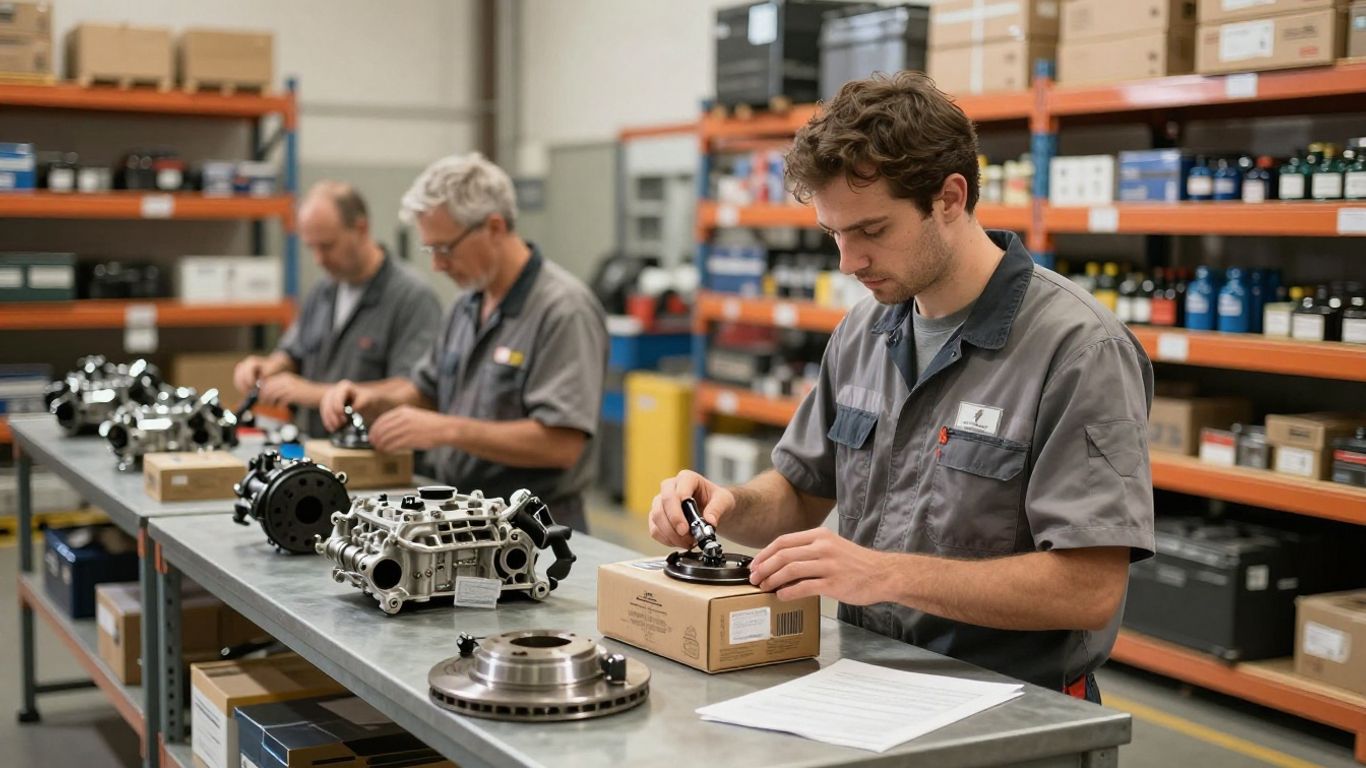
A useful way to prepare for supplier conversations is to borrow the discipline of an approved supplier list: record what was checked, what remains uncertain, and when the information should be reviewed again. The subject matter differs, but the habit of documenting vendor checks transfers well to automotive buying.
Check business details and Australian customer support
Look for a registered business name, Australian phone number, email address, delivery terms, and a clear process for handling problems. Confirm whether support is available during Australian business hours and whether the person responding can discuss fitment rather than only process an order. Be wary of websites with copied descriptions, missing terms, or payment instructions that change during the conversation.
Before paying, check that the invoice identifies the supplier, the part, the agreed price, freight, and any warranty terms. These details give you something concrete to refer to if the order is delayed or incorrect.
Read reviews across independent platforms
Read reviews on more than one platform and look for repeated patterns rather than a single glowing or angry comment. Pay attention to feedback about part accuracy, packaging, response quality, refunds, and how the business handled mistakes. Reviews that describe a specific transaction are usually more useful than vague claims about being “the best.”
A small number of complaints is not automatically disqualifying. What matters is whether the supplier responds clearly, accepts responsibility where appropriate, and shows a consistent process for resolving issues. A review profile with no detail at all should not carry much weight.
Look for industry experience and specialist knowledge
Experience is most valuable when it matches your vehicle and the part category. A supplier familiar with a particular make, model family, or component type may identify fitment issues that a general catalogue misses. For European vehicles, Euro One Auto Parts states that it supplies OEM and premium aftermarket parts and specialises in mechanical components for leading European vehicle brands.
Ask how long the business has handled the relevant parts, which information it uses to verify fitment, and whether it regularly works with workshops or technicians. Specific answers are a better sign than broad claims about expertise.
Assess part quality and compatibility
Compatibility should be treated as a shared verification exercise. The supplier’s listing matters, but so do your vehicle details, the old part’s identification marks, and any information from the mechanic installing it. A reliable seller will not object to reasonable questions about specifications, condition, or fitment.
Review product descriptions, specifications, and photos
A useful listing explains what is included, what is excluded, the part’s condition, and any known limitations. Photos should show the actual item when condition matters, not merely a generic catalogue image. Look closely at connectors, threads, seals, mounting tabs, corrosion, dents, and signs of previous repair.
If a description uses broad language such as “fits many models,” ask for the exact applications that include your vehicle. Get clarification before ordering, especially when the component has multiple revisions or left- and right-hand versions.
Confirm OEM numbers and vehicle fitment data
Compare the OEM or manufacturer number on your existing part with the number supplied by the seller. A superseded number may be valid, but the supplier should explain the relationship rather than asking you to assume that similar numbers are interchangeable. Share the VIN or detailed vehicle information where the supplier’s process allows it.
Use a written confirmation as your final check. If a mechanic has identified the part, ask whether the quoted item matches the mechanic’s description and whether any programming, seals, brackets, or related hardware are required.
Ask how used and refurbished parts are inspected
For used components, ask what inspection was performed, whether the part was tested while fitted to a vehicle, and what wear or damage was found. For refurbished parts, ask what was replaced or reconditioned and whether the final item was tested after that work. “Inspected” can mean different things, so request a plain-language explanation.
The answer should also distinguish between cosmetic wear and a fault that affects operation. Euro One Auto Parts is described as sourcing hard-to-find European parts through its supplier network; that kind of sourcing detail is useful to ask about when a common catalogue search does not produce a clear match.
Compare pricing without sacrificing value
Price comparisons become misleading when suppliers quote different inclusions. One quote may include seals, freight, or a warranty while another covers the part only. Ask for the same information from every shortlisted supplier, then compare the complete purchase rather than the largest discount.
Request a complete quote before ordering
Request the part number, condition, brand or manufacturer, quantity, taxes, freight, expected dispatch date, warranty, and return conditions in one written quote. If installation is involved, ask whether the quote covers only the component or also any related consumables and labour. This reduces the chance of discovering an extra charge after the order is placed.
A clear quote should remain understandable when you read it later. If the supplier avoids putting important promises in writing, treat that as a reason to pause.
Factor in shipping, taxes, and additional fees
Freight can change the value calculation, particularly for engines, panels, transmissions, and other bulky items. Check whether residential delivery, tail-lift service, rural delivery, insurance, or a depot collection charge applies. For interstate or international sourcing, confirm any taxes or border-related costs before comparing totals.
Put the figures side by side so that a low headline price does not conceal a high delivered cost. The calculation need not be elaborate; it just needs to include every amount you are expected to pay.
Evaluate the total cost of ownership
The cheapest part may cost more if it fails early, arrives incomplete, or needs extra labour to install. Consider the part’s expected service life, warranty support, availability of replacement components, and the cost of returning it. A slightly higher price can be reasonable when it buys clearer provenance or better support.
This is also where a used component may make sense. A properly described used OEM part can be a practical option for an older vehicle, but only when its condition and return terms are clear. Judge the risk you are accepting, not just the number on the quote.
| Cost factor | Question to ask | Why it matters |
|---|---|---|
| Part price | What exact item and condition are quoted? | Prevents unlike-for-like comparisons. |
| Freight | What is the delivered charge and service level? | Bulky or rural deliveries can alter the total. |
| Installation | Are labour and related materials separate? | Reveals costs beyond the component itself. |
| Warranty and returns | What happens if the item fails or does not fit? | Puts a value on after-sale protection. |
Once these figures are visible, you can compare value with much less guesswork. Keep the quote that formed the basis of your decision, even if you ultimately choose another supplier.
Review warranties, returns, and consumer protections
A warranty is useful only when you understand what it covers and how to claim it. Read the written terms before payment, including exclusions, duration, proof requirements, and who pays return freight. Also separate a voluntary warranty from your rights when goods are faulty, unsafe, or not as described.
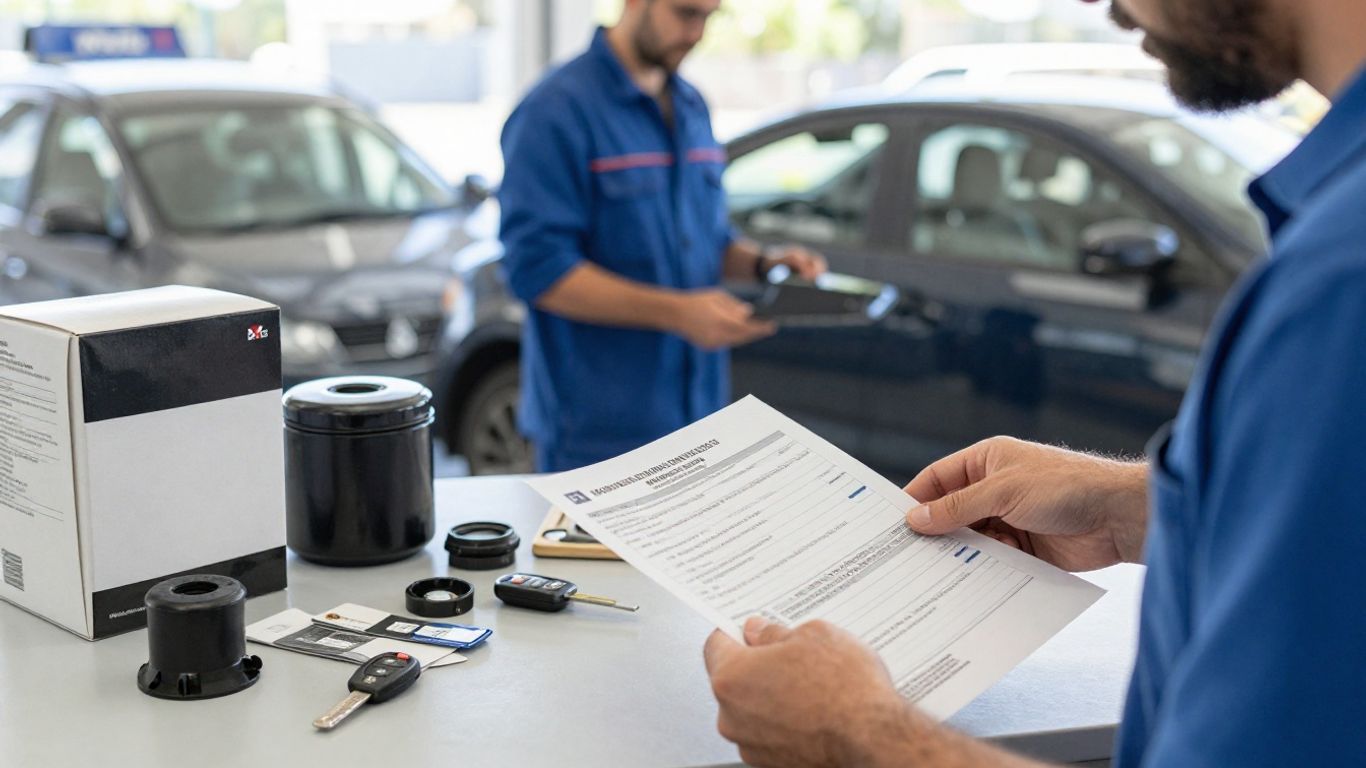
For broader vendor evaluation, the MSP buyer’s guide is a reminder to define selection criteria before comparing providers. The same approach works here: decide what protection you require, then test each supplier against it rather than accepting the first policy you see.
Understand warranty coverage and exclusions
Check whether the warranty covers parts only or also reasonable labour, diagnosis, freight, and related damage. Ask whether installation by a qualified technician is required and whether the supplier needs proof of correct installation. Used, electrical, modified, or clearance items may have different terms, so do not assume one policy applies to everything.
A supplier should be able to explain the claim process in plain language. Find out how quickly you must report a fault, what evidence is needed, and whether repair, replacement, credit, or refund is the usual remedy.
Check the returns process for incorrect or faulty parts
Ask how to report a wrong part before sending anything back. Confirm the return address, packaging requirements, time limits, inspection process, and freight arrangements. Do not discard boxes, labels, or invoices until you have checked the part and confirmed that it fits.
A different process may apply when you ordered the wrong item yourself. That is why fitment confirmation before purchase is so valuable. If the supplier made the error, preserve the correspondence showing what was requested and what was confirmed.
Know your rights under Australian Consumer Law
Australian Consumer Law may provide guarantees that goods are of acceptable quality, match their description, and are fit for a purpose made known to the seller. The precise remedy depends on the circumstances, the seriousness of the problem, and the way the part was supplied. A supplier’s written policy cannot simply erase applicable consumer guarantees.
For a general background check on transparent service providers, the private laboratory guide discusses checking certification, pricing, and results processes; those are not automotive rules, but the same principle applies: verify the provider’s process rather than relying on appearance alone. For a dispute, keep your documents and seek guidance from an appropriate Australian consumer authority.
Evaluate availability, delivery, and logistics
A supplier can be trustworthy and still be a poor fit if the part cannot arrive when your vehicle is booked for repair. Ask whether the item is physically in stock, held by a partner, or available only after ordering. “Available” and “dispatches today” are not interchangeable descriptions.
Confirm stock levels and realistic dispatch times
Ask for the location of the stock, the quantity available, the expected dispatch date, and the carrier service. For imported or hard-to-find parts, ask what event would delay the estimate and whether the supplier will notify you. Written timing is particularly important when a workshop is charging storage or your vehicle is off the road.
Euro One Auto Parts describes prompt shipping and sourcing for European parts across Australia, but you should still confirm the specific item’s current availability rather than applying a general service statement to every order.
Check delivery coverage across Australia
Confirm that the supplier delivers to your postcode and ask whether regional, remote, island, or depot deliveries follow different rules. Some carriers require a business address or impose extra charges for residential access. Check whether tracking is provided and when responsibility for the parcel transfers under the supplier’s terms.
Give the supplier an accurate delivery address, contact number, and any access instructions. A correct address does not guarantee a smooth delivery, but an incomplete one creates an avoidable problem.
Plan for bulky, fragile, or urgent parts
Panels, glass, engines, gearboxes, and suspension components need packaging suited to their size and vulnerability. Ask how the item will be secured, whether it will travel on a pallet, and what to do if the packaging arrives damaged. Photograph the parcel before opening it if the condition is questionable.
For urgent repairs, build in time for inspection and possible returns instead of ordering at the last possible moment. A fast dispatch does not remove the need to verify the part when it arrives.
Test the supplier’s service before you buy
Your pre-purchase conversation is a small but useful service test. Ask the same core questions you would ask any shortlisted supplier and notice whether the response is specific, patient, and consistent with the listing. You do not need a perfect sales experience, but you do need enough information to make a sound decision.
Ask clear questions through phone, email, or chat
Give the supplier the vehicle details, the part you need, and the issue you are trying to solve. Then ask about fitment, condition, stock, delivery, warranty, and returns. Email or chat can be especially useful because the answers create a written record, while a phone call may be quicker for clarifying technical details.
The international hotel selection guide makes a similar practical point in another context: define your priorities before comparing providers. Here, that means deciding whether certainty of fit, delivery speed, price, or warranty support matters most for this purchase.
Assess the accuracy and speed of responses
Fast replies are helpful, but accuracy matters more. A supplier that takes a little longer to verify a VIN may be more dependable than one that immediately promises a fit without checking. Compare the response with the product listing and ask follow-up questions when the wording is vague.
Notice whether the person corrects an earlier mistake openly. Clear correction is generally more reassuring than an attempt to move past an inconsistency.
Confirm installation and technical support options
Ask whether the supplier provides installation guidance, can identify related parts, or recommends professional installation for the component. Do not assume that a seller will diagnose a vehicle fault simply because it sells replacement parts. Your mechanic remains the right person to confirm the underlying problem and installation requirements.
If support is limited, find that out before ordering. Knowing the boundary between supply and technical assistance helps you budget for a mechanic and prevents unrealistic expectations.
Make a confident supplier decision
By this point, the best choice should be more than a feeling. You should have comparable information about fitment, condition, price, delivery, support, and protection. A short pause before payment is worthwhile, especially for a high-value or safety-related component.
Compare shortlisted suppliers using the same criteria
Use a simple comparison note with the same headings for every supplier. This keeps a persuasive sales message from overshadowing practical gaps, such as unclear stock or weak returns terms.
A useful final check can cover:
- Confirmed part number and vehicle fitment.
- Total delivered price and payment terms.
- Stock status and expected dispatch date.
- Warranty, returns, and fault-reporting process.
- Quality of communication and technical answers.
After you score the same criteria, the trade-offs become easier to see. The supplier with the lowest price may not be the one with the lowest overall risk.
Verify the order before payment
Read the order confirmation line by line before paying. Check the vehicle details, part number, side or position, quantity, condition, quoted freight, delivery address, and promised timing. If anything differs from the conversation, stop and ask for a corrected invoice.
Use a payment method that gives you a clear transaction record, and never let artificial urgency replace basic verification. A reputable supplier should tolerate a careful final check.
Keep records of quotes, warranties, and communications
Save the listing, quote, invoice, tracking details, warranty, photographs, and messages in one folder. Record when the part arrived and any condition issues before installation. These notes are useful for a return, warranty claim, future maintenance, or a later purchase for the same vehicle.
The new construction contractor checklist similarly highlights references, insurance, communication, and clearly defined expectations as useful checks before engaging a service provider. The industries differ, but keeping evidence of what was promised is just as sensible when buying automotive parts.
Conclusion
Choosing a reliable auto parts supplier in Australia is mostly an exercise in careful verification. Define the part, confirm compatibility, compare the full cost, and test how the supplier handles straightforward questions before you commit. When the information is clear and the records are complete, you can buy with considerably less uncertainty.
Frequently Asked Questions
What information should I give an auto parts supplier?
Provide the VIN where appropriate, registration details, make, model, build date, engine and transmission information, and the part number or a clear description of the component.
Are aftermarket parts reliable?
Some are, but quality varies by manufacturer and product. Check specifications, fitment data, warranty terms, and independent feedback rather than judging an aftermarket part by price alone.
Is buying used auto parts risky?
It can involve more uncertainty than buying new, but a used part may be suitable when its condition, testing, provenance, and return terms are clearly explained.
How can I confirm that a part will fit?
Compare the OEM number, provide detailed vehicle information, and ask the supplier to confirm fitment in writing. A mechanic can provide an additional check for complex components.
What should a complete quote include?
It should identify the exact part, condition, quantity, freight, taxes or other fees, expected dispatch timing, warranty, and return conditions.
Can I return a part I ordered incorrectly?
That depends on the supplier’s change-of-mind policy and the condition of the item. Faulty, unsafe, or misdescribed goods may involve separate consumer guarantees, so check the circumstances carefully.
What is the biggest warning sign when choosing a supplier?
Unclear fitment answers, missing business details, pressure to pay immediately, or reluctance to put price and warranty promises in writing should all prompt further caution.