

Key Takeaways
Timing-system problems can cause noise, poor running, starting trouble, or an engine that stops suddenly. Symptoms are clues, not a diagnosis, so act cautiously and have the vehicle checked.
- A rattling or slapping noise may point to a loose chain, worn guide, or another engine problem.
- Misfires, rough idling, and reduced power can occur when engine timing is no longer correct.
- A timing belt may fail with little audible warning; do not wait for noise before following its service interval.
- If the engine stops or makes a sudden severe noise, switch it off and arrange an inspection or tow rather than repeatedly restarting it.
- Diagnosis should include the timing system and its related parts, with repairs based on the vehicle maker’s service information.
Common symptoms of timing belt or chain trouble
A timing belt or chain keeps the crankshaft and camshaft synchronized so the engine’s valves operate at the right time. If that timing shifts, the engine may run poorly, make unusual noises, or stop altogether. The symptoms can overlap with faults elsewhere, so one symptom alone is not proof of timing-system damage. Understanding timing-system maintenance can help put those warning signs in context.
Rattling, slapping, or ticking noises from the engine
A new rattle near the engine, especially on starting or at idle, can be a reason to have the timing system checked. A chain that has become loose, or a worn tensioner or guide, may allow extra movement and create a rattling or slapping sound. Ticking can also come from other engine components, so the sound’s location and when it occurs matter. Note whether it changes with engine speed, but avoid running the engine just to reproduce a severe noise.
Misfires, rough idling, or reduced power
When camshaft and crankshaft timing is off, combustion may not occur as expected. The engine can misfire, idle unevenly, hesitate, or feel less responsive. These symptoms can also come from ignition, fuel, or sensor problems, and a timing issue cannot be confirmed by how the vehicle feels alone. If the change is sudden or accompanied by a loud noise, stop driving and arrange a prompt inspection.
Difficulty starting or an engine that will not start
A timing problem may make an engine difficult to start or prevent it from starting at all. If a belt or chain has failed or moved out of position, the engine may not be able to maintain the synchronization it needs to run. A no-start condition has many possible causes, including a weak battery or fuel-system fault, so the starter sound by itself does not identify the problem. If the engine stopped unexpectedly while driving, do not keep trying to start it.
Check engine light and camshaft or crankshaft correlation codes
A check engine light may appear when the engine computer detects that camshaft and crankshaft signals do not agree as expected. A mechanic can read stored diagnostic trouble codes and compare them with the vehicle’s symptoms and mechanical timing. A correlation code is a useful clue, not a verdict that a chain or belt must be replaced; sensor and wiring faults can produce similar evidence. A proper diagnosis checks the cause before parts are ordered.
How symptoms differ between a timing belt and a timing chain
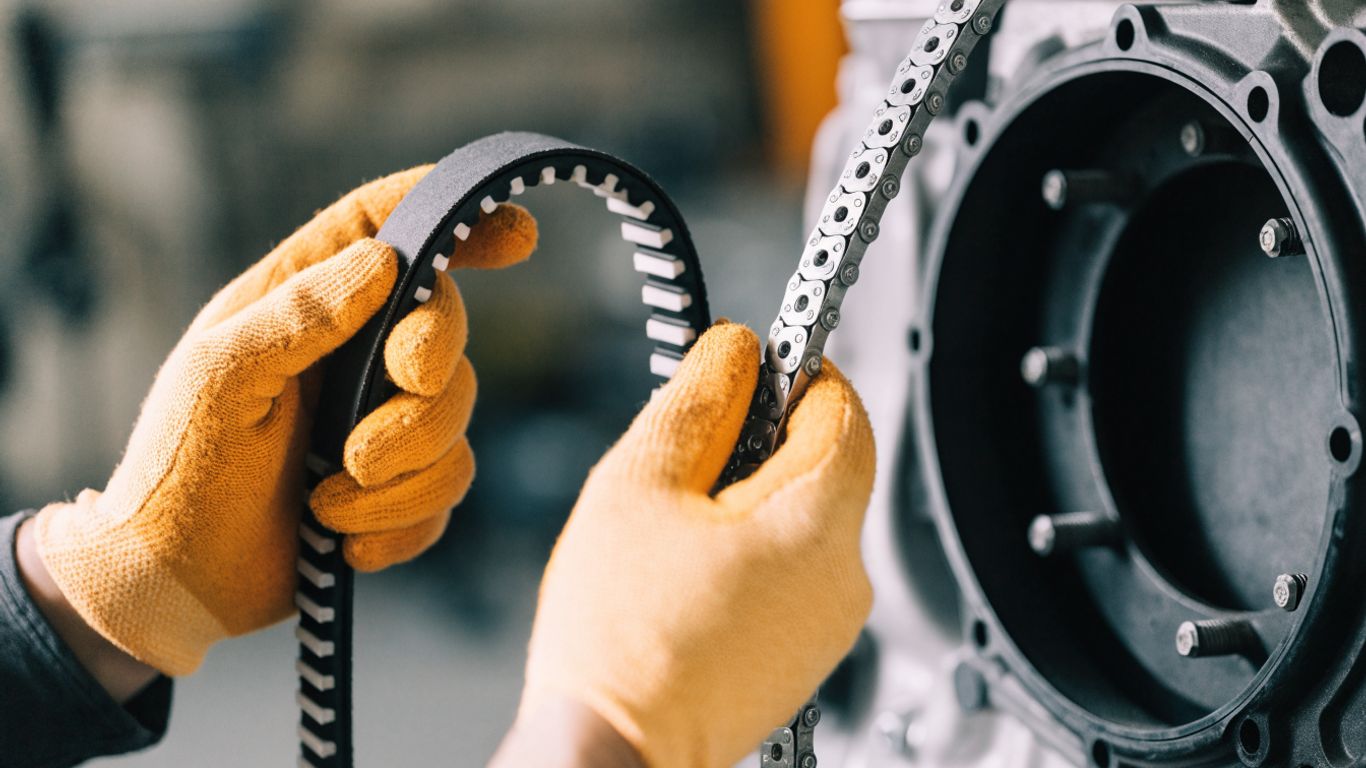
Belts and chains perform the same basic synchronization job, but they differ in construction and service needs. A chain-related problem may make noise as wear or slack develops, while a belt may deteriorate without an obvious sound beforehand. Neither pattern is universal: engine layout, maintenance history, and the condition of associated parts all influence what a driver notices. The distinction is one reason to confirm which system the specific vehicle uses rather than relying on a general rule.
Why a worn chain may produce noise before failure
A chain can become noisy when it has excess slack or when a tensioner or guide is no longer controlling its movement properly. In some cases the rattle is noticeable during start-up or at idle, giving the driver a reason to seek an inspection. Noise is not a reliable measure of how much life remains, however, and some faults may not announce themselves clearly. A new or worsening rattle deserves prompt attention, particularly if the engine also runs roughly.
Why a damaged belt can fail with little warning
A timing belt can wear or deteriorate without the kind of persistent metallic rattle associated with some chain problems. The belt is often hidden behind a cover, so visible wear may not be apparent during an ordinary walk-around. A belt that has reached its specified replacement interval should not be treated as safe simply because the engine sounds normal. Follow the maintenance schedule for the exact vehicle and engine.
How tensioners and guides affect the symptoms
Tensioners and guides help control movement in a timing system. If one wears or fails, a chain may become noisy or run with too much slack; belt tension problems can also interfere with correct operation. The symptoms may therefore come from a related component rather than from the belt or chain itself. Inspection should consider the whole assembly, not just the part named in the driver’s first suspicion.
Why symptoms vary by engine design
Engine designs differ in how their timing systems are arranged, what components are driven by them, and what happens if timing is lost. Some engines may suffer serious internal damage after a failure, while the consequences vary on others. The location of the system and access for inspection also differ, which affects what a technician can check without disassembly. For a useful comparison of construction and service needs, see belt-and-chain differences; the vehicle’s own service information remains the guide for its specific engine.
| What you notice | Possible timing-system clue | Why it needs checking |
|---|---|---|
| Rattle near the engine | Chain slack or a worn tensioner or guide | Other components can make similar sounds |
| Rough running or misfires | Timing may be out of position | Ignition, fuel, and sensor faults can look similar |
| Sudden engine stop | A belt or chain may have failed or shifted | The cause and risk of further damage need assessment |
| No obvious noise | A belt may still be due or damaged | Sound alone cannot confirm belt condition |
These are patterns to discuss with a technician, not a home diagnostic chart. In particular, a quiet engine does not rule out a belt that has reached its replacement interval.
What to do if you suspect timing system damage
Your next step depends on how the symptoms began and how severe they are. An engine that has stopped, developed a pronounced new rattle, or suddenly lost power should be treated cautiously. Continuing to drive or repeatedly starting it may increase the chance of further damage, depending on the engine and the fault. If you are unsure, stop somewhere safe and arrange professional advice.
When to stop driving and shut off the engine
Pull over safely and switch the engine off if it stops unexpectedly, makes a sudden harsh noise, or develops severe misfiring or loss of power. Do not continue a trip simply because the vehicle still moves; the condition may worsen without warning. If a warning light appears without any unusual running or noise, consult the owner’s manual and contact a repair professional for guidance. When in doubt, avoiding further engine operation is the cautious choice.
Why repeated starting attempts can worsen damage
If timing has shifted or a belt or chain has failed, cranking the engine again may move internal parts while they are no longer synchronized. The possible consequences depend on engine design, but repeated attempts do not establish whether the fault is minor or serious. If the starter turns and the engine does not catch after an unexpected stop, pause rather than trying again and again. Tell the technician what happened before the engine became unable to start.
How to arrange a safe inspection or tow
When the engine has stopped or is making a severe new noise, a tow is generally safer than driving it to a workshop. Contact roadside assistance or a towing provider and explain that you suspect a timing-system fault. Give the operator your location and vehicle details, and follow their instructions for moving the vehicle safely. A description of the symptoms can help the repair shop prepare, though it cannot replace an inspection.
What to tell the mechanic about the symptoms
A clear timeline can help a technician distinguish a sudden failure from a problem that developed gradually. Share what the vehicle was doing, what you heard or felt, and whether any warning light appeared. If useful, note the following before you call or arrive:
- When the noise or performance change first appeared.
- Whether it happened at start-up, at idle, or while driving.
- Any recent repairs, maintenance, or known oil leaks.
- Whether the engine stopped, restarted, or failed to start afterward.
Keep the details factual and avoid running the engine to collect more evidence. A short, accurate account is more helpful than a guess about which part failed.
How a mechanic diagnoses a damaged timing belt or chain
A mechanic combines the driver’s account with electronic checks and physical inspection. The goal is to determine whether timing is actually out of specification and, if so, what caused it. Similar symptoms can come from sensors, ignition, fuel delivery, or other engine components, so diagnosis should not begin and end with a code or a sound. A careful process helps identify the repair the vehicle needs rather than replacing parts based on assumption.
Scanning for fault codes and checking engine timing
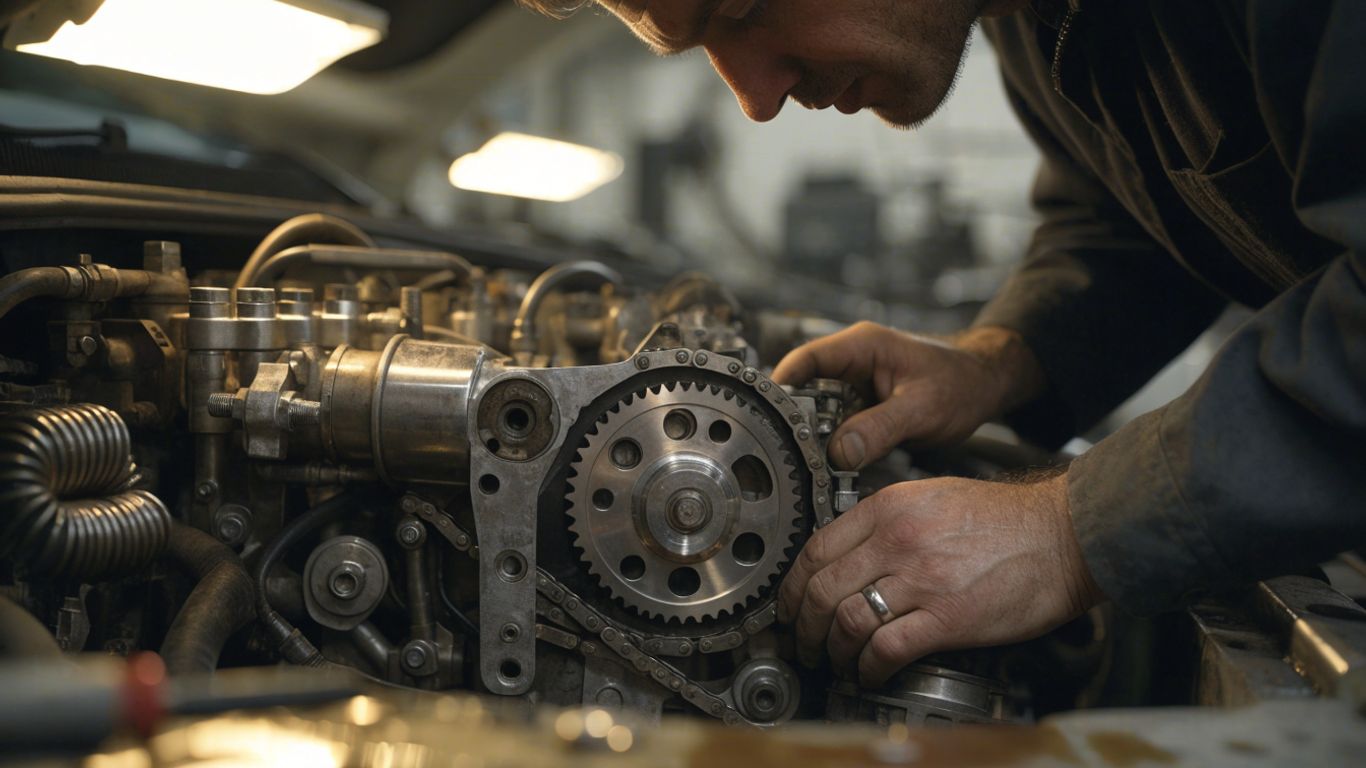
A scan tool can show stored trouble codes and relevant engine data, including codes that point to a mismatch between camshaft and crankshaft signals. The technician may then check mechanical timing against the manufacturer’s procedure. A code gives direction for further testing; it does not independently prove that a belt or chain is damaged. The findings need to fit the physical condition and the engine’s symptoms.
Inspecting belt condition, tension, or chain slack
Access to the timing system may require removing covers or other components, depending on the engine. Once accessible, a technician can inspect the belt for condition and proper tension, or assess chain slack and related movement using the appropriate procedure. Some damage cannot be assessed from an exterior glance, and a belt can be hidden from view during routine checks. The inspection should follow the vehicle maker’s guidance rather than a universal visual test.
Checking tensioners, guides, and related components
A belt or chain may not be the only part at fault. The mechanic can examine tensioners, guides, and other components that keep the timing system controlled and operating correctly. If one has failed or worn, replacing only the belt or chain may leave the original cause in place. Findings from those checks help determine the scope of repair.
Ruling out other causes of similar symptoms
Misfires, poor starting, and abnormal engine noises can have causes outside the timing system. A technician may test sensors, ignition components, fuel delivery, or other systems as appropriate to the vehicle and the evidence. That cross-check matters: replacing a timing component without confirming the cause can leave the original symptom unresolved. Search results can also be unrelated to engine diagnosis, including pages about Chainsaw Man, Mr Wet Wall, tuning file services, hand arthritis, and party rental bundles; rely on vehicle-specific service information for repair decisions.
Common causes and factors that increase failure risk
Timing-system wear can develop over time, but the reasons and warning signs differ between designs. Age and mileage matter for belts with specified replacement intervals, while chain-driven systems also depend on correct lubrication and the condition of their guides and tensioners. Leaks or neglected maintenance can add risk, though an inspection is needed to establish the actual cause. A history of routine service is useful evidence, not a guarantee that every component remains sound.
Age, mileage, and missed replacement intervals
A timing belt has a replacement interval set by the vehicle manufacturer, often based on both time and mileage. Rubber and reinforcing materials age in service, so a low-mileage vehicle may still reach its time-based limit. Check the service records and the schedule for the exact engine; intervals are not interchangeable across models. If the belt’s history is unknown, ask a qualified mechanic how to confirm its status.
Low or contaminated engine oil in chain-driven systems
Many chain-driven systems rely on engine oil to lubricate moving components and help hydraulic tensioners operate as intended. Low, degraded, or contaminated oil can affect those parts and may contribute to wear or abnormal operation. Check oil level and follow the manufacturer’s oil service recommendations, but do not assume that an oil change alone will correct a timing-system fault. If the engine is noisy or a warning is present, get it inspected.
Oil leaks and contamination around a timing belt
Oil leaking into an area where a timing belt runs can harm belt materials or contaminate components, depending on the engine design. A leak should be assessed and repaired rather than left to reach the belt. Because the system may be covered, a driver might not see contamination without an inspection. Mention any known leak or recent repair when discussing the vehicle’s symptoms.
Worn tensioners, guides, or water pump components
Tensioners and guides can wear with use and affect how the belt or chain is controlled. On some engines, a water pump is serviced alongside the timing belt, but whether that applies depends on the specific design and service procedure. A mechanic can identify which components are connected to the job and whether they show wear or leakage. Checking related parts can help avoid leaving an associated fault unaddressed.
Repair options and preventing future timing system problems
The right repair depends on inspection findings, the engine design, and the manufacturer’s service procedure. A damaged belt or chain may require replacement, but the technician should also identify why it failed or moved out of position. Service records and the correct parts specification matter, especially when the vehicle’s history is incomplete. After diagnosis, ask what was found and which related components are included in the recommended work.
When a belt or chain replacement is necessary
Replacement is appropriate when inspection confirms damage, excessive wear, or a fault that prevents the system from maintaining correct timing. A belt that has reached the vehicle maker’s replacement interval may also be due even if the engine appears to run normally. Chains are not automatically maintenance-free; their condition and associated components still need attention when symptoms or test results indicate a problem. The mechanic should explain the evidence and the relevant service guidance before work begins.
Why related components are often replaced together
Accessing the timing system can involve substantial disassembly, and related parts may have similar age or wear. Replacing a worn tensioner or guide along with the belt or chain may be recommended when inspection or the manufacturer’s procedure supports it. On some engines, the water pump may also be part of the same service plan. Ask the shop to distinguish required work from preventive recommendations and to explain why each item applies to your engine.
How to follow the manufacturer’s service schedule
Use the maintenance schedule for the exact vehicle, engine, and operating conditions rather than relying on a general mileage figure. Keep invoices and service records so future technicians can verify when timing work was done and which components were replaced. If the history is uncertain, ask the shop to check what can be established and whether preventive replacement is advised. For broader background on why these parts matter, see how timing components work.
What to verify after repair before driving
Before collecting the vehicle, ask what was replaced, what caused the original concern, and whether the repair followed the relevant service procedure. The shop should confirm the engine’s timing and check that it runs properly after assembly. Review the invoice and service recommendations, and ask about any remaining warning lights, noises, or follow-up work. If the same symptoms return, stop driving if they are severe and contact the repairer promptly.
Conclusion
Rattles, rough running, starting trouble, and sudden engine stoppage can all be signs of a timing-system problem, but none confirms the cause on its own. Because a belt or chain fault can have serious consequences, respond to severe symptoms by switching off the engine and arranging an inspection. A diagnosis based on the vehicle’s design, service history, and physical checks is the safest route to the right repair.
Frequently Asked Questions
Can a timing belt fail without warning?
Yes. A belt may deteriorate or fail without a clear noise beforehand, which is why following the vehicle manufacturer’s replacement schedule matters even when the engine seems to run normally.
What does a failing timing chain sound like?
Some chain-related faults can produce a rattle or slapping noise, often noticeable at start-up or idle. Similar sounds can come from other engine parts, so a mechanic should confirm the source.
Can a timing-system problem cause a check engine light?
It can. A fault that affects the relationship between camshaft and crankshaft signals may trigger a code, but a code alone does not prove the belt or chain is at fault.
Is it safe to drive with a timing chain rattle?
A new or worsening rattle should be checked promptly. If the noise is severe or the engine runs poorly, stop safely, switch it off, and arrange professional advice rather than continuing to drive.
Should I keep trying to start an engine that suddenly stopped?
No. If a timing component has failed or shifted, repeated cranking may worsen damage. Stop trying and arrange an inspection or tow, especially if the engine stopped unexpectedly while driving.
How can I tell whether my car has a timing belt or chain?
Check the owner’s manual, service records, or manufacturer information for the exact vehicle and engine. A mechanic can also identify the system during an inspection.
Do timing chains need maintenance?
They may not have the same scheduled replacement interval as some belts, but their condition still matters. Follow the vehicle’s oil service recommendations and have unusual noises or timing-related codes checked.