

Key Takeaways
Importing engine parts is easier to manage when you confirm requirements before buying and keep the paperwork consistent from order to delivery.
- Check the parts’ condition and current Australian biosecurity and import requirements before shipping.
- Gather precise product details so tariff classification and cost estimates are based on the actual parts.
- Make the invoice, packing list, and shipment contents agree.
- Choose transport and delivery terms that make responsibilities clear, and track the shipment.
- Keep clearance and purchase records, and check the delivery as soon as it arrives.
1. Check whether the engine parts can be imported
Before paying for an engine or component overseas, establish what it is, what condition it is in, and whether any Australian conditions apply. A complete vehicle and a part for a vehicle may be treated differently, so do not assume rules for importing a road vehicle apply to every engine component. Check current government requirements for the precise item and its condition, then get advice if the classification is unclear.
Identify whether the parts are new, used, or reconditioned
Condition affects what evidence a seller should provide and what cleaning or inspection may be needed. Ask whether the component is new, used, or reconditioned, and request clear details about its previous use, materials, and any residues or attached items. For a used engine, for example, identify whether fluids remain and whether dirt or organic matter is present. Record the condition in the purchase documents so there is a clear reference if the shipment is inspected or the delivered part differs from what was ordered.
Check biosecurity conditions in BICON
Australia’s Biosecurity Import Conditions system, BICON, is the place to check whether conditions apply to the goods you plan to import. Search using an accurate description of the part and review any requirements for its origin, condition, packaging, or treatment. If a result is unclear, do not rely on a seller’s assumption that a part is clean enough; confirm the applicable condition before shipment. This early check can help prevent avoidable delays when the goods arrive.
Confirm whether asbestos-related restrictions apply
Some imported goods can be subject to restrictions involving asbestos, so establish what the component contains rather than relying on a vague description such as “automotive spare.” Ask the supplier for a clear materials statement or other supporting evidence where relevant, especially for older or used components. Keep any declaration with the order records. If the supplier cannot confirm the material composition, seek guidance before dispatch rather than letting an uncertain item travel first and questions follow later.
Find out if permits or other approvals are required
Check whether the specific parts need a permit, approval, or other formal step before they are sent. Requirements can depend on the item and its circumstances, and a whole road vehicle may have separate approval requirements; official guidance on road vehicle import approvals explains that distinction. A broker or the relevant Australian authority can help resolve uncertain cases. Confirm the answer in writing and retain any approval documentation with the shipment file.
2. Classify the parts and estimate import costs
A reliable estimate starts with a precise description of what is being imported, not just the vehicle make or a broad label like “engine parts.” Gather the details a broker or customs authority may need, then check the classification and likely charges before committing to a purchase. Costs vary with the goods, their value, and the transport arrangement, so treat preliminary figures as estimates until confirmed.
Gather product details for tariff classification
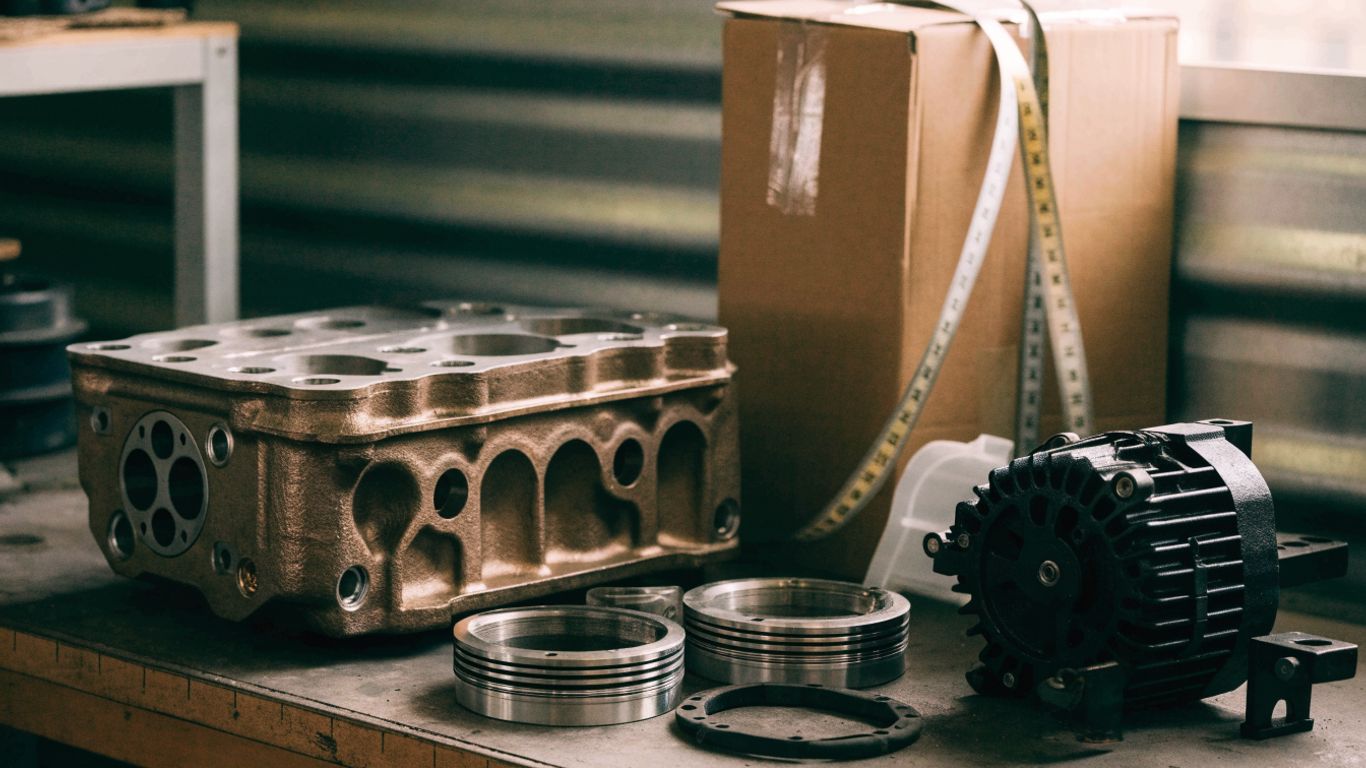
Write down the part’s function, material, make and model, condition, and any identifying numbers available. Include whether it is a complete engine, an assembly, or an individual component; that distinction may matter when someone assesses classification. Photographs and the supplier’s technical description can help clarify what the invoice wording means. Specific descriptions matter because a broad or inconsistent label can make it harder to verify classification and calculate charges accurately.
Check applicable customs duty and trade agreements
Once you have a proposed classification and origin, check the applicable customs duty and whether a trade agreement could affect the rate. Eligibility depends on the goods and the agreement’s requirements; the exporting country alone does not settle the question. For goods from the UK, this overview of the UK-Australia trade agreement provides context on automotive exports and origin rules. Confirm the current treatment for the actual parts with an official source or broker before using a rate in your budget.
Budget for GST, freight, insurance, and clearance fees
Duty is only one possible cost. Build an estimate that includes the purchase price and the other charges relevant to your shipment, then compare transport options on a like-for-like basis. The main cost categories to check are:
| Cost category | Details to confirm |
|---|---|
| Customs duty | Classification, origin, and any applicable preference |
| GST | Whether it applies and the basis used to calculate it |
| Freight and insurance | Route, dimensions, weight, and level of cover |
| Clearance and delivery | Broker, carrier, handling, and final delivery charges |
This breakdown helps reveal costs that a product listing or initial freight quote may not include. Ask which charges are estimates and which are fixed, and leave room in the budget for inspection, storage, or other delays if they arise.
Ask a customs broker to confirm the likely charges
A broker can review your description, supporting documents, and proposed tariff classification to give a more informed view of expected charges. Send the same information you plan to use on the invoice and transport documents, including the part’s condition, origin, and value. If you are importing a large item or buying through an overseas marketplace, include its packed dimensions and weight as well. A guide to importing engines from Japan offers additional context on condition checks, quarantine, and shipping costs, but confirm current requirements for your own shipment.
3. Choose a supplier and prepare the paperwork
A dependable order file begins with a supplier who can identify the exact part and document what is being sold. Check that the part number, condition, price, origin, and quantity are clear before arranging freight. If you are looking for classic vehicle components, Superformance describes import and parts-sourcing services in Australia. Superformance is one possible source to investigate; confirm the details of the specific item and order directly before making a decision.
Verify the supplier’s business and product details
Check that the business name, contact details, and payment instructions are consistent across the quote and invoice. Ask for photographs, part numbers, and a written description that distinguishes a new component from a used or reconditioned one. You can also ask how the seller will package the item and whether it can provide supporting declarations. Superformance describes services related to classic-vehicle parts sourcing, but whichever supplier you consider, verify the particular part and terms for your order rather than assuming every item is available or suitable.
Request an itemized commercial invoice
The invoice should identify each part in plain, specific language and show the quantity, unit price, currency, and total value. It should also name the seller and buyer and give enough detail to match the invoice to the shipment. Avoid descriptions that are so broad they could refer to many different items. If a supplier uses an abbreviated part name, request a fuller description and make sure any later documents use consistent wording.
Match the packing list to the shipment
The packing list should reflect what is actually packed: item counts, package counts, and, where available, weights and dimensions. Before dispatch, compare it with the invoice and the supplier’s final packing details. For a multi-part order, a short check of the paperwork can catch omissions while the goods are still at the seller’s premises:
- Match each part number to the invoice description.
- Confirm the quantity and package count.
- Check weights and dimensions against the freight booking.
- Note any separate boxes or components shipped later.
If the contents change during packing, request corrected documents before the shipment leaves. That simple step makes later checks and clearance questions easier to handle.
Collect certificates or declarations relevant to the parts
Ask whether the part requires a certificate, materials declaration, treatment record, or other supporting document based on its composition, condition, or import conditions. Do not request paperwork by habit alone; first identify what applies to the goods. Keep the supplier’s answers and any supporting certificates together with the invoice and packing list. If the supplier cannot provide a document that appears necessary, pause and confirm the requirement before the goods are sent.
4. Prepare engine parts for international shipping
Engine parts can be heavy, irregularly shaped, and vulnerable to contamination or damage in transit. Decide how each item will be cleaned, protected, and secured before the carrier collects it. Discuss any unusual shape, weight, or packaging with the freight provider in advance, and ensure that the final shipment description remains consistent with the import paperwork.
Remove dirt, grease, and other contamination from used parts
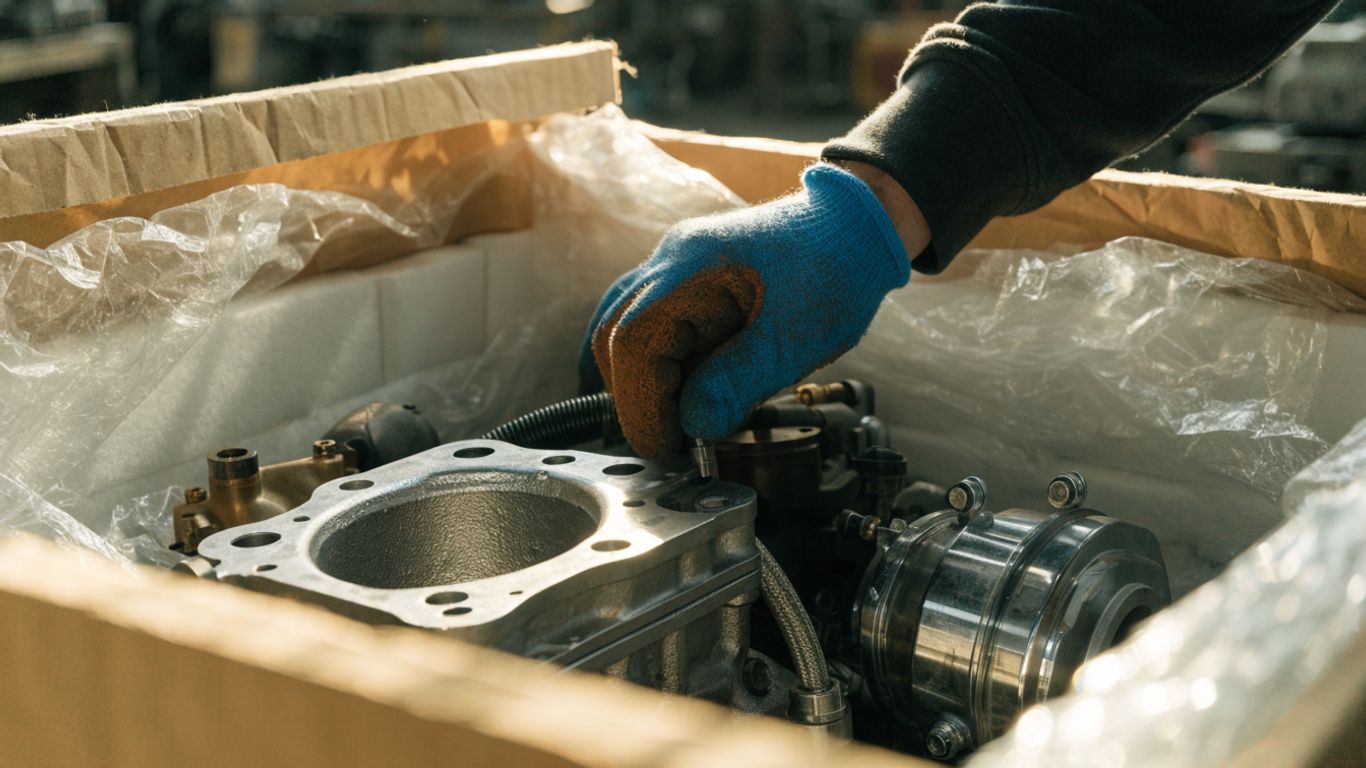
Used parts should be checked for soil, plant material, grease, and other residues that could create a biosecurity concern or complicate inspection. Ask the supplier to clean the component appropriately and to describe what was done; keep the part accessible for inspection if needed. Pay particular attention to recesses, seams, and attached materials where dirt can remain. Cleaning is not a substitute for checking BICON conditions, but arriving with a clean item can help avoid problems caused by preventable contamination.
Protect components against moisture and transport damage
Choose packaging that supports the component’s weight and protects exposed surfaces from impact, moisture, and movement. Small or fragile parts may need individual wrapping, while larger assemblies may need secure bracing or a suitable crate. Ask the carrier or packer what they accept for heavy mechanical goods, and do not rely on a thin carton for an item that could shift or puncture it. Photograph the packaged shipment before collection so its condition is documented.
Confirm packaging and labeling requirements with the carrier
Carriers can have requirements for weight limits, dimensions, packaging, and handling, and these can differ by service. Provide accurate measurements and explain whether the shipment contains an engine, a heavy assembly, or smaller components. Ask whether the carrier requires specific labels or handling details, and follow its instructions rather than guessing. Clear packaging details help the booking match the physical cargo and reduce the chance of a last-minute refusal or repacking request.
Check that the shipment details match the import documents
Before dispatch, compare the final package count, contents, description, and declared value with the invoice and packing list. Make sure the names and addresses are accurate and that any corrected documents replace earlier versions. If components are being shipped separately, the paperwork should make that clear. A final comparison is worthwhile: discrepancies can prompt follow-up from the carrier or customs, and are harder to correct once the cargo is moving.
5. Arrange transport and track the shipment
The right transport option depends on the part’s size, weight, urgency, and destination. Get quotes based on the packed shipment rather than a rough estimate of the part alone, and compare what each quote includes. For shipments from the United States, this car-parts shipping guide discusses shipping choices and cost factors; use a carrier’s current quote for your actual package.
Compare air freight, sea freight, and courier options
Air transport may suit smaller or time-sensitive items, while sea freight is often considered for larger cargo; courier services can be convenient for packages within their limits. Compare the expected transit time, price, collection arrangements, and any handling or delivery fees. The packed dimensions and weight can affect the available services, so ask the seller to measure before you choose. The lowest initial quote is not always the lowest total cost if it excludes handling or delivery to your address.
Choose an Incoterm that clearly assigns shipping responsibilities
An Incoterm sets out how responsibilities and costs are divided between the seller and buyer in an international sale. Confirm which version and named place apply, who arranges the main carriage, and who is responsible for export and import steps. Make sure you understand what is included in the quoted price and which tasks remain yours. Put the agreed term in the purchase documents so the supplier, carrier, and buyer are working from the same arrangement.
Confirm cargo insurance and delivery arrangements
Ask what insurance is included, what it covers, and whether the value and type of component are adequately declared. Confirm who will receive the shipment, whether delivery is to a business or residential address, and whether unloading equipment is needed for a heavy item. Check the delivery address and contact number against the booking. Clear arrangements before dispatch can prevent a freight delivery from being delayed because no one is available or prepared to receive it.
Track the shipment and respond to carrier requests
Use the carrier’s tracking information to monitor key scans and expected arrival dates. Keep an eye on email and phone messages in case the carrier requests documents or clarification. If there is a delay, ask what action is required and whether storage or other charges may accrue while the matter is resolved. For larger engine shipments, agree on who will monitor updates so a request does not sit unanswered while the cargo is waiting.
6. Complete Australian customs and biosecurity clearance
Clearance involves providing the required information, responding to requests, and paying applicable charges before the goods can be released. The exact process depends on the shipment and its circumstances, so follow the instructions from the relevant authorities, carrier, or broker. Have your commercial and transport documents ready and keep a copy of everything submitted.
Lodge the required import declaration
Confirm whether an import declaration is required for your shipment and who will lodge it. If you use a broker, provide complete and consistent information so the declaration reflects the goods accurately. Check details such as the importer, goods description, value, and origin before submission. Keep confirmation of the declaration with the rest of the import file, along with any reference numbers you may need when following up.
Provide invoices, transport documents, and supporting evidence
Authorities or your broker may request documents to support the declared goods and their value. Keep a readily accessible set of records so you can respond without having to reconstruct the order from email threads. Useful items may include:
- The commercial invoice and proof of purchase.
- The packing list and transport document.
- Product descriptions, part numbers, and photographs.
- Any applicable approvals, certificates, or declarations.
The documents should describe the same shipment in consistent terms. If a detail changes, provide the corrected version and explain the change rather than sending conflicting copies without context.
Arrange inspection or treatment if authorities require it
If an inspection or treatment is required, follow the directions given for the specific consignment and coordinate access with the carrier or broker. Ask what preparation is needed, where the inspection will take place, and who will arrange any required service. Do not assume the goods will be released immediately after arrival; a hold may continue until the requested step is complete. Keep records of notices, appointments, and treatment documentation for your files.
Pay applicable charges and address any customs holds
Review the charge notice or broker statement and ask for clarification if a line item is unfamiliar. Pay amounts due through the stated process, and keep proof of payment. If the shipment is held, find out what information or action is outstanding and who needs to provide it. Respond promptly and retain copies of communications, since notes and reference numbers help if the issue needs follow-up.
7. Receive the parts and keep import records
Once the shipment is released, check it promptly and preserve the paperwork that explains how it was purchased, transported, and cleared. The arrival check is also a chance to compare the order with what was delivered, before packaging is discarded or a discrepancy becomes harder to establish. Set up a simple file for each import, whether it is digital or on paper.
Check the delivery for damage or missing items
Compare the delivered packages with the packing list and inspect the exterior before signing where possible. Photograph visible damage, keep the packaging, and record missing or incorrect items as soon as you notice them. Check part numbers and quantities against the order, not just the package labels. If a component is heavy or difficult to unpack, note its condition before moving it so any transport damage is clearly documented.
Retain invoices, declarations, and clearance documents
Keep the commercial invoice, proof of payment, packing list, transport document, import declaration, receipts, and any approvals or inspection records together. A complete file makes it easier to answer later questions about value, origin, or the goods received. Follow any applicable record-retention requirements and keep copies in a secure, organized place. For future orders, these documents can also help you compare estimates with the charges that were actually incurred.
Resolve discrepancies with the supplier or freight provider
If the part is damaged, missing, or different from what you ordered, contact the appropriate party promptly and provide clear evidence. Send photographs, the relevant invoice or packing-list entry, and a short description of the problem. Keep communications factual and retain replies, claim references, and any agreed remedy. If the issue appears to have happened during transit, ask the carrier or insurer what evidence and deadlines apply.
Review the process before placing future orders
After the shipment is complete, compare the original estimate with the final cost and note where delays or extra steps occurred. Record which product details, documents, and packaging instructions worked well, and what you would ask the supplier or carrier next time. If you plan to import another part, recheck current conditions rather than assuming earlier requirements still apply. A short review now can make the next order more predictable without treating one shipment as a guarantee of another.
Conclusion
A smooth engine-parts import begins well before dispatch: identify the exact goods, confirm current Australian requirements, budget for the full landed cost, and keep the paperwork aligned with the shipment. Careful tracking and a prompt delivery check help close the loop and leave you with records for the next order.
Frequently Asked Questions
Do I need an import approval for an engine part?
It depends on the specific item and its circumstances. Check current official requirements for the part itself; do not assume that rules for importing a complete road vehicle automatically apply to an individual component.
Where can I check Australian biosecurity conditions?
Search the BICON system using an accurate description of the goods and review any conditions shown for the item. If the result is unclear, confirm the requirement with the relevant authority or a customs broker before shipping.
Can I import used engine parts into Australia?
Used parts may be importable, but their condition and cleanliness can affect requirements and handling. Check the conditions that apply to the specific goods and address contamination concerns before dispatch.
What information should be on the commercial invoice?
The invoice should clearly identify the seller, buyer, goods, quantities, unit prices, currency, and total value. Specific product descriptions make it easier to match the paperwork to the shipment.
How do I estimate the cost of importing engine parts?
Consider the purchase price, any applicable customs duty and GST, freight, insurance, brokerage, handling, and delivery charges. Ask a broker to review the classification and likely charges for the particular shipment.
Is air freight or sea freight better for engine parts?
It depends on the shipment’s weight, dimensions, urgency, and total cost. Compare quotes using the packed measurements and check what each service includes before choosing.
What should I do if my shipment is held at the border?
Contact the carrier or broker to identify the reason for the hold and what action is required. Provide requested documents promptly, follow any inspection or treatment directions, and keep copies of notices and payments.