

Key Takeaways
A long-lived engine usually comes down to consistent care rather than one complicated repair. Use the owner’s manual as your starting point, then build simple checks into your normal routine.
- Change engine oil and the filter according to the vehicle manufacturer’s schedule.
- Keep coolant, belts, hoses, filters, and other wear components in good condition.
- Drive smoothly and stay within the vehicle’s fuel, load, and towing recommendations.
- Treat warning lights, unusual sounds, smells, smoke, and vibrations as early clues.
- Arrange professional diagnosis when a problem is persistent, severe, or unclear.
Follow a reliable engine oil maintenance routine
Engine oil reduces friction, carries heat away from moving parts, and helps keep internal surfaces clean. Its protective qualities decline as it ages or becomes contaminated, so oil care should be one of the most dependable parts of your maintenance routine. The exact interval depends on the vehicle, oil, engine, and driving conditions. A useful overview of engine maintenance tips can provide additional general context, but your owner’s manual remains the final reference for your car.
Choose the right oil grade and specification
Start with the oil grade and performance specification listed in the owner’s manual or maintenance schedule. A different viscosity may not flow correctly at startup or under operating temperatures, while an incorrect specification may not provide the protection the engine was designed to receive. When topping up, use the same approved type whenever possible and avoid guessing based only on brand or price.
Check oil levels and condition between services
Park on level ground, switch off the engine, and allow enough time for the oil to settle before checking the dipstick, unless the vehicle uses an electronic measurement procedure. The level should sit within the marked range, not above the maximum line. Look for a sudden drop, a strong fuel smell, or a milky appearance, and remember that color alone does not reliably determine whether oil needs changing.
Replace the oil filter at the correct interval
A filter captures particles that could circulate through the lubrication system, but it has a limited service life. Replace it whenever the maintenance schedule calls for it and use a part that matches the engine’s specifications. Oil and filter changes are also covered in this oil and filter guide, which can help you understand the basic relationship between the two jobs.
For a quick planning reference, the maintenance schedule may be organized like this:
| Check or service | What to look for | When to act |
|---|---|---|
| Oil level | Level within the marked range | Top up with approved oil if low |
| Oil condition | Fuel smell, milky appearance, or debris | Arrange diagnosis if abnormal |
| Oil filter | Correct fit and service interval | Replace with the oil |
| Leaks | Fresh oil around the engine or beneath the car | Inspect promptly |
Use the table as a reminder, not as a substitute for the vehicle-specific schedule. If the engine is losing oil between services, find the cause rather than repeatedly treating the symptom with top-ups.
Recognize symptoms of low or contaminated oil
A low oil warning, ticking or knocking sound, burning-oil smell, visible leak, or new engine noise deserves prompt attention. Stop driving if the oil-pressure warning remains illuminated, because continuing to run the engine can cause severe damage. Early attention saves money when a small leak or incorrect level is corrected before lubrication is seriously compromised.
Keep the cooling system working efficiently
The cooling system controls engine temperature across cold starts, highway driving, heavy traffic, and hot weather. It relies on the correct coolant mixture, sealed hoses, a functioning thermostat, a clean radiator, and adequate airflow. Small leaks can become major problems, so inspect the system periodically rather than waiting for a temperature warning.
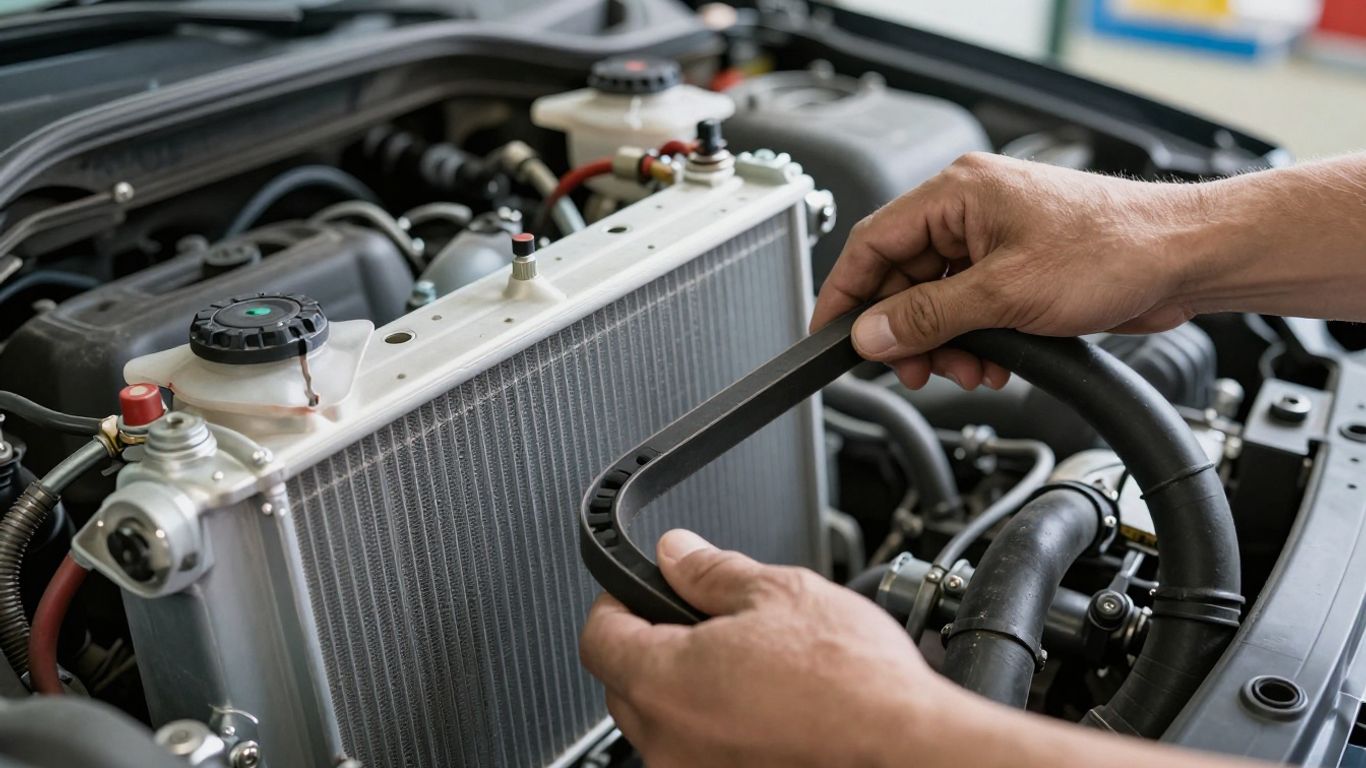
Monitor coolant levels and recommended mixture
Check the expansion tank only when the engine is cool, and keep the level between its markings. Use the coolant type and mixture specified by the manufacturer; mixing incompatible products or adding plain water repeatedly can reduce protection. Never remove a radiator or expansion-tank cap from a hot engine, since pressurized coolant can cause serious burns.
Inspect hoses, belts, the radiator, and the thermostat
Look for swollen, cracked, soft, or leaking hoses and inspect accessible belt surfaces for fraying or damage. Check the radiator area for leaks, blocked fins, or accumulated debris that restricts airflow. A thermostat that sticks open or closed can cause poor warm-up or overheating, so temperature changes that seem unusual should be investigated.
Prevent overheating during traffic and hot weather
Keep the radiator area clear and pay attention to coolant loss before a long trip. Heavy traffic, steep roads, high ambient temperatures, and a loaded vehicle all increase the cooling system’s workload. If the air conditioning suddenly performs differently alongside a rising temperature gauge, treat it as a possible warning rather than simply turning the system off and carrying on.
Respond safely when the temperature warning appears
A temperature warning or gauge entering the hot zone calls for immediate caution. Pull over safely, switch off the engine, and allow it to cool; do not open the cooling-system cap while it is hot. Once safe, look for obvious leaks or steam from a distance and arrange assistance if the warning returns or the coolant level is empty.
Maintain the air, fuel, and ignition systems
Combustion depends on a suitable supply of clean air, correctly metered fuel, and a reliable ignition system in gasoline engines. Restricted airflow, dirty injectors, worn spark plugs, or poor fuel can show up as hesitation, rough running, reduced power, or harder starting. Regular inspection helps separate ordinary service needs from faults that require testing.
Replace the engine air filter when necessary
The engine air filter keeps dust and debris out while allowing air to reach the engine. Follow the replacement interval, but inspect it sooner if you drive on dusty roads or notice restricted performance. A filter that is visibly loaded with dirt or damaged should not be left in place simply because the calendar interval has not arrived.
Keep fuel injectors and the fuel system clean
Use fuel that meets the vehicle manufacturer’s requirements and keep the fuel filler area clean so debris does not enter the system. Symptoms such as uneven idling, hesitation, or difficult starting can have several causes, including fuel delivery problems. Avoid assuming that an additive will solve a persistent fault; diagnosis is more useful when the symptom continues.
Inspect spark plugs and ignition components
Spark plugs wear gradually and can develop deposits, excessive gaps, or other damage. Inspect or replace them at the specified interval, and check ignition coils, wires where fitted, and electrical connections for signs of deterioration. Misfires should be addressed promptly because they can affect drivability and may damage emissions-control components.
Understand how poor fuel quality affects engine performance
Fuel that is contaminated or unsuitable for the engine can contribute to knocking, hesitation, rough running, or reduced performance. Use the octane rating and fuel type listed for the vehicle, especially when the engine is turbocharged or tuned for a particular specification. If symptoms begin directly after refueling, note the timing and seek advice before repeatedly adding products to the tank.
Replace essential fluids and wear components
Engine longevity also depends on systems connected to it. Transmission fluid, belts, seals, filters, and other components can affect starting, cooling, lubrication, and reliable power delivery. A broader set of essential fluid checks is useful when building a routine for the whole vehicle, not just the engine bay.
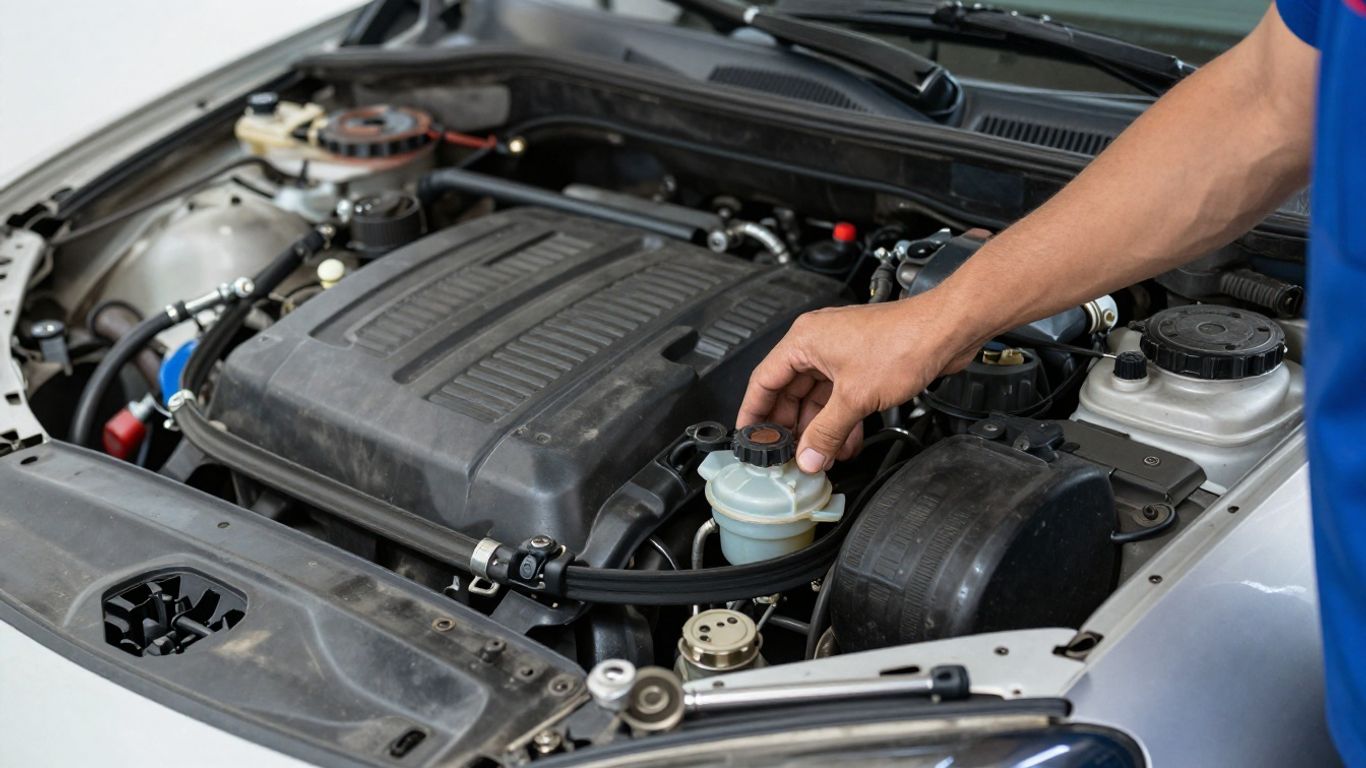
Check transmission, brake, power steering, and windshield washer fluids
Check each fluid using the method specified for that system, since some levels must be measured hot, cold, or with the vehicle positioned in a particular way. Use only the recommended fluid and never treat a falling level as normal without looking for a leak. Brake and transmission concerns deserve particular care because incorrect fluid or low level can affect safety as well as mechanical operation.
Inspect serpentine belts and timing belt service requirements
The serpentine belt drives accessories such as the alternator and, on some vehicles, the water pump. Cracks, glazing, fraying, or chirping noises call for inspection. A timing belt has a specified replacement interval even when it looks acceptable, and missing that service can lead to major engine damage on engines where belt failure affects valve timing.
Replace worn filters, seals, and gaskets promptly
A dirty cabin filter may not damage the engine directly, but an overdue engine air filter can restrict airflow. Oil seals, coolant hoses, gaskets, and other sealing parts should be replaced when they leak or deteriorate. Prompt repairs help prevent fluid loss from becoming overheating, lubrication failure, or contamination.
Use the vehicle manufacturer’s maintenance schedule
The manufacturer’s schedule brings together time, mileage, operating conditions, and component-specific service needs. Keep receipts and note the date, mileage, parts, and fluids used so the next decision is based on a clear record. A practical car maintenance checklist can supplement that record, but it should not override the schedule written for your particular vehicle.
Adopt driving habits that reduce engine wear
Maintenance cannot compensate for every harsh driving habit. Cold starts, repeated hard acceleration, excessive idling, heavy loads, and unsuitable driving modes can increase stress on the engine and drivetrain. Gentle, deliberate driving is easier on components and often makes emerging problems easier to notice.
Warm up the engine without excessive idling
After starting, allow the engine a brief moment to stabilize, then drive gently until it reaches normal operating temperature. Long periods of stationary idling waste fuel and do not warm every component evenly. In cold weather, clear windows safely and avoid high engine speeds until the vehicle has warmed through normal driving.
Accelerate, brake, and shift smoothly
Smooth inputs reduce abrupt changes in engine speed and drivetrain load. Automatic-transmission drivers should avoid switching rapidly between drive and reverse before the vehicle stops, while manual drivers should select an appropriate gear rather than forcing the engine to labor. You do not need to drive unnaturally slowly; consistency is the goal.
Avoid overloading and towing beyond rated limits
Use the vehicle’s stated payload and towing limits, including passengers, cargo, and trailer weight. Excess load raises demands on the engine, cooling system, transmission, brakes, and tires. If towing is regular, follow the manufacturer’s instructions for equipment, servicing, and driving conditions instead of relying on a generic rule.
Use the correct fuel and drive mode for conditions
Choose the specified fuel and select a drive mode that suits the road, weather, and load. Sportier settings may hold gears or sharpen responses, while economy settings may change throttle and shift behavior; neither replaces good judgment. On slippery or steep roads, prioritize control and follow the vehicle’s instructions rather than chasing quick acceleration.
A sensible routine behind the wheel can be summarized in a few habits:
- Drive gently until the engine reaches normal temperature.
- Avoid repeated hard launches and unnecessary high revs.
- Keep loads and trailers within the rated limits.
- Match fuel and drive mode to the vehicle and conditions.
These habits are simple, but they reduce avoidable stress between scheduled services. They also make it easier to distinguish a genuine mechanical change from normal variation in how the car is being used.
Detect problems before they cause major damage
Early diagnosis is often less expensive and less disruptive than waiting for a breakdown. Pay attention to changes that repeat, appear together, or worsen under particular conditions. Write down when a symptom occurs, what the engine was doing, and whether any dashboard message appeared; that information can shorten the inspection.
Pay attention to warning lights and dashboard messages
A warning light is not merely a service reminder. Read the message, check the owner’s manual, and determine whether the light is steady or flashing. A flashing engine warning, oil-pressure warning, or temperature warning generally calls for stopping safely and seeking prompt assistance rather than continuing a normal trip.
Identify unusual noises, smells, smoke, and vibrations
New tapping, knocking, squealing, grinding, burning smells, exhaust smoke, or strong vibrations can point to problems that need attention. Note whether the symptom appears during startup, acceleration, braking, turning, or idling. Do not place hands near belts, fans, or hot components while investigating under the hood.
Track changes in fuel economy and engine performance
A gradual drop in fuel economy may reflect tire pressure, traffic, weather, driving style, or a developing mechanical issue. Hesitation, weak acceleration, rough idle, hard starting, and increased oil consumption are more useful when recorded over time. Comparing your notes with service dates can reveal patterns that a single drive might hide.
Know when to use a professional mechanic
Use a qualified mechanic when a warning persists, a fluid is leaking, the engine overheats, a misfire continues, or the cause is beyond a safe visual inspection. Diagnostic equipment and proper testing are preferable to replacing parts at random. Stop driving and arrange help when the car is unsafe, losing vital fluid, or making a severe mechanical noise.
A short video on routine checks can be a useful visual refresher after you have read the vehicle’s own instructions.
Conclusion
How to maintain your car engine for long life is ultimately a matter of steady oil, cooling, fluid, filter, and belt care combined with sensible driving and early response to symptoms. Keep accurate records, follow the manufacturer’s schedule, and ask for professional help before a small warning becomes an expensive failure.
Frequently Asked Questions
How often should I change my engine oil?
Follow the mileage or time interval in the vehicle manufacturer’s maintenance schedule, using the shorter interval when the schedule distinguishes severe driving conditions. Check the level between services and respond to leaks or warning lights sooner.
Should I check the engine oil when the engine is hot?
Use the method in the owner’s manual. Many vehicles are checked on level ground after the engine has been switched off briefly, while some systems specify a different procedure.
Can I use water instead of engine coolant?
Water may be an emergency short-term measure in limited circumstances, but it does not provide the same freeze, corrosion, and boiling protection as the specified coolant mixture. Correct the mixture as soon as possible.
What does an overheating warning mean?
It means the engine temperature may be too high. Pull over safely, switch off the engine, keep away from hot pressurized components, and arrange assistance if the warning does not resolve after cooling.
How do I know when an air filter needs replacement?
Use the scheduled interval and consider earlier inspection if you drive in dusty conditions. A visibly dirty, damaged, or restricted filter should be evaluated rather than left in service automatically.
Is a short warm-up necessary before driving?
A brief stabilization period is generally sufficient for most modern vehicles. Drive gently until normal temperature is reached instead of idling for a long time.
When should I stop driving and call a mechanic?
Stop when the engine overheats, the oil-pressure warning remains on, a warning light flashes, a serious leak appears, or the engine makes a severe new noise. Continuing can turn a manageable fault into major damage.