

Key Takeaways
Engine knocking can come from a combustion problem, overheating, poor lubrication, or worn internal parts. The sound’s timing, conditions, and severity help narrow the cause, but persistent knocking deserves prompt diagnosis.
- Low-octane fuel, carbon deposits, and incorrect ignition timing can disturb combustion.
- A lean mixture and excessive heat may cause pinging during acceleration.
- Low oil, bearing wear, piston slap, and valve train damage can create deeper mechanical knocks.
- Faulty injectors, spark plugs, or ignition components may make the engine run unevenly.
- Stop driving and seek professional help if the noise is loud, worsening, or accompanied by low oil pressure.
1. Low-octane or poor-quality fuel
One of the most common reasons for engine knocking noise is fuel that does not suit the engine or has degraded in storage. When the fuel-air mixture ignites too easily under compression, combustion can become rough instead of progressing smoothly from the spark. Drivers often hear this as a light metallic ping during acceleration, hill climbs, or heavy engine load.
Check the owner’s manual for the recommended octane rating before assuming premium fuel is the answer. If the noise began soon after refueling, contaminated or stale fuel is also worth considering. A reputable repair shop can test the fuel system and confirm whether the problem is combustion-related rather than immediately replacing parts.
Avoid hard acceleration until the cause is clear, especially if the sound becomes louder with engine load. A short-lived ping after questionable fuel may disappear after the tank is diluted with suitable gasoline, but repeated knocking should not be treated as harmless. A broader engine knock diagnosis guide can help you compare the sound and circumstances before arranging an inspection.
2. Carbon buildup inside the combustion chamber
Carbon deposits can accumulate on the piston crown, cylinder head, or valves over time. These deposits may raise the effective compression or create hot spots that ignite part of the mixture before the intended flame front reaches it. The result can be a pinging noise, rough running, or reduced performance under load.
The pattern matters. Carbon-related knock is often more noticeable when the engine is hot and the throttle is open, while an unrelated mechanical tap may continue at idle. Do not try to scrape deposits through an accessible opening or pour an unapproved cleaner into the tank without checking the vehicle manufacturer’s guidance.
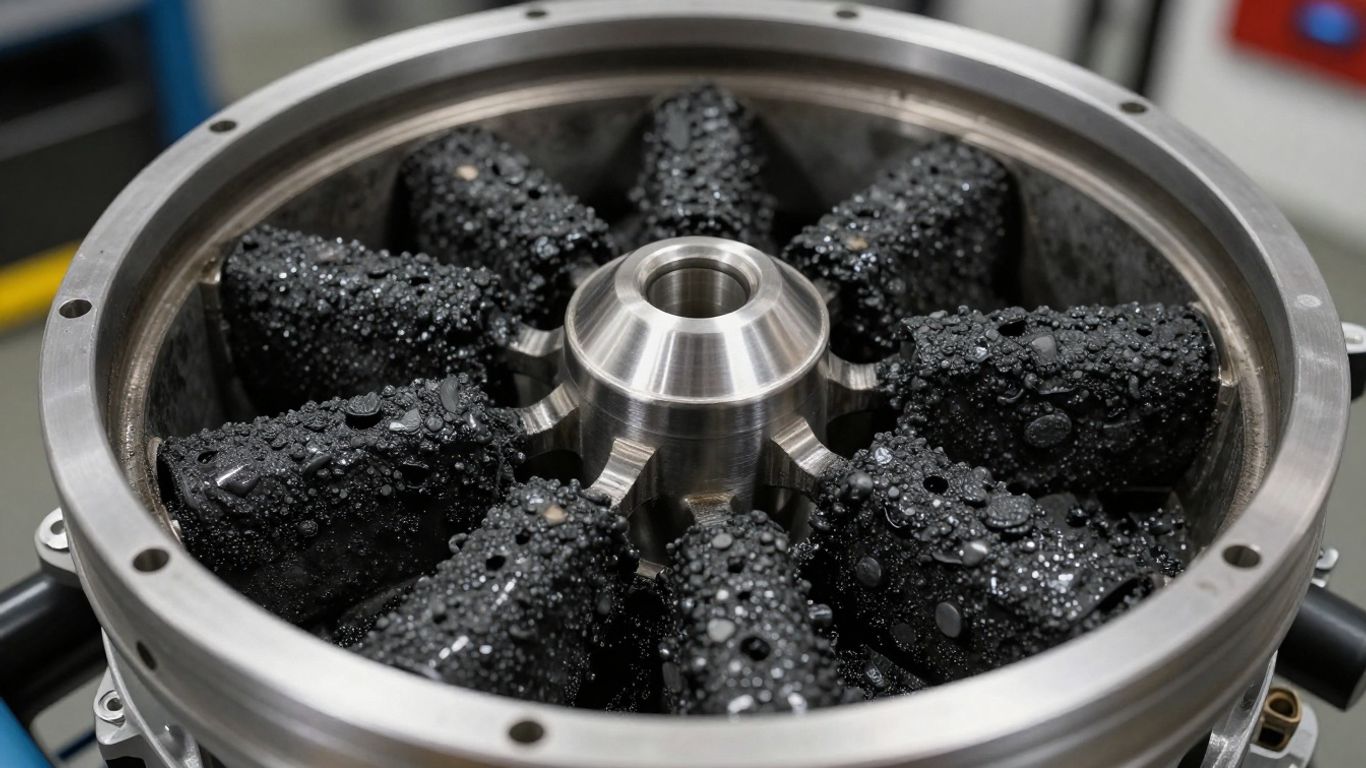
A technician can inspect for deposit-related problems and decide whether a cleaning procedure is appropriate. The right repair depends on the engine design and the severity of the buildup; treating the symptom with higher-octane fuel alone may only mask the underlying issue.
3. Incorrect ignition timing
Spark timing determines when combustion begins in relation to piston movement. If the spark occurs too early, cylinder pressure can rise while the piston is still traveling upward, producing a sharp knock under load. Problems with timing sensors, control systems, or mechanical timing components can all deserve attention.
Modern engines usually adjust timing electronically, so a diagnostic scan is often more useful than trying to turn a distributor by hand. Fault codes, live data, and a road test can reveal whether timing is being commanded incorrectly or whether another fault is causing the control unit to compensate.
The following clues can help distinguish a timing-related complaint from a constant internal engine noise:
| Clue | What it may suggest | Useful next step |
|---|---|---|
| Knock only during acceleration | Timing or fuel-load issue | Scan and road-test the vehicle |
| Rough idle with warning light | Sensor or ignition fault | Check codes and wiring |
| Noise after recent repair | Timing installation problem | Recheck component alignment |
| Knock with overheating | Excessive combustion temperature | Test cooling system promptly |
These clues are not a substitute for testing, but they make the conversation with a technician more precise. If the sound appeared after belt, chain, sensor, or engine-control work, mention that history before any parts are changed.
4. A lean air-fuel mixture
An engine runs lean when it receives too much air or too little fuel for the operating conditions. A vacuum leak, restricted injector, weak fuel delivery, or inaccurate airflow measurement can contribute. Because a lean mixture burns hotter, it may encourage pinging during acceleration and can sometimes bring hesitation or surging with it.
Listen for changes when the engine is cold compared with fully warmed up. A lean condition may also show up through a warning light or fuel-trim readings, though the absence of a warning light does not rule it out. Guessing at the cause by replacing injectors first can become expensive quickly.
Testing should cover intake leaks, fuel pressure, injector operation, and relevant sensors. Once the mixture is corrected, the knock may disappear, but any damage caused by prolonged overheating or detonation still needs to be assessed. Continued driving under heavy load is a poor choice while the mixture remains unknown.
5. Engine overheating
Excessive engine temperature makes knock more likely because hot combustion-chamber surfaces and incoming air can promote abnormal ignition. Cooling-system faults may include low coolant, a failing thermostat, a damaged water pump, a blocked radiator, or a cooling fan that does not operate correctly. The noise may arrive alongside a rising temperature gauge or a warning message.
If the temperature gauge is climbing, pull over safely and switch the engine off. Never remove a hot radiator cap, since pressurized coolant can cause severe burns. Allow the engine to cool before checking for obvious leaks, and do not continue driving simply because the gauge briefly returns to normal.
A cooling-system inspection should happen before chasing fuel or ignition adjustments. Overheating can also warp components or damage the head gasket, turning an initially manageable fault into a major repair. Any coolant loss, steam, sweet smell, or repeated temperature spike warrants prompt attention.
6. Low engine oil or poor lubrication
Oil protects bearings, camshaft surfaces, piston components, and other moving parts from direct metal-to-metal contact. When the level is low, the oil is badly degraded, or pressure is insufficient, parts may tap or knock as lubrication breaks down. A low-oil warning light is especially serious and should not be ignored.
Check the level on flat ground with the engine off, following the procedure in the owner’s manual. Look underneath for leaks and notice whether the oil appears unusually thin, dirty, or contaminated. Adding the correct oil may be an emergency measure, but it does not repair a leak, failing oil pump, or worn bearing.
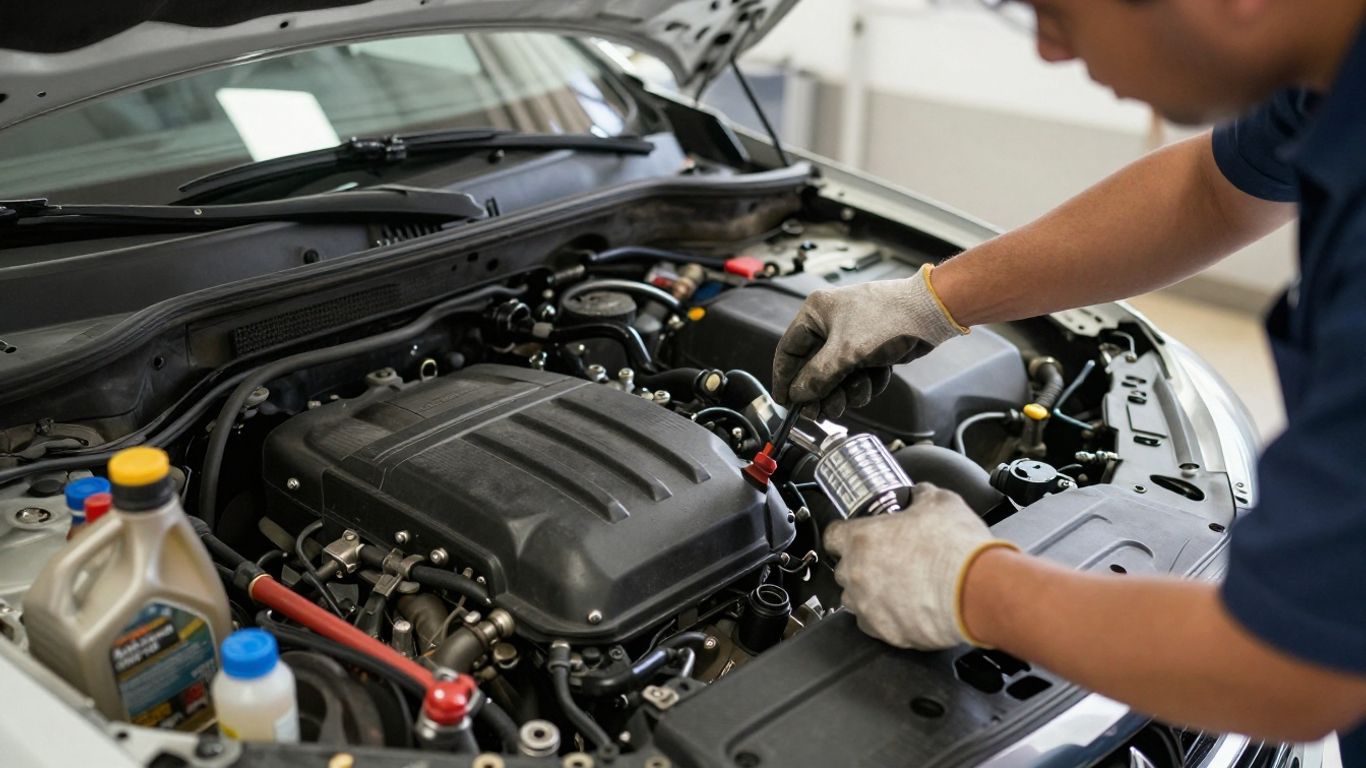
A deep knock that rises with engine speed can indicate internal damage rather than a simple low level. Shut the engine down if the oil-pressure warning appears, the sound is heavy, or the level is dangerously low. A mechanic may need to measure oil pressure and inspect the filter, sump, bearings, and other lubricated components.
7. Worn connecting rod bearings
Connecting rod bearings allow the rods to move smoothly on the crankshaft journals. With wear, excess clearance can let the rod move more than it should, creating a deep rhythmic knock. The sound often becomes more apparent when the engine is loaded or when the throttle is opened briefly.
This kind of knock is more urgent than a mild cold-start tick. Continued operation can damage the crankshaft and, in severe cases, lead to catastrophic engine failure. Oil pressure may be low, but a normal-looking dipstick reading does not rule out bearing wear.
When a technician is narrowing down a suspected bearing problem, several observations are useful:
- Whether the knock follows engine speed rather than road speed.
- Whether it grows louder under acceleration or load.
- Whether the oil contains metallic particles.
- Whether oil pressure is below the manufacturer’s specification.
Those signs help determine whether the engine should be tested in place or removed for internal inspection. Avoid revving the engine to reproduce a serious knock; that test can increase the damage you are trying to diagnose.
8. Piston slap from worn engine components
Piston slap occurs when clearance between a piston and its cylinder becomes excessive. The piston can move sideways and contact the cylinder wall, producing a hollow skirt-like slap. It is often loudest during a cold start and may become quieter as the piston and cylinder warm and expand.
Piston slap can resemble other noises, including a wrist-pin problem, a loose accessory, or a lower-end knock. Its location, temperature pattern, and frequency matter more than the word “slap” used to describe it. A listening tool and compression or leak-down testing may help separate it from combustion knock.
Some wear is manageable for a period, while severe clearance can increase oil consumption, blow-by, and cylinder damage. If the engine is smoking, losing power, or using oil rapidly, schedule a proper assessment rather than relying on the change in sound after warm-up.
9. Damaged valve train parts
The valve train includes components such as lifters, rocker arms, camshaft lobes, springs, and valves. Wear, poor lubrication, incorrect adjustment, or a damaged component can produce a fast tapping or knocking sound from the top of the engine. The noise may be strongest at idle or immediately after startup.
A valve train noise usually has a different character from deep connecting-rod knock, but sounds travel through an engine and can be misleading. A blocked oil passage or low oil pressure can affect several upper-engine components at once. Recent maintenance, unusual oil sludge, and changes in the noise after warming up are useful details to report.
Inspection may involve removing a cover, checking clearances, verifying oil flow, and examining cam and follower surfaces. Do not assume an oil additive will solve a worn or broken part. If a valve cannot open or close correctly, continued driving may cause misfire, poor compression, or further mechanical damage.
10. Faulty fuel injectors or ignition components
A weak spark, damaged spark plug, failing ignition coil, or injector that delivers fuel inconsistently can make combustion uneven. The driver may describe the result as a knock, although the underlying sound could be a misfire, rough combustion, or a vibration from the engine running on fewer cylinders. Warning lights, hesitation, and poor fuel economy often provide additional clues.
Start with basic diagnosis rather than replacing every ignition part at once. A scan can identify misfire patterns, while inspection of plugs, coils, injector operation, wiring, and fuel pressure can narrow the fault. If the engine is shaking or the warning light is flashing, reduce load and stop driving when safe because unburned fuel can damage the emissions system.
A clear repair history makes diagnosis faster, particularly if the issue began after a tune-up, fuel-system service, or electrical repair. For context, this engine knocking reference explains why abnormal combustion can sound metallic, while a separate car knocking troubleshooting guide discusses several mechanical possibilities. The practical answer is still the same: identify whether the noise comes from combustion, accessories, or internal contact before authorizing repairs.
Conclusion
The reasons for engine knocking noise range from unsuitable fuel and carbon buildup to overheating, lubrication failure, and serious internal wear. Note when the sound occurs, check warning lights and fluid levels safely, and avoid hard driving until the cause is known; a prompt inspection can prevent a small fault from becoming an engine replacement.
Frequently Asked Questions
Is engine knocking always a serious problem?
Not always, because a brief light ping may come from fuel or operating conditions. Persistent, loud, or deep knocking can indicate serious damage and should be checked promptly.
Can bad gasoline cause an engine to knock?
Yes. Fuel with an unsuitable octane rating, contamination, or age-related degradation can contribute to abnormal combustion and a metallic ping under load.
Can low oil make an engine knock?
Yes. Low oil or insufficient oil pressure can deprive bearings and other moving parts of lubrication, allowing damaging contact and producing a deeper knock.
Is engine knock the same as pre-ignition?
No. They are related abnormal-combustion events but are not identical. Proper diagnosis requires considering ignition timing, mixture, temperature, and engine operating conditions.
Should I drive with a knocking engine?
Avoid driving if the knock is loud, worsening, accompanied by an oil-pressure or temperature warning, or paired with a flashing check-engine light. Continued operation can increase repair costs.
How can a mechanic locate the source of a knock?
A mechanic may combine listening tests with a scan, oil-pressure measurement, cooling-system checks, ignition and fuel tests, and compression or internal inspection as needed.
Can changing spark plugs fix engine knocking?
It can help when worn plugs or an ignition fault is causing incomplete or uneven combustion, but spark plugs will not correct low oil, bearing wear, overheating, or other mechanical problems.