

Key Takeaways
A car that refuses to start usually gives you a useful clue through its silence, clicks, cranking speed, warning lights, or smell. Work from the safest and simplest checks toward more involved diagnosis, and stop when fuel, electricity, or moving parts create a hazard.
- Note exactly what happens when you turn the key or press the start button.
- Check the battery, terminals, gear position, fuel level, and obvious damage first.
- Treat silence, clicking, slow cranking, and normal cranking as different symptoms.
- Avoid repeated attempts that can drain the battery or damage the starter.
- Call for professional help when the problem involves unsafe wiring, fuel leaks, or uncertain engine damage.
Start with basic safety and symptoms
Before trying to solve the problem, make the situation safe and collect a few clues. Park away from moving traffic if possible, switch on hazard lights, and keep the vehicle secure. The sound you hear matters because a silent starter points to a different group of faults than an engine that cranks normally.
Move the car to a safe location
If the car has stopped in traffic, move it only if it can roll safely and you have enough control. Turn on the hazard lights, set the parking brake, and leave the vehicle if remaining inside would expose you to traffic or severe weather. Never push a car onto a road without enough people and visibility to control it.
Check what happens when you turn the key
Turn off the radio and climate controls, then make one deliberate starting attempt. Notice whether the dashboard goes dark, the starter stays silent, a single click occurs, rapid clicks occur, or the engine turns at its normal speed. If the engine cranks but does not catch, move to fuel, spark, air, and security checks rather than treating it as a simple dead battery.
Look for warning lights and unusual sounds
Scan the instrument panel before and during the attempt. A security light, battery warning, check-engine light, or unusual temperature warning can narrow the search, although a light by itself does not identify the failed part. Listen for grinding, whining, a fuel-pump hum, or a sharp electrical snap.
Confirm the vehicle is in park or neutral
Automatic vehicles generally need to be in Park or Neutral before the starter will operate. Press the brake firmly and move the selector through the positions before returning it to Park, then try Neutral if the vehicle manual permits it. For a manual transmission, press the clutch fully and make sure the gear lever is in neutral.
Inspect for obvious leaks or damage
Look beneath the vehicle and around the engine bay for fresh fuel, oil, coolant, or damaged wiring. Do not start the engine or use a jump lead near spilled fuel. A record of visible symptoms can also help with unrelated troubleshooting habits, such as keeping an email delivery checklist when a problem needs to be reported clearly.
Diagnose a car that makes no sound
When turning the key produces no click and no crank, start with the electrical path to the starter. The battery may be discharged, a connection may be open, or the car may not be receiving the start command. Work slowly, because replacing a starter before checking power and fuses can waste time and money.
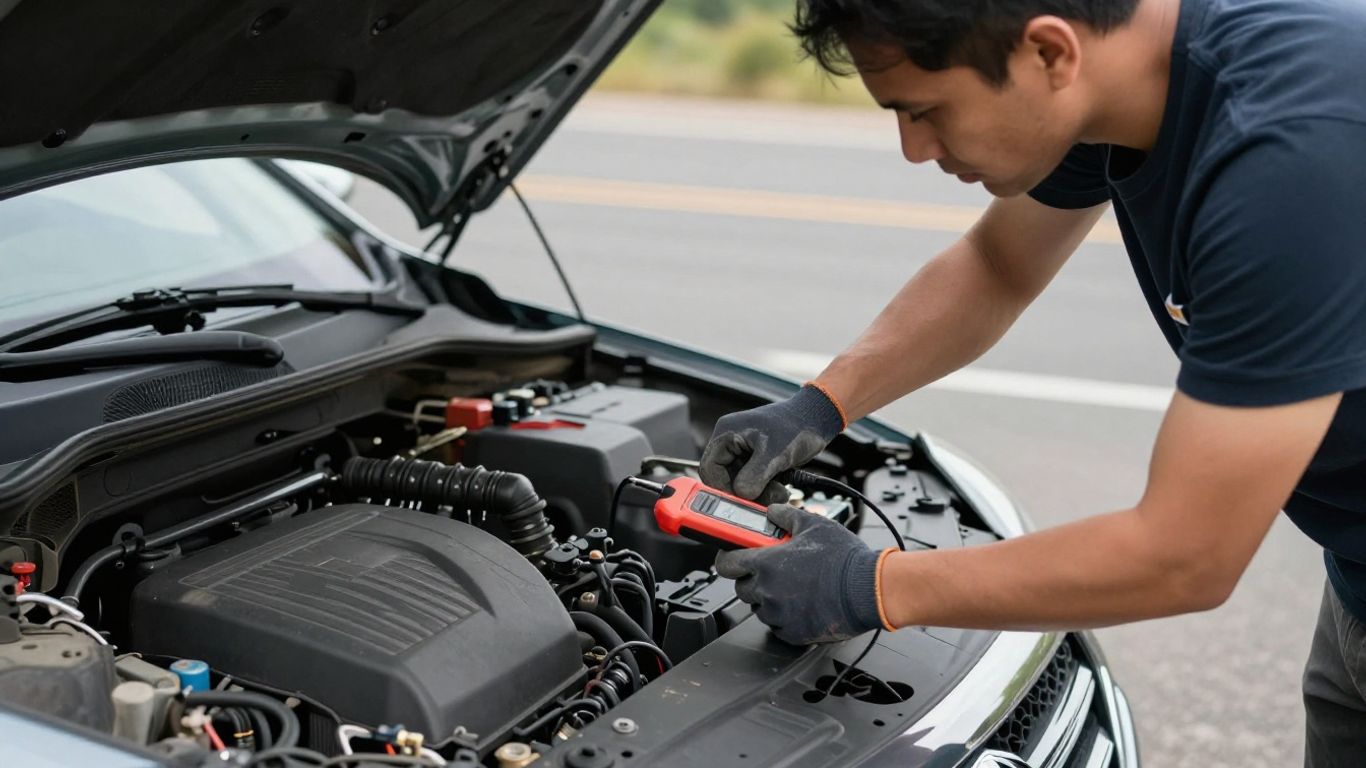
Test the battery and battery terminals
Turn on the headlights and observe their brightness, then try the starter. Very dim lights or a dashboard that goes dark suggest low battery voltage or a poor connection. Look for loose clamps, white or blue-green corrosion, and a swollen or cracked battery case; a damaged battery should not be jump-started.
Check for a faulty starter motor
If the lights remain bright but the starter is silent, the starter motor, solenoid, or its wiring may be at fault. A mechanic can test whether voltage reaches the starter when the key is turned. Do not strike the starter or crawl beneath the car unless it is properly supported and the procedure is safe for that vehicle.
Inspect the ignition switch and fuses
A worn ignition switch may power accessories while failing to send the start signal. Check the owner’s manual for starter, ignition, and engine-control fuses, and inspect them with the vehicle switched off. Replace a fuse only with the specified rating; a replacement that blows immediately signals a deeper electrical fault.
Try starting the car in neutral
A faulty park/neutral safety switch can prevent cranking even when the battery is healthy. Hold the brake, select Neutral, and make one brief attempt. If it starts in Neutral but not Park, avoid relying on that workaround and arrange an inspection of the selector or switch.
Recognize when a jump-start may help
A jump-start is reasonable when the battery is discharged, the terminals are sound, and there is no swelling, leakage, burning smell, or exposed damage. Follow the vehicle manual and cable order carefully, and keep the cable clamps from touching. If the car starts, have the battery and charging system tested rather than assuming the issue is solved.
Troubleshoot a clicking or slow-cranking engine
Clicking usually means the starter is receiving some power but not enough usable current, although a starter or solenoid can create similar symptoms. Rapid clicking commonly accompanies low voltage or poor connections, while one heavy click can point toward the starter circuit. Compare the sound with the brightness of the interior lights and headlights.
Distinguish a weak battery from a bad connection
A weak battery often makes lights dim as the starter engages. A bad connection can produce the same symptom, especially when a terminal is loose or corrosion sits between the clamp and post. Gently check whether the clamps move; do not short the terminals with a tool or touch both battery posts at once.
Clean corroded battery terminals
Switch the vehicle off and wear eye protection and gloves. Disconnect the negative cable first when the vehicle procedure allows, clean corrosion with a battery-terminal brush, and reconnect the cables securely, positive first and negative second. If corrosion returns quickly, the battery, charging system, or cable may need professional testing.
Check the battery voltage
A multimeter provides a better answer than dashboard brightness. With the car off, a healthy fully charged battery is commonly near 12.6 volts, while a much lower reading suggests discharge; the exact reading varies with temperature and battery condition. Voltage can look acceptable until a load is applied, so a proper load test remains useful.
A simple symptom guide can keep the next decision practical:
| Symptom | More likely area | First sensible check |
|---|---|---|
| Rapid clicking | Low voltage or poor connection | Battery charge and terminals |
| One heavy click | Starter or solenoid circuit | Cable voltage and starter test |
| Slow, labored crank | Weak battery, cable, or engine resistance | Battery load test and connections |
| Normal crank, no start | Fuel, spark, air, or security | Fuel and ignition checks |
The table is only a starting point, not a diagnosis. If a charged battery and clean connections do not change the sound, testing the starter circuit under load is the more useful next step.
Consider a failing starter or solenoid
A starter can draw excessive current as it wears, causing a slow crank even with a charged battery. A solenoid may click without turning the motor, or it may fail intermittently. Because high-current testing involves moving parts and strong electrical loads, have a technician confirm the fault before buying a replacement.
Avoid repeated starting attempts
Long or repeated attempts drain the battery, heat the starter, and can flood some gasoline engines. Pause for several minutes between short attempts, and stop if you smell fuel, hear grinding, or see smoke. A controlled diagnosis is usually faster than turning the key until every symptom becomes worse.
Fix a car that cranks but will not start
A normal cranking speed means the starter is probably doing its basic job, but the engine is not completing combustion. The remaining questions are whether it has fuel, ignition, enough air, and permission from its control systems. Avoid guessing at parts; each test should separate one possibility from another.
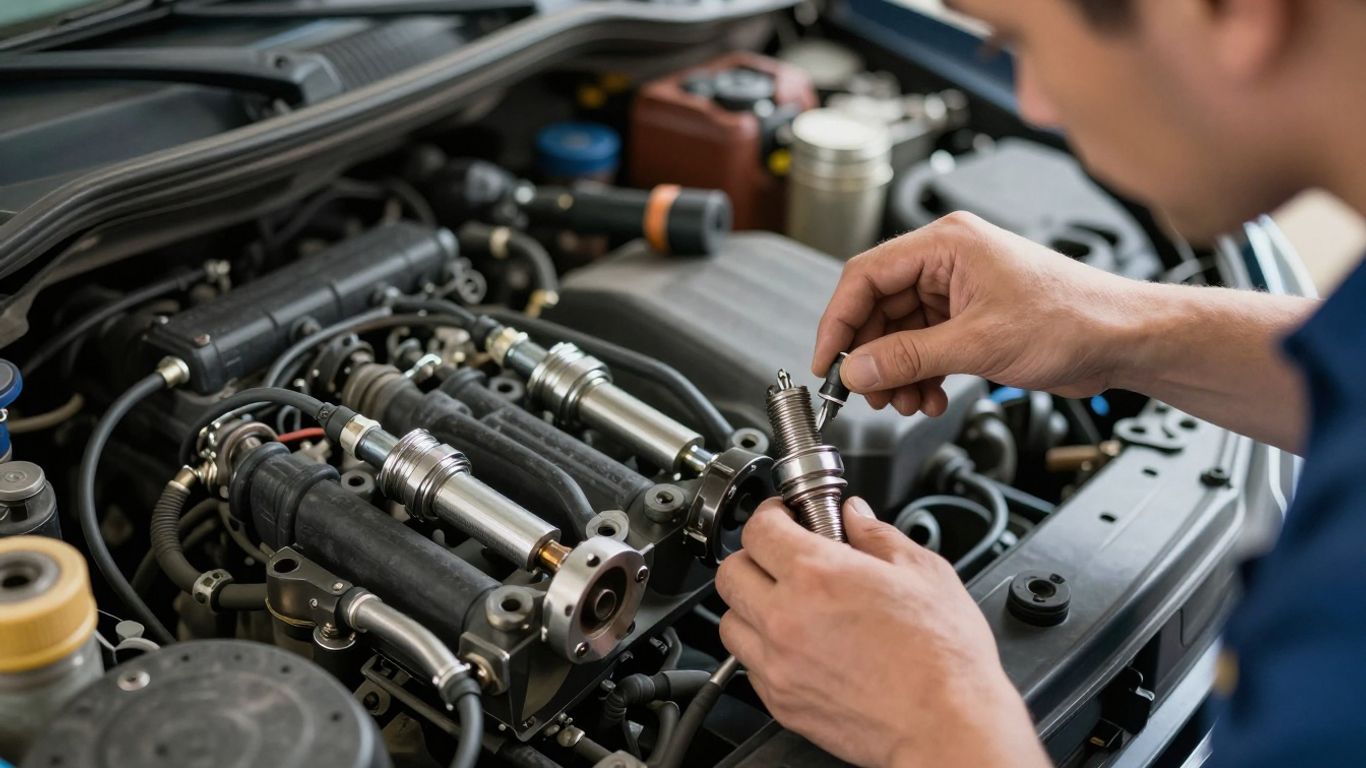
Confirm the engine is getting fuel
Check the fuel gauge, but remember that gauges can be inaccurate or affected by a failed sender. With the key turned to the run position, listen briefly for a fuel-pump sound from the tank area if the vehicle normally makes one. Do not loosen fuel lines or spray combustible fluid into the intake without the correct equipment and knowledge.
Check the ignition system and spark plugs
A gasoline engine needs a correctly timed spark. Worn spark plugs, failed coils, damaged plug wires, or a crankshaft-position sensor can interrupt ignition. Spark testing should use an approved tester and the manufacturer’s procedure, since ignition systems can produce a dangerous shock.
Inspect the air intake and engine sensors
A disconnected intake hose, blocked filter, or failed airflow or position sensor can interfere with starting. Look for loose connectors, chewed wiring, and an intake obstruction without forcing delicate sensor parts. If the check-engine light is on, scan for codes, but treat the code as a direction for testing rather than proof that one component must be replaced.
Consider the fuel pump and fuel filter
A failing pump may produce no priming sound, low fuel pressure, or an engine that starts briefly and stalls. A restricted filter can also reduce fuel delivery, though many newer vehicles place the filter inside the tank or integrate it with the pump assembly. Pressure testing is safer and more informative than opening the fuel system at home.
Look for engine immobilizer problems
If the engine starts and immediately stops, or a security indicator flashes unusually, the immobilizer may not recognize the key. Keep other coded keys and electronic devices away from the ignition while testing. A diagnostic scan may be needed to distinguish a key-recognition issue from a genuine fuel or ignition fault.
Check the key, security system, and electronics
Modern starting systems depend on communication between the key, security module, engine computer, and starter controls. A drained key-fob battery may prevent remote functions or complicate key recognition, while a blown fuse can interrupt a larger circuit. Use the owner’s manual because reset procedures and warning-light behavior differ by model.
Replace or test the key fob battery
Replace the coin-cell battery with the correct type and observe its orientation. Some vehicles include a backup location where the fob can be held near the start button or steering column. If the remote works but the engine still will not start, the problem may lie elsewhere in the security or starting circuit.
Try a spare key
A spare key is a quick way to separate a damaged or unrecognized key from a vehicle fault. Remove heavy key rings and keep the spare close to the reader during the attempt. If only one key fails, have that key programmed or repaired rather than repeatedly cycling the ignition.
Reset the immobilizer system
Follow the exact reset sequence in the vehicle manual; it may involve locking the car, waiting, or leaving the ignition on for a specified period. Do not disconnect the battery as a first resort, since that can erase settings or create additional electronic issues. If the security light remains active, professional scanning is appropriate.
Inspect the ignition-related fuses
Use the fuse diagram to locate ignition, starter, engine-control, and security-system fuses. Check for an open fuse and inspect the surrounding holder for heat or melting. A fuse is protection, not the underlying repair, so a repeated failure needs electrical diagnosis.
Identify signs of an electronic control problem
Intermittent starting, multiple unrelated warning lights, loss of gauges, or communication faults can indicate a power, ground, network, or control-module problem. Record when the failure happens and whether accessories work normally. Specialized scan equipment may be required, especially when the starter operates but the engine computer is not communicating.
Handle common weather and maintenance-related causes
Temperature, moisture, fuel quality, and neglected service can turn a marginal system into a no-start. Cold weather reduces available battery power, while damp conditions can expose weaknesses in ignition insulation or connectors. Check the simple environmental explanations before dismantling anything.
Start a car in cold weather
Switch off lights, heated seats, and other accessories before starting. Press the clutch in a manual vehicle, allow glow plugs to complete their cycle in a diesel vehicle, and use only the starting procedure recommended by the manual. If the battery is weak, repeated attempts will reduce its reserve quickly.
Deal with a flooded gasoline engine
A flooded gasoline engine may crank normally but fail to fire, sometimes with a strong fuel smell. Many fuel-injected vehicles can clear excess fuel by holding the accelerator fully down while cranking briefly, but procedures vary and should follow the manual. Stop if the battery weakens or fuel odor becomes strong.
Check for moisture in the ignition system
After rain, washing, or high humidity, inspect accessible connectors, coil areas, and plug wells for moisture. Drying the area gently may help, but do not use an open flame or force water out of sealed electrical parts. Persistent moisture points to a damaged seal, boot, or wiring harness.
Inspect fuel quality and fuel level
Confirm the vehicle has enough fuel and that the gauge is behaving normally. Contaminated or stale fuel can cause hard starting, rough running, or a no-start condition, especially after the car has sat for a long time. Do not drain a tank yourself if you lack safe fuel-storage equipment; a shop can sample and remove questionable fuel.
Prevent future starting problems with routine maintenance
Keep battery terminals clean, replace the battery when testing shows it is failing, and follow the service schedule for plugs, filters, and fluids. Store a small torch, gloves, and the owner’s manual in the car. Preventive habits are less dramatic than roadside repairs, much like preparing properly before carpet installation avoids avoidable problems later.
Know when to stop troubleshooting and call a mechanic
Some checks are suitable for a careful driver, but a no-start can involve high current, pressurized fuel, moving belts, or internal engine damage. Stop when the next step requires lifting the vehicle, opening the fuel system, probing unfamiliar wiring, or bypassing a safety device. A clear handoff to a repair shop is often the safest fix.
Recognize unsafe electrical and fuel-system issues
Do not jump-start a swollen, cracked, leaking, or frozen battery. Stop immediately for a fuel leak, strong unburned-fuel odor, smoke, melted wiring, sparks, or a burning smell. Keep flames and cigarettes away, move people back, and call roadside assistance or emergency services when conditions are dangerous.
Decide whether towing is necessary
A tow is sensible when the vehicle is blocking traffic, will not respond to a safe jump-start, or has a security, fuel, or engine fault that cannot be checked at the roadside. Use a service that can handle the vehicle’s drive system and clearance. Do not keep driving after a jump-start if the battery warning light remains on or the engine runs erratically.
Prepare useful information for the repair shop
Tell the technician whether the engine is silent, clicking, slow-cranking, or cranking normally. Share warning lights, odors, recent repairs, weather conditions, fuel history, jump-start attempts, and any diagnostic codes. Good notes can prevent duplicated tests, just as precise inputs improve an automated billing engine.
Estimate likely repair costs
Ask for a diagnosis, an itemized estimate, and the difference between essential and recommended work. Battery terminals or a discharged battery may be relatively simple, while a starter, fuel pump, wiring fault, or control module can require more labor. A visible leak also deserves prompt attention; the same principle applies when arranging roof leak repairs, where delay can allow a small defect to spread.
Test the car after the repair
Before accepting the vehicle, start it several times under different conditions and check that warning lights behave normally. Confirm that the original symptom is gone, accessories work, and there are no new odors, leaks, or unusual sounds. Ask what failed, what was tested, and what maintenance should be watched next.
A short test drive can reveal a charging or stalling problem that does not appear while parked. If the repair involved the battery or alternator, ask whether the charging voltage was checked; if it involved security electronics, confirm that every key still works.
Conclusion
When a car will not start, begin with safety and the symptom pattern rather than replacing parts at random. Battery connections, gear position, fuel, ignition, air, and security systems account for many common paths, but unsafe signs deserve a tow and qualified diagnosis. A few careful observations can make the repair quicker and less expensive.
Frequently Asked Questions
What should I check first when my car will not start?
Make the vehicle safe, confirm Park or Neutral, and note whether you hear silence, clicks, slow cranking, or normal cranking. Then check the battery condition, terminals, fuel level, warning lights, and obvious leaks.
Why does my car click but not start?
Rapid clicking often indicates low battery voltage or a poor battery connection. A single heavy click can also come from a starter or solenoid fault, so battery testing and cable inspection should come before replacing parts.
Can a jump-start fix a car that will not start?
It may help when the battery is discharged and the battery and cables are safe. It will not correct a failed starter, fuel pump, ignition system, immobilizer, or damaged wiring, and a battery that is swollen or leaking should not be jump-started.
Why does my car crank but not start?
Normal cranking with no ignition usually means the engine needs a fuel, spark, air, timing, or security-system check. A technician can use fuel-pressure, spark, scan, and sensor tests to separate those causes.
How do I know if the immobilizer is stopping the car?
An unusual flashing security light, an engine that starts and immediately stops, or a key that is not recognized can point toward the immobilizer. Try the spare key and follow the manual’s key-recognition procedure before seeking a scan.
Is it safe to keep trying to start the car?
Use only short attempts with pauses between them. Stop if you smell fuel, see smoke, hear grinding, notice sparks, or the battery becomes weak, because repeated attempts can worsen electrical and mechanical damage.
When should I call a mechanic for a no-start problem?
Call when basic checks and a safe jump-start do not help, or whenever the issue involves fuel leaks, damaged wiring, a swollen battery, internal engine noises, or a security-system fault. Towing is safer than driving an unreliable vehicle or working beside traffic.