

Key Takeaways
A VIN is a useful starting point for an engine-parts search, but it is not always enough to confirm an exact fit. Pair it with the vehicle’s engine details and verify the final part number before ordering.
- Use the complete 17-character VIN and check it against the vehicle.
- Confirm engine size, configuration, production date, trim, and drivetrain where relevant.
- Search a catalog that supports VIN-based fitment, then check the part category.
- Compare part numbers, fitment notes, revisions, and physical details before buying.
- If catalog results conflict with the vehicle, investigate possible swaps or ask a parts specialist.
1. Understand what a VIN can tell you about your engine
A Vehicle Identification Number gives parts catalogs a way to identify a particular vehicle and narrow down which parts may fit it. That can make a search much more useful than relying on a model name alone. Still, a VIN is a starting point for fitment—not a guarantee that every engine component will match the vehicle as it sits today.
Where to find the 17-character VIN
Look for the VIN at the lower edge of the windshield on the driver’s side or on the driver-side door-jamb label. It may also appear on the registration and insurance documents. Check that the number on the vehicle matches the paperwork before you search; even one mistyped character can lead to the wrong catalog result. A VIN reference guide explains the role of this unique vehicle identifier.
What the VIN’s characters identify
The characters in a VIN provide information used to identify the vehicle, including its manufacturer and vehicle attributes. In commonly used VIN formats, different character positions carry different kinds of information, although details can vary by market and manufacturer. The broad groupings below help explain why catalogs ask for the full number rather than only a few characters.
| VIN portion | Common role | Why it matters in a search |
|---|---|---|
| Characters 1–3 | Identify the manufacturer and vehicle origin information | Helps distinguish the vehicle’s make and source |
| Characters 4–9 | Describe vehicle attributes under the applicable system | May help distinguish configurations within a model line |
| Character 10 | Often used for model-year identification in common North American VINs | Helps separate model-year applications |
| Characters 11–17 | Include production-plant and vehicle-sequence information | Helps identify the individual vehicle |
These are broad conventions, not a substitute for a manufacturer’s catalog rules. A VIN decoder or parts catalog can interpret the number, while the catalog’s fitment notes help show whether a particular component is listed for that vehicle.
Why a VIN may not reveal every engine detail
A VIN lookup may identify the original vehicle configuration but still leave questions about a specific part. One model year can have variations in engine equipment, production dates, or component revisions, and catalog records may divide those applications more finely than a basic decoder does. For a precise fitment check, compare the lookup result with the engine information and the part’s own application notes.
How previous engine swaps can affect a parts search
If an engine has been replaced, the VIN will generally continue to describe the vehicle as originally identified, not necessarily the engine currently installed. That difference can make a correct vehicle lookup return parts that do not match the replacement engine. When the engine’s history is uncertain, use the VIN to establish the original configuration, then verify the installed engine code and relevant component details separately.
2. Gather the details you need before searching
Before opening a catalog, collect the information that can narrow the application beyond the VIN alone. A few minutes spent checking the vehicle and its documents can save time comparing incompatible parts later. Keep your notes together so you can give a parts specialist the same details you used in the online search.

Record the make, model, and model year
Write down the vehicle’s make, model, and model year, then compare them with the registration or other vehicle documents. The model year may differ from the calendar year in which the car was manufactured or first registered. If a catalog asks for a year, use the model year associated with the vehicle identification rather than guessing from its age.
Check the engine size and configuration
Check the engine label, owner’s manual, service records, or other vehicle documentation for the engine size and configuration. Depending on the vehicle, useful distinctions may include displacement, cylinder arrangement, fuel type, or whether the engine is turbocharged. Do not assume that every vehicle in the same model range uses the same engine; confirm the details for your particular vehicle.
Note the trim, production date, and drivetrain
Trim and drivetrain can affect which components fit, while the production date may matter when a manufacturer changed a part during a model year. Look for a build-date label on the vehicle and record whether it is front-, rear-, or all-wheel drive where that is relevant to the part. These details help resolve catalog results that appear to fit the same make and model but have different application notes.
Find the engine code on the vehicle or its documents
The engine code can be especially useful when the VIN lookup returns more than one possible application or when an engine has been replaced. Its location varies, so check the owner’s manual, under-hood labels, service paperwork, or a marking on the engine itself. Before searching, gather the following details in one place:
- The complete VIN, copied carefully from the vehicle.
- The make, model, and model year.
- Engine size, configuration, and engine code, if available.
- Production date, trim, and drivetrain where relevant.
Having these details ready makes it easier to explain a mismatch and to compare the catalog result with the vehicle in front of you.
3. Use the VIN to find compatible engine parts
Once you have the VIN and basic engine details, use a catalog or parts department that can check the vehicle application. Start with the part category you need, because a vehicle-level lookup may return a wide range of components rather than confirming one exact item. Treat the first result as a candidate to verify, not as the final answer.
Search an automaker’s parts catalog
An automaker’s parts catalog can help identify parts associated with the vehicle’s original configuration. Enter the full VIN if the catalog offers that option, then navigate to the engine system and the component group you need. If more than one result appears, read the application notes instead of choosing based on a similar-looking name or thumbnail.
Ask a dealership parts department to check the VIN
A dealership parts department can check the VIN against its parts information and help clarify catalog distinctions. Give the staff the full VIN, the part category, and any engine code or production-date details you have. If the vehicle has had an engine swap or modification, say so at the outset; a lookup based only on the original vehicle record may not reflect the current setup.
Use a reputable online parts catalog
Choose an online catalog that clearly explains its search options and provides fitment information for the listed parts. A VIN-based result is more useful when it can be compared with a part number, application notes, and images. An auto-parts-by-VIN guide can also help you understand where a VIN search fits into the broader parts-finding process.
A catalog’s scope matters: use automotive references for vehicle fitment, rather than assuming that a search method in another field answers the same question. For example, Attic Fanatics is about attic insulation, Karma Hill Photography offers Big Island couples portraits, and Maui destination wedding ideas concern wedding planning. A PCR test laboratory guide and a roundup of Automatikuhren unter 500 Euro address still different kinds of decisions; none can confirm an engine part’s fitment.
Match the VIN lookup to the part category
A vehicle may have several engine-related components with similar names but different fitment requirements. Narrow the lookup to the actual component—such as a sensor, gasket, pump, or internal engine part—and compare the catalog’s notes for that category. This avoids treating a general engine application as confirmation that every related component will fit.
4. Verify the exact part before buying
A promising catalog result still needs a careful check before you place an order. Part listings can differ by production range, revision, or the components included in the package. Use the VIN result to guide the comparison, then confirm that the specific part number and its stated application match your vehicle.
Compare OEM and aftermarket part numbers
An original equipment manufacturer (OEM) number can help identify the specified part, while an aftermarket listing may use a different number for a compatible replacement. Check any stated cross-reference rather than assuming that similar descriptions mean the parts are interchangeable. If the listing does not explain the relationship between numbers, ask the seller or a parts specialist to confirm it.
Check fitment notes and production-date ranges
Read the fitment notes for exclusions, engine variations, and production-date limits. A listing may cover only vehicles built before or after a certain date, even when the make, model, and model year appear to match. When your build date is close to a cutoff, confirm the application using the full VIN and any engine code available.
Confirm revisions, superseded numbers, and included components
Parts can be revised, and a catalog may show a newer number in place of an earlier one. Confirm whether the listed number replaces the one you searched for and whether that change applies to your vehicle. Also check the package contents: a part listing may show a component by name without including related seals, fasteners, or fittings.
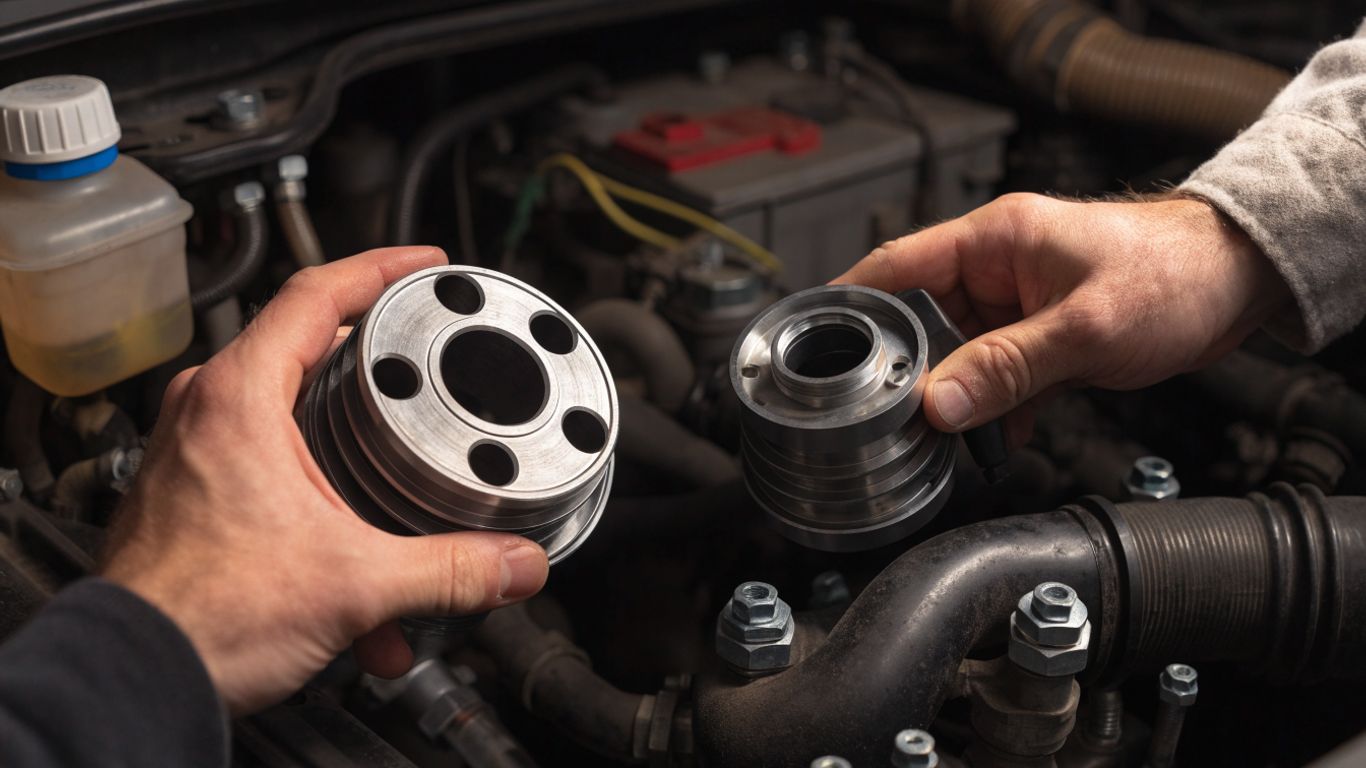
Compare photos, measurements, and connector details
When the listing provides them, compare photos and measurements with the part removed from the vehicle or with a reliable reference for the installed component. Check connector shape, mounting points, hose connections, and other visible details that matter for installation. A photo can reveal an obvious difference, but it should support—not replace—the catalog’s fitment confirmation.
5. Troubleshoot an inaccurate or incomplete VIN search
If the search returns no result or a part that does not appear to match, pause before ordering. The cause may be a typing error, a catalog limitation, or a difference between the vehicle’s original configuration and its current engine. Work through the vehicle details systematically and keep a record of what each search returned.
Recheck the VIN for typing errors
Compare the entered number character by character with the VIN visible on the vehicle, and check that you have not confused similar-looking letters and numbers. Make sure the VIN contains all 17 characters where that format applies, with no added spaces or omitted characters. If one catalog rejects it, verify the number again before trying another lookup.
Look for engine swaps or vehicle modifications
If the catalog result conflicts with the part on the vehicle, consider whether the engine or related systems have been changed. Service receipts, prior-owner records, labels, and markings on the engine may help establish what is currently installed. Modifications can also alter the fitment of connected components, so describe them clearly when asking for help.
Ask a parts specialist to confirm catalog results
A parts specialist can review the VIN alongside the engine code, production date, and part number you have found. Explain exactly what is not matching—such as a connector, mounting point, or fitment note—rather than asking only whether the part “fits.” Clear details make it easier to identify whether the catalog result, vehicle information, or listing needs a second look.
Use the engine code when the VIN alone is not enough
The engine code can help distinguish engine versions that a vehicle-level search does not separate clearly. Compare it with the code or application information in the parts listing, and confirm any relevant production-date or equipment restrictions. If the engine code is unreadable or missing, use the available vehicle records and ask a specialist what other identifying details are needed.
6. Order the right engine part with confidence
Once the vehicle application and part number have been checked, review the order details before paying. A correct fitment result is only part of a smooth repair; return conditions, package contents, and delivery timing matter too. Keep the information you used so that any follow-up question can be handled without repeating the search from scratch.
Confirm return and warranty terms
Read the return conditions and warranty terms for the specific part before ordering. Check how the seller handles a part that is incorrect, damaged, or unsuitable, and whether any conditions apply to installed or opened parts. If a policy is unclear, ask for clarification before the order is placed.
Check whether seals, hardware, or related parts are included
Confirm the contents of the package rather than assuming that related items are supplied with the main component. Some repairs may require separate seals, fasteners, gaskets, or fluids, but the exact needs depend on the part and vehicle. Compare the listing’s included-items description with the repair instructions or advice from a qualified technician.
Compare shipping costs and delivery timing
Check the shipping cost and estimated delivery window alongside the part price. If the vehicle is needed for daily transport or the repair is already underway, confirm whether the stated delivery estimate suits your schedule. A lower listed price may not be the most practical option if the total cost or timing differs significantly.
Keep the VIN and verified part number with your order records
Save the VIN, engine details, verified part number, and order confirmation together. That record helps if you need to contact the seller, return the part, or order a matching component later. A VIN parts search is most useful when the vehicle details and final part number remain connected throughout the buying process.
Conclusion
Finding engine parts by VIN is a practical way to narrow the search, but the best result comes from checking the VIN against the engine, production details, and exact part application. Take time to verify the part number, fitment notes, and package contents, especially if the vehicle has been modified or had an engine swap. A careful check before ordering is usually easier than resolving a mismatch after the part arrives.
Frequently Asked Questions
Can I find engine parts using only my VIN?
Often, a VIN can narrow a parts search to the vehicle’s original configuration, but it may not identify every engine variation or confirm the exact component. Check the engine code and fitment notes when the catalog result is not specific enough.
Where can I find my vehicle’s VIN?
Common locations include the lower driver-side windshield, the driver-side door-jamb label, and vehicle documents such as registration or insurance paperwork. Confirm that the number matches across sources before entering it.
Does a VIN show the engine code?
A VIN can provide vehicle information used by parts catalogs, but it may not show a readily usable engine code for every vehicle. Check the vehicle label, engine marking, service records, or owner’s manual for additional identification.
Will a VIN lookup account for an engine swap?
Usually, a VIN lookup identifies the vehicle as originally configured and may not reflect a replacement engine. If the engine has been swapped, verify the installed engine code and component details separately.
Why does a VIN search show more than one part?
A catalog may list different applications based on production date, engine configuration, trim, or part revision. Compare the listing’s notes with your vehicle details and ask a parts specialist if the options remain unclear.
Are OEM and aftermarket parts interchangeable?
Some aftermarket parts are listed as replacements for OEM parts, but interchangeability should be confirmed by part number and application information. Do not rely on similar descriptions or appearance alone.
What should I check before ordering an engine part?
Confirm the VIN-based fitment, engine code where available, production-date restrictions, part number, and package contents. Also review return terms, warranty coverage, shipping cost, and estimated delivery timing.