

Key Takeaways
An overheated engine does not automatically need replacement. The outcome depends on how hot it became, how long it was driven that way, and whether the damage is limited to the cooling system, cylinder head, gasket, or deeper engine components.
- Stop safely and switch the engine off as soon as overheating appears.
- A pressure test, compression test, and leak-down test can reveal the extent of damage.
- A failed thermostat, radiator, water pump, fan, or hose may be repairable without replacing the engine.
- A warped head, damaged block, seized components, or persistent low compression can make replacement more sensible.
- Compare the repair estimate, warranty, mileage, condition, and value of the vehicle before deciding.
How overheating can damage an engine
Overheating changes the question from “What part failed?” to “What did the excess heat damage?” A cooling-system fault may be relatively straightforward to repair, while prolonged heat can distort metal surfaces and damage seals. If you are asking, “Does my car need a new engine after overheating?”, the answer cannot be determined from the temperature gauge alone. The engine needs a careful diagnosis.
Why engine temperature rises beyond the safe range
The engine creates substantial heat as it burns fuel, and coolant carries that heat to the radiator. The thermostat regulates flow, the water pump circulates coolant, the radiator releases heat, and fans move air when needed. If one link fails, temperature can rise quickly, especially in traffic, on a steep grade, or in hot weather.
A low coolant level can also leave parts of the engine without adequate heat transfer. A warning light, gauge climbing toward the red, steam, a sweet coolant smell, or a sudden loss of power should be treated as a reason to stop rather than an inconvenience to drive through. General guidance on common overheating causes can help with background, but it cannot replace an inspection of the vehicle in front of you.
The difference between a brief overheat and severe overheating
A brief rise in temperature followed by a prompt shutdown may leave the engine with little more than a cooling-system fault. Severe overheating is different: the engine may continue running while the gauge is in the red, coolant may boil away, or the vehicle may lose power, misfire, or stall. The longer the engine operates without adequate cooling, the more likely heat is to affect the head gasket, cylinder head, pistons, bearings, or block.
There is no reliable time limit that separates safe from catastrophic overheating. Ambient temperature, engine design, coolant level, load, oil condition, and the original fault all matter. A car that restarted after cooling down may still have hidden damage.
How low coolant, failed parts, and leaks contribute to damage
Coolant can be lost through a split hose, radiator, water pump seal, expansion tank, heater circuit, or head-gasket failure. A failed thermostat can restrict flow, while a faulty fan can prevent the radiator from shedding heat at low road speeds. Low engine oil can add friction and heat, although adding oil will not correct a cooling-system fault.
Before approving major work, the mechanic should identify the initiating problem as well as the damage it caused. Replacing a radiator without finding why coolant disappeared, for example, may leave the vehicle vulnerable to another overheat.
Why driving while overheated increases repair costs
Driving farther can turn a repairable cooling fault into an engine rebuild or replacement. Heat may warp the cylinder head, weaken the head gasket, damage piston rings, or cause moving parts to seize. Even a short distance can matter when coolant has already been lost.
The practical rule is simple: pull over when it is safe, shut the engine down, and arrange assistance. A guide to what to do when an engine overheats is useful for reviewing those immediate decisions, but continuing to drive in the hope that the gauge will fall is a gamble.
Signs your engine may have serious damage
Some symptoms appear immediately; others emerge after the vehicle cools and is restarted. None proves that the engine must be replaced on its own. Taken together, however, recurring symptoms can tell a mechanic whether the problem is confined to the cooling system or has reached the combustion chambers and crankcase.
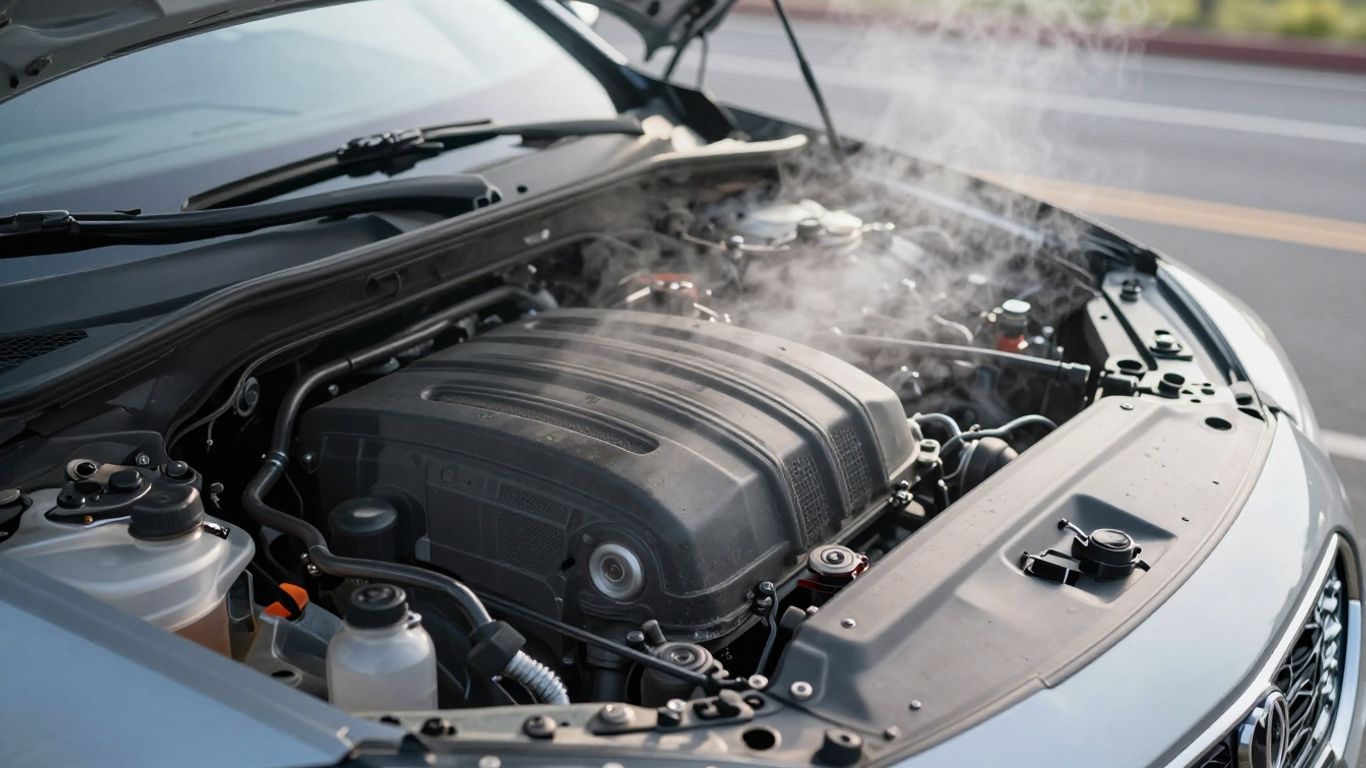
Symptoms of a blown head gasket
A failed head gasket can allow combustion gases into the cooling system, coolant into a cylinder, or oil and coolant to cross paths. Common clues include persistent white exhaust after the engine is warm, bubbling in the coolant reservoir, repeated coolant loss without an obvious external leak, rough starting, and misfires.
The engine may also pressurize the cooling system unusually quickly after a cold start. These signs warrant testing rather than a guess based solely on residue under the oil cap.
Evidence of a warped or cracked cylinder head
An overheated cylinder head may no longer seal evenly against the engine block. The result can be low compression, coolant leakage, recurring gasket failure, or a misfire in one or more cylinders. A crack may be visible only after the head is removed and cleaned, while warping must be measured against the manufacturer’s tolerance.
A head that can be machined and tested may be salvageable. If it is badly distorted or cracked in a critical area, replacement of the head—or the complete engine—may be considered.
How coolant and engine oil can mix
Oil contaminated with coolant may look tan, creamy, or unusually opaque, particularly on the dipstick or beneath the filler cap. Coolant with an oily film can indicate a breach between passages. These observations are clues, not final proof, because condensation and old deposits can create misleading appearances.
The mechanic should check the oil level, coolant condition, recent service history, and signs of external leakage. Do not keep running an engine suspected of coolant contamination; lubrication may be compromised.
When knocking, smoke, or loss of power indicates internal damage
Knocking, persistent misfire, heavy white exhaust, blue oil smoke, hard starting, and major loss of power raise concern about internal damage. A seized engine, bent connecting rod, damaged piston, or severely low compression generally requires more than a cooling-system repair.
The pattern matters. Steam from a leaking hose is not the same as smoke from burning oil, and a temporary rough idle after an overheat is not equivalent to a continuing knock. A technician should document the symptom and reproduce it only when doing so is safe.
When an overheated engine may not need replacement
Many overheating events begin with a replaceable component rather than a destroyed engine. The challenge is separating the original fault from the consequences of heat. If the block, crankshaft, pistons, and cylinder head remain within usable limits, a focused repair can cost much less than an engine replacement.
Common cooling-system repairs that can solve the problem
A hose, radiator, thermostat, water pump, fan, belt, pressure cap, or sensor may be the main failure. Repairing that part and restoring the correct coolant mixture may resolve the temperature problem if internal tests are normal.
The repair should include bleeding trapped air where required and verifying that the system holds pressure. Simply topping up coolant can hide a leak for a short time without addressing its cause.
How a thermostat, radiator, or water pump failure affects the diagnosis
A thermostat stuck closed restricts circulation, while a damaged radiator may not transfer enough heat. A water pump with a failed impeller or leaking seal may circulate coolant poorly. Each fault can produce severe symptoms, but none automatically proves that the engine itself is beyond repair.
The mechanic should inspect the cooling system and then test the engine for secondary damage. This two-stage approach avoids replacing an engine before establishing whether the overheating source was external and whether compression and sealing remain acceptable.
Situations where replacing the head gasket is enough
If the head gasket has failed but the cylinder head can be tested, resurfaced within specification, and refitted correctly, the bottom end may remain serviceable. The work still requires careful inspection for cracks, flatness, damaged fasteners, and contamination. Related cooling-system failures must also be corrected.
A gasket-only repair is not automatically cheap. Labor, machining, new bolts, fluids, timing components, and access can make the estimate substantial. It can nevertheless be the sensible option when the rest of the engine is healthy.
Why the engine’s age, mileage, and maintenance history matter
A well-maintained engine with moderate mileage may justify cylinder-head work even after a serious overheat. An older, high-mileage engine with oil consumption, low compression, worn bearings, or a long record of neglected cooling-system service may not.
The decision should consider the vehicle as a whole, including transmission condition, rust, tires, electrical faults, and recent repairs. Parts availability also affects the calculation; a quality used, genuine, or aftermarket part may make a targeted repair more affordable when the underlying engine remains sound.
Tests mechanics use to assess engine damage
A trustworthy diagnosis combines several findings rather than relying on one dramatic symptom. Testing can identify an external leak, locate a combustion leak, compare cylinder sealing, and reveal whether fluids have crossed internal barriers. Ask for the results in writing before agreeing to an engine replacement.
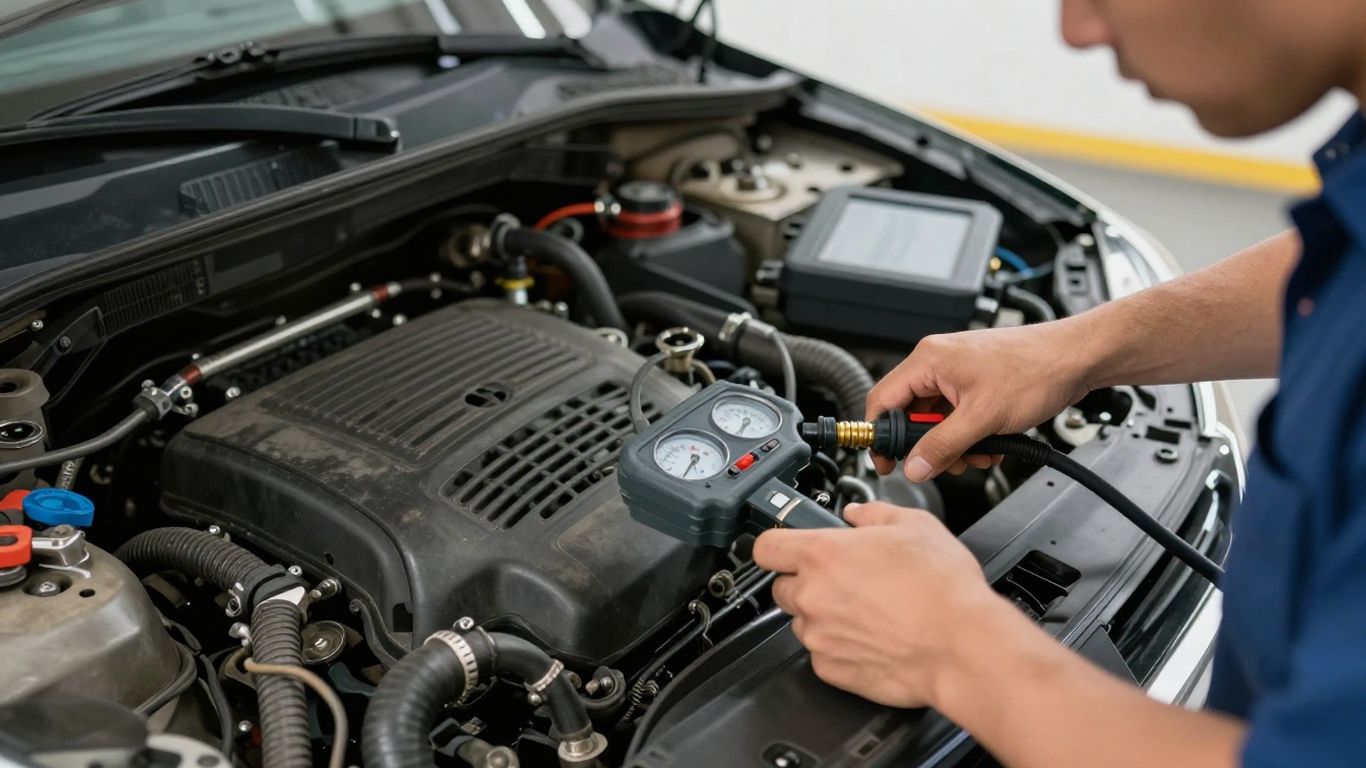
Cooling-system pressure testing
During a pressure test, the cooling system is pressurized while the mechanic checks whether it holds pressure and looks for leaks. External leaks may appear at hoses, the radiator, the pump, or the heater circuit. A pressure drop with no visible external leak can point toward an internal leak, although additional tests are needed.
The test should be performed with appropriate equipment and a cold engine where specified. It can explain why coolant is disappearing, but it does not by itself measure the condition of pistons, rings, or bearings.
Compression and leak-down testing
A compression test compares the pressure produced by each cylinder during cranking. Uneven or very low readings may indicate a valve, gasket, piston, or ring problem. A leak-down test introduces compressed air into a cylinder and identifies where that air escapes.
Air heard in the intake, exhaust, crankcase, or cooling system can help localize the fault. Results should be interpreted alongside engine temperature, throttle position, battery condition, and the manufacturer’s specifications.
Checking for combustion gases in the coolant
A chemical test can look for combustion gases entering the cooling system. Positive results support suspicion of a head-gasket, cylinder-head, or block problem. Some leaks are intermittent, however, and a negative result does not always eliminate every possible failure.
The test is most useful when combined with pressure testing and cylinder results. A mechanic should explain what was tested, what was found, and what uncertainty remains.
Inspecting the oil, coolant, spark plugs, and exhaust
Fluid condition and component inspection can add useful context. A spark plug that looks unusually clean may have been steam-cleaned by coolant, while deposits on other plugs may suggest a cylinder-specific problem. The exhaust can reveal persistent coolant or oil burning, but brief vapor on a cold day is normal.
A compact summary of how evidence is typically interpreted can help you discuss the estimate:
| Finding | Possible implication | What it does not prove |
|---|---|---|
| External coolant leak | Hose, radiator, pump, or housing fault | That internal damage is absent |
| Uneven compression | Valve, gasket, piston, or ring problem | That the complete engine must be replaced |
| Combustion gases in coolant | Breach between cylinder and coolant passage | Whether the head or block is repairable |
| Coolant-contaminated oil | Internal fluid crossover | Which component failed first |
These findings are starting points, not a verdict. The mechanic should connect them to measured tolerances, service history, and the cost of returning the vehicle to reliable operation.
When replacing the engine is the better option
Replacement becomes more attractive when the damage is extensive, the repair path is uncertain, or the cost approaches the vehicle’s realistic value. It is not necessarily the most technically elegant answer, but it can reduce the time and risk involved in rebuilding a severely damaged unit. The warranty and source of the replacement engine matter as much as the headline price.
Damage that makes rebuilding impractical
A cracked block, damaged crankshaft, seized pistons, multiple failed cylinders, or severe bearing damage can make rebuilding costly. Machine-shop work may reveal additional defects after disassembly, creating an estimate that grows beyond the original plan.
A rebuild may still be possible, but feasibility depends on parts, tolerances, specialist labor, and the engine’s design. A professional should explain whether the proposal is a repair, a remanufacture, or a replacement with a different unit.
Comparing a used, remanufactured, and new engine
A used engine may have a lower upfront price but less certain history. A remanufactured engine has generally undergone a defined rebuilding process, though coverage and included components vary. A new engine is usually the most expensive option and may not be available for every vehicle.
Ask about mileage or production history, testing, included accessories, compatibility, installation requirements, and warranty exclusions. The cheapest quote may omit sensors, manifolds, fluids, programming, or labor needed to complete the installation.
How labor, parts, and warranty affect the decision
The total estimate should separate the engine, removal and installation labor, fluids, filters, seals, cooling-system repairs, diagnostic work, and any required programming. It should also say who supplies the replacement and who handles a warranty claim if a fault appears.
A written warranty with clear duration and coverage can change the comparison substantially. A clear written estimate is more useful than a verbal promise, especially when the original overheat may have affected connected components.
When the vehicle’s value does not justify the repair
A sound engine does not make an uneconomic vehicle a good investment. Compare the completed repair cost with the vehicle’s condition, market value, financing position, safety equipment, and likely near-term maintenance. Include the cost of replacing the car, not just the cost of the engine.
A second opinion can be worthwhile when the estimate is large or the diagnosis is based on symptoms rather than measured results. Discussions about head-gasket versus overhaul decisions can provide another perspective, but your vehicle’s test results must control the decision.
What to do after your car overheats
Your first priority is safety, followed by preventing additional damage. Pulling over early gives a mechanic a better chance of identifying a limited fault before it becomes an engine failure. It also gives you a clearer record of what happened, which can help with diagnosis.
Safe steps to take immediately
Move away from traffic if possible, switch off the engine, and keep passengers clear of hot components and moving fans. If there is steam, fire, or a strong fuel smell, leave the vehicle and request emergency assistance. Do not attempt to continue driving simply because the gauge falls after stopping.
Useful immediate actions include:
- Turn off the air conditioning and pull over safely.
- Switch off the engine once stopped in a safe location.
- Wait for the engine and cooling system to cool naturally.
- Arrange roadside assistance or a tow rather than driving on.
These steps reduce exposure to hot coolant and lower the chance of converting a cooling-system fault into internal engine damage. Further roadside guidance is available in this overheating safety advice, while information about vehicle problems should not be confused with unrelated home issues such as wildlife signs in an attic.
Why you should not open the radiator cap while it is hot
A hot cooling system is pressurized. Removing the radiator or expansion-tank cap can release boiling coolant and steam, causing severe burns. Wait until the engine is fully cool and follow the vehicle manufacturer’s instructions before checking the level.
Even after cooling, keep your hands away from belts and fans because some electric fans can start unexpectedly. If coolant is visibly leaking, do not rely on a top-up to make the trip home.
How to arrange a professional inspection
Tell the shop when the gauge rose, whether steam appeared, how far the vehicle was driven, whether the engine stalled, and whether coolant or oil was added. Share warning lights, unusual sounds, smoke color, and any recent cooling-system work. Those details help the technician choose tests efficiently.
Request an inspection that identifies both the overheating cause and possible internal damage. A reputable parts network can then help source an appropriate used, genuine, or aftermarket replacement component if the diagnosis points to a repair rather than a complete engine.
Questions to ask before approving engine repairs
Ask what failed first, what evidence proves internal damage, which tests were performed, and whether the head and block were measured. Ask for separate prices for repair and replacement, the expected turnaround time, and the warranty terms. You can also ask what related parts should be replaced while access is available.
Be wary of an answer that offers only a diagnosis by appearance. A recommendation should connect symptoms to test results and explain the risks of choosing the least expensive option.
How to prevent another overheating incident
Follow the maintenance schedule for coolant, belts, hoses, oil, and filters. Check the coolant level only when the engine is cool, watch for stains or sweet smells, and respond promptly to a temperature warning. Have recurring low coolant investigated rather than repeatedly topping up the reservoir.
Keep the radiator and airflow path clear, and make sure the cooling fan operates as intended. A safe-driving overheating guide can reinforce the warning signs, but regular servicing and quick action remain the most reliable prevention.
Conclusion
An overheated car may need anything from a hose or thermostat to a complete engine, and the difference is established through testing rather than guesswork. Shut the vehicle down safely, obtain documented pressure and engine tests, and compare the repair with the vehicle’s age, condition, value, and warranty options before making a decision.
Frequently Asked Questions
Does overheating always mean the engine is ruined?
No. The cause may be a failed cooling-system component, and some engines sustain little internal damage when shut down promptly. Testing is needed to determine whether the head gasket, cylinder head, block, or moving parts were affected.
How long can I drive an overheating car?
You should not continue driving once the temperature warning appears or the gauge reaches the red zone. Pull over safely, switch the engine off, and arrange a tow or professional assistance.
Can a head gasket be replaced without replacing the engine?
Often, yes, if the cylinder head and block remain usable and the rest of the engine is in good condition. The head should be inspected for cracks and measured for warping before the repair is approved.
What test is best for an overheated engine?
No single test answers every question. Pressure testing, compression and leak-down testing, combustion-gas testing, and inspection of fluids and plugs provide a more complete diagnosis when interpreted together.
Is white smoke always a blown head gasket?
No. Vapor from condensation can be normal, especially during cold starts. Persistent white exhaust after warm-up, coolant loss, misfires, or cooling-system pressurization makes an internal coolant leak more concerning.
Is a used engine worth considering?
It can be, particularly when the vehicle is otherwise sound and the replacement has a known history or suitable warranty. Compare its total installed cost and coverage with a remanufactured unit and with repairing the original engine.
Should I get a second opinion before replacing the engine?
A second opinion is sensible when the estimate is substantial, the evidence is unclear, or the proposed repair does not explain the overheating cause. Take the test results and written estimate to the next mechanic so the evaluation starts with useful information.