

Key Takeaways
Frequent oil top-ups can point to a leak, oil burning inside the engine, or both. The pattern of loss and a careful inspection help narrow down the cause.
- Check the dipstick regularly and record mileage whenever you add oil.
- Blue or gray exhaust smoke may indicate oil is burning, but its absence does not rule that out.
- Look for fresh drips and greasy residue, while remembering that some leaks only appear when the engine is running.
- Use the oil grade specified in the owner’s manual and ask a mechanic to investigate persistent oil loss.
- Address the cause promptly: driving with too little oil can damage the engine and other components.
What excessive engine oil consumption looks like
Oil use can be hard to judge from one glance at the dipstick. What matters is a repeated drop between checks or a growing need to add oil sooner than expected. If you’re asking, “Why is my car consuming too much engine oil,” start by noting how quickly the level changes and whether you can see or smell other signs of trouble.
How often you need to top off the oil
There is no single top-up interval that applies to every car. Engine design, age, mileage, driving conditions, and the manufacturer’s guidance all affect what is normal, so compare your experience with the owner’s manual and past oil checks. A noticeable change in how often you need to add oil is worth investigating, even if the car still seems to drive normally.
Keep a simple record rather than relying on memory. Note the odometer reading and the amount of oil added each time; if you’re trying to understand excessive oil consumption, that history can help distinguish a steady pattern from a sudden change. Consistent records also give a mechanic a clearer starting point.
Blue or gray smoke from the exhaust
Blue or gray smoke from the tailpipe can be a sign that oil is entering the combustion chamber and burning. The smoke may be easier to spot during startup, acceleration, or after the car has been idling, but a small amount of oil burning may not produce obvious smoke. Exhaust color is a clue, not a diagnosis.
Different patterns can point toward different areas to inspect, but they do not confirm a specific fault on their own. This quick comparison can help you describe what you have noticed:
| What you notice | Possible clue | What to do next |
|---|---|---|
| Blue or gray smoke at startup | Oil may be entering a cylinder while the car sits | Note when it happens and arrange an inspection |
| Smoke during acceleration | Oil may be reaching the combustion chamber under load | Ask a mechanic to check the engine condition |
| No visible smoke, but the level keeps dropping | Oil may be burning in amounts too small to see, or leaking elsewhere | Track the level and inspect for leaks |
Use the pattern to guide the conversation with a mechanic, not to choose a repair by guesswork. Other problems can affect exhaust appearance, and the absence of smoke does not rule out oil consumption. A car-burning-oil guide can offer another general overview of common signs and causes.
Oil warning lights and low dipstick readings
An oil warning light deserves attention, but it does not always mean the engine is simply low on oil. Some warning lights indicate low oil pressure, which can become urgent; check the owner’s manual to understand your vehicle’s specific warning. If the light comes on while driving, pull over safely and follow the manual’s instructions rather than continuing as usual.
A dipstick reading is a direct way to check the level, provided you use the method specified for your car. Park on level ground, allow the engine to settle as directed, and read the marked range. A consistently low reading means you should top up with the correct oil and investigate why the level fell.
Oil spots, smells, or residue around the engine
A dark spot under the car, a burning-oil smell, or greasy residue under the hood may indicate an external leak. Oil can also land on hot engine or exhaust parts and create a smell without forming a puddle on the ground. If you notice smoke from under the hood or a strong burning smell, stop somewhere safe and have the car checked.
Look for changes over time, not just a single mark on the driveway. A clean, dry area can become wet after a drive, and a leak may be hidden by covers or other components. Take a photo of any residue you can safely see; it may help a mechanic identify where to inspect.
Common reasons an engine consumes too much oil
Oil can leave an engine in more than one way. It may escape through a leak, pass into the combustion chamber and burn, or be drawn through a ventilation system. Several faults can produce similar symptoms, so the parts below are possibilities to investigate rather than a do-it-yourself diagnosis.
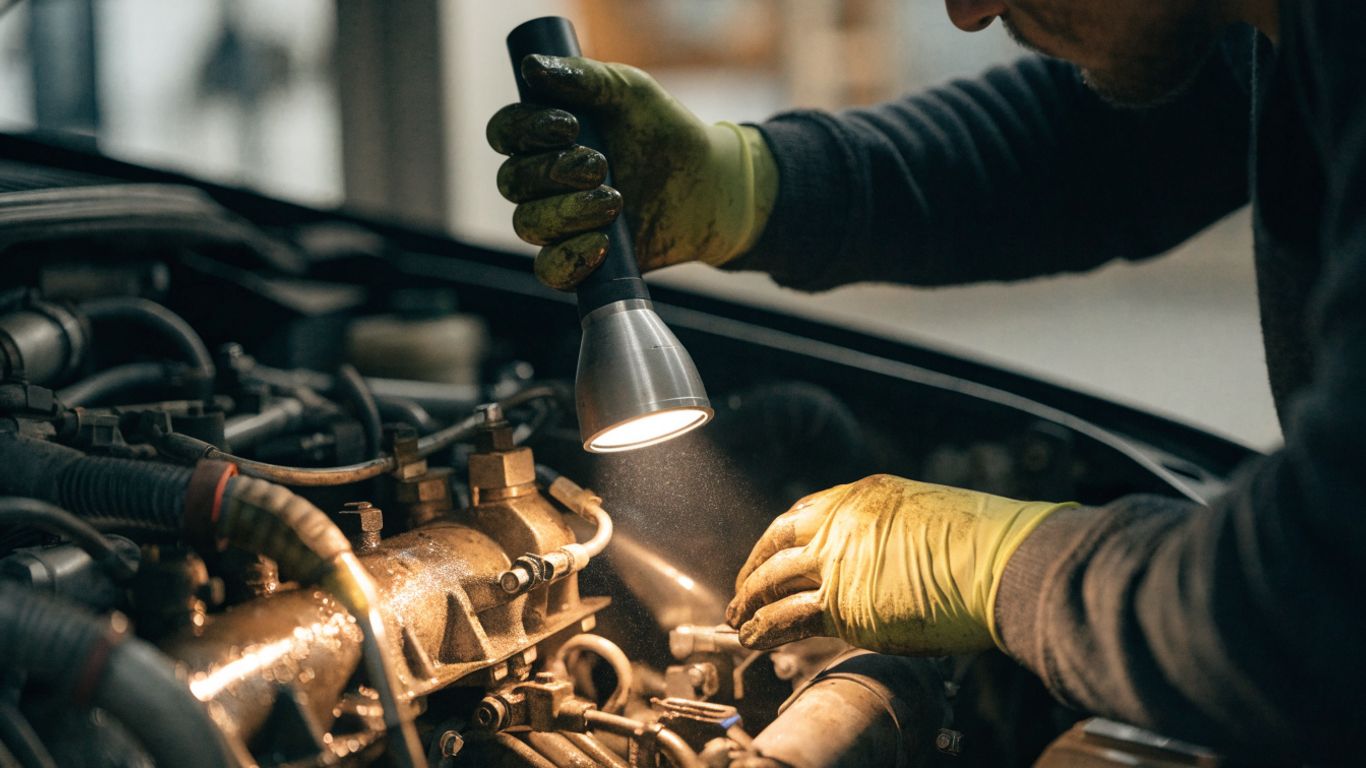
Worn piston rings or cylinder walls
Piston rings help control oil as the pistons move through the cylinders. If rings or cylinder walls become worn or damaged, oil may pass into the combustion chamber and burn. The engine may also show other symptoms, but only appropriate testing can establish whether internal wear is responsible.
Damaged valve seals or valve guides
Valve seals and guides help control oil around the valves. If a seal or guide is damaged or worn, oil can enter the combustion chamber, sometimes producing smoke after startup or following a period of idling. Smoke timing can provide a useful clue, but it cannot confirm the exact part at fault.
A faulty PCV system
The positive crankcase ventilation (PCV) system helps manage gases inside the engine. A faulty or restricted component can disrupt that flow, and in some cases oil may be drawn into the intake and burned. Checking the PCV system is one part of a broader diagnosis, especially when there is no obvious external leak.
Turbocharger seal problems
On a turbocharged engine, a problem with turbocharger seals can allow oil to enter the intake or exhaust side. Smoke and oil loss may occur, but those symptoms can have other causes too. A mechanic can inspect the turbocharger and related plumbing as part of a proper assessment.
The wrong oil type or viscosity
Oil that does not meet the vehicle manufacturer’s specifications may not behave as intended in that engine. Check the manual for the required grade and specification before topping up or changing oil. If you are unsure whether a previous service used the correct oil, ask the shop to verify what went in.
Do not try to mask a suspected mechanical problem by switching to a different grade without checking the manufacturer’s guidance. The right next step is to confirm the specification, then investigate any continued loss. Also avoid overfilling: too much engine oil can create its own problems, so keep the level within the dipstick’s marked range.
How to tell whether oil is burning or leaking
A car can lose oil through an external leak, by burning it internally, or through a combination of both. A missing puddle does not prove the engine is burning oil, since leaks can occur only while the engine is running or leave residue on parts underneath the car. The most useful clues come from checking the vehicle when parked and noting what happens during a drive.
Check for drips beneath the parked car
After parking on a level surface, look beneath the engine area for fresh drops or a growing stain. A clean piece of cardboard under the car can make new drips easier to spot, provided it is placed safely and kept away from hot or moving parts. No drip is not the same as no leak; oil may be caught on an undertray or blown away while driving.
If a leak is suspected, describe where the spot appears and whether it follows a drive or an overnight park. The same careful observation is useful for other household leaks, though the components and repair process differ; for example, a dripping relief valve concerns a hot-water system, not a car engine. Keep the two systems separate when deciding what kind of professional help to call.
Inspect the engine for wet or greasy areas
With the engine off and cool, look for visible wetness or oily grime around accessible areas. Avoid reaching near belts, fans, or hot components, and do not crawl under a car supported only by a jack. A mechanic may need to clean an area and recheck it after driving to locate the source.
Oil residue can spread from its original source, so the dirtiest patch may not be where the leak begins. If you can safely see a wet area, take a photo and note when you noticed it. That information can narrow the inspection without encouraging guesswork.
Notice when exhaust smoke appears
Observe whether smoke appears at startup, while idling, or during acceleration, and whether it disappears quickly or continues. Blue or gray smoke can point toward burning oil, while other exhaust colors may suggest different issues. Make a note of the conditions rather than repeatedly revving the engine to reproduce the symptom.
A second person can observe from a safe distance while the car is started outdoors, but do not run the engine in an enclosed space. If smoke is heavy or the vehicle is running poorly, stop the test and seek professional help. An inspection is more useful than trying to force a symptom to appear.
Rule out oil loss through the PCV system
The PCV system can be involved in oil consumption even when the engine exterior appears dry. A mechanic can check the valve, hoses, and related components for faults or restrictions and consider whether oil is being carried into the intake. Do not assume that replacing one valve will solve the issue; the underlying cause and the vehicle’s design matter.
A useful diagnosis considers the PCV system alongside leaks, engine wear, and other possible sources of oil loss. That prevents one plausible explanation from becoming an expensive guess. Tell the mechanic what you have observed and how quickly the dipstick level falls.
How to diagnose oil consumption
A diagnosis starts with good observations and the correct specifications for the vehicle. Record the oil level and mileage, then give that information to a mechanic along with any smoke, smell, warning light, or visible leak. These steps do not replace testing, but they make it easier to identify a change and avoid unnecessary parts replacement.
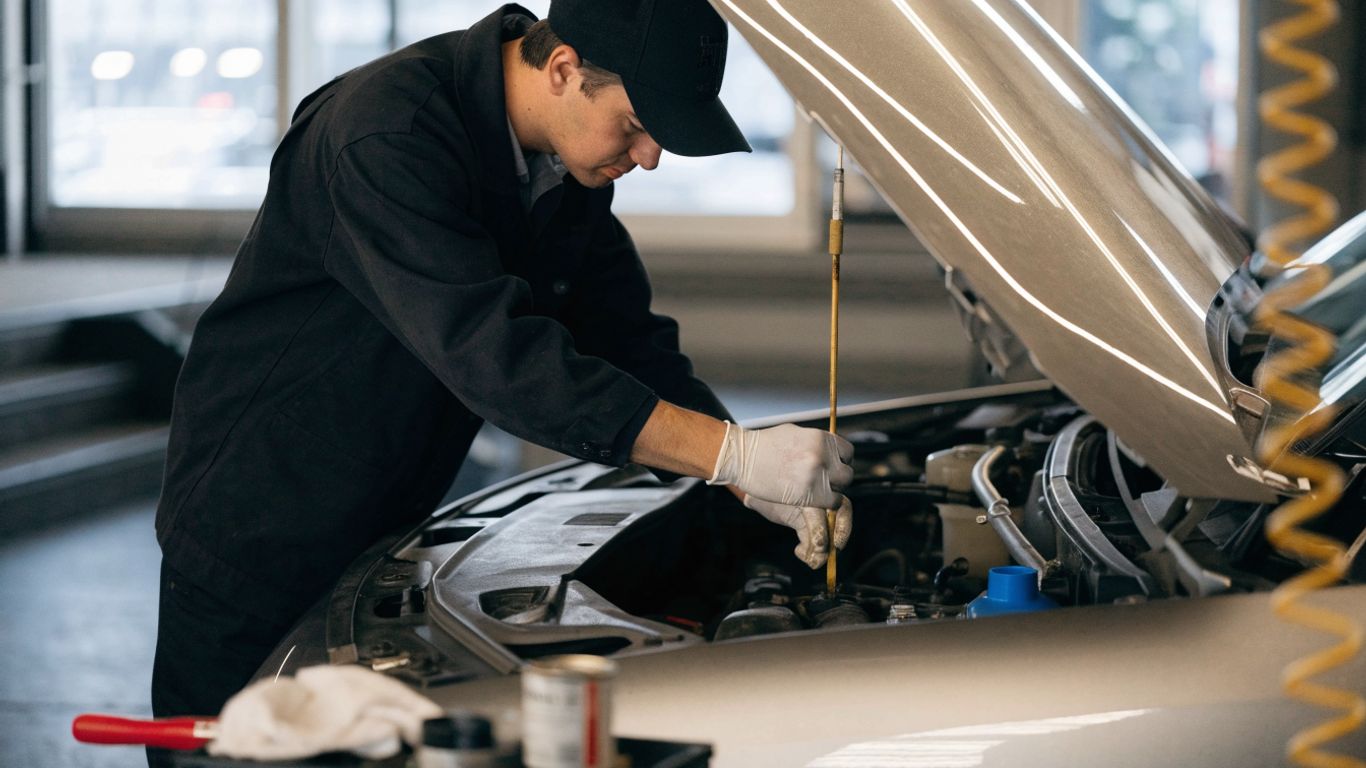
Track oil levels and mileage consistently
Check the oil in the same way each time, following the owner’s manual for when and how to take a reading. Record the date, odometer reading, dipstick level, and the amount added. This creates a practical history that is more useful than a vague estimate that the car “uses a lot.”
A compact log can be enough to reveal a pattern. For each check, note:
- The odometer reading and date.
- The dipstick level before adding oil.
- The amount and grade of oil added.
- Any smoke, smell, warning light, or visible drip.
Bring the log to your mechanic and explain any sudden change. If you are asking for a repair estimate or replacement part, a car-parts supplier can help source a suitable used, genuine, or aftermarket component; fitment still needs to be confirmed for the exact vehicle.
Check the owner’s manual for the specified oil
The owner’s manual identifies the oil grade and specification intended for your vehicle. Check it before adding oil, and do not rely only on a bottle label or advice meant for a different model. If the manual is unavailable, a qualified shop can help confirm the correct requirement using the vehicle details.
Use the specified oil for any top-up, and avoid mixing products unless the manufacturer’s guidance allows it. The correct oil will not repair worn parts or a leak, but it can rule out an avoidable mismatch as a contributing factor. Keep a record of what you add.
Ask a mechanic about compression and leak-down tests
A compression test and a leak-down test can help assess cylinder sealing and provide evidence about internal engine condition. They are not interchangeable with a visual inspection, and results need to be interpreted in the context of the engine and its specifications. Ask the mechanic what the test can establish and what it cannot.
If testing points toward internal wear, discuss the likely repair scope and whether further inspection is needed before authorizing major work. A test result is most helpful when considered alongside oil-consumption records, smoke patterns, and any other symptoms. It should inform a diagnosis, not stand alone as a promise of a particular repair.
Inspect the PCV valve, spark plugs, and turbocharger
A mechanic may inspect the PCV valve and hoses, examine spark plugs for signs that could be consistent with oil entering the cylinders, and check the turbocharger if the vehicle has one. These checks can help narrow the possibilities, but no single finding should be treated as conclusive without considering the whole engine. Follow the service guidance for your model.
Share any recent repairs and the exact oil used, if you know it. That context can help distinguish a new fault from a long-running pattern and guide which checks make sense. Do not remove hot components or attempt an inspection around moving engine parts yourself.
Consider an oil-consumption test
If the cause is still unclear, ask whether a structured oil-consumption test is appropriate. A shop may document the starting level, check for leaks, and measure the change over a specified period or distance under agreed conditions. The procedure and acceptable consumption limit can vary by manufacturer and engine, so the vehicle’s own guidance matters.
Ask for the results in writing, including the distance driven and the amount of oil used. That gives you a basis for discussing next steps and helps separate a measured result from an impression. A local repair business may also need to build trust with customers through clear explanations; practical advice on local business marketing addresses that separate business concern.
What can happen if you ignore excessive oil use
Oil does more than reduce friction: it also helps protect and cool moving engine parts. If the level falls too far, the engine may not have enough oil to operate as intended. The risk depends on how low the level gets, how long the car is driven that way, and what caused the loss.
Engine parts can wear faster
When lubrication is inadequate, contact and friction between moving parts can increase. Wear may build over time, and damage can become more expensive to repair than the original leak or faulty component. A car that still seems to run normally is not necessarily free from harm.
Low oil can damage bearings and other components
A critically low oil level can reduce the supply available to bearings and other parts that rely on lubrication. Warning lights, knocking, or unusual engine noise call for prompt attention; continuing to drive may worsen the damage. If the oil-pressure warning appears, follow the manual and stop safely rather than treating it as a reminder for a later check.
Catalytic converters and oxygen sensors can be affected
Oil that enters the exhaust can leave deposits that may affect emissions-control components, including oxygen sensors and the catalytic converter. The degree of risk depends on the amount and duration of oil burning. Fixing the cause early can help avoid additional problems beyond the engine itself.
Severe oil loss can lead to engine failure
If oil loss becomes severe, the engine can suffer major damage or fail. Do not keep driving simply because the car has not yet stalled or made a loud noise. If the dipstick reads below the safe range or a warning indicates low pressure, stop and get advice before continuing.
How to reduce oil consumption and fix the cause
The right repair depends on whether the oil is leaking, burning, or being lost through another route. Adding oil can protect the engine temporarily when the level is low, but it does not fix the cause. Have the vehicle assessed and follow its manufacturer’s service information before choosing a repair or changing oil.
Repair external leaks and replace faulty seals
A mechanic should identify the source of an external leak before replacing seals or other components. Oil can travel across the engine, so repairing the most visible wet area without locating the origin may not stop the loss. Once the source is confirmed, the repair may involve a gasket, seal, or another part specific to the vehicle.
After the work, check the level as directed and watch for fresh residue or a new stain. If the leak continues, return with your notes rather than assuming the first repair addressed every source. Some cars can have more than one leak at a time.
Service or replace the PCV system
If inspection shows a fault in the PCV system, service or replacement may reduce oil entering the intake. The correct procedure depends on the vehicle and on which component has failed. Ask the mechanic what was found and whether hoses or related parts were also checked.
Do not treat a PCV repair as a guaranteed fix for all oil consumption. If the level continues to fall afterward, continue the diagnosis for leaks or internal engine wear. Recheck the dipstick consistently so you can tell whether the repair changed the pattern.
Use the manufacturer-recommended oil
Use the oil grade and specification in the owner’s manual, including when topping up between services. A different viscosity is not a universal remedy for consumption and could be unsuitable for the engine. If the car has a special service requirement, confirm it with the manufacturer’s guidance or a qualified mechanic.
Repair worn internal engine parts when needed
If testing confirms worn rings, cylinder walls, valve components, or another internal fault, discuss the repair options with a qualified mechanic. Internal engine work can be substantial, and the appropriate choice depends on the vehicle’s condition and the test results. Ask for a clear explanation of the evidence, expected scope, and any alternatives before approving major work.
Follow a regular oil-check and maintenance schedule
Regular checks can catch a falling level before it becomes an emergency. Follow the service intervals in the manual, use the specified oil, and keep receipts or notes about maintenance. A parts network can make it faster and more affordable to find quality used, genuine, or aftermarket parts in Melbourne, Sydney, Brisbane, and nationwide, but confirm compatibility before ordering.
The same distinction between sourcing a part and diagnosing a fault applies to businesses that manage repair inventory. For that different operational need, Microsoft Dynamics 365 Supply Chain Management is described as supporting planning, procurement, manufacturing, inventory, and warehouse operations—not diagnosing a car’s engine. Likewise, decisions about roof damage, such as roof repair or replacement, concern a different kind of inspection and should not be confused with engine leak diagnosis.
Conclusion
A car that needs frequent oil top-ups is giving you a reason to investigate, whether the oil is leaking externally, burning inside the engine, or leaving through another system. Track the level and mileage, use the manufacturer-specified oil, and have persistent loss diagnosed before it can lead to more serious damage. Careful observations and the right tests are a better path to a lasting fix than guessing at parts.
Frequently Asked Questions
Is it normal for a car to use some engine oil?
Some oil use can occur, but what is acceptable depends on the vehicle and manufacturer guidance. A new or increasing need for top-ups deserves attention, particularly if the level falls quickly or other symptoms appear.
Can a car burn oil without visible smoke?
Yes. A small amount of oil may burn without producing smoke that is easy to see. If the dipstick level keeps falling and no leak is apparent, ask a mechanic to investigate possible internal or PCV-related causes.
Why is there no puddle if my car is losing oil?
Oil may leak only while the engine is running, collect on an undertray, or reach hot components and burn away. Oil can also enter the engine’s intake or combustion chamber, so a dry parking spot does not rule out oil loss.
Does blue smoke always mean the engine is burning oil?
Blue or gray exhaust smoke can be a sign of burning oil, but it does not prove the exact cause. A mechanic should consider the smoke pattern alongside the oil level, visible leaks, and test results.
Should I keep driving if the oil warning light comes on?
Treat the warning seriously and check the owner’s manual for your vehicle’s instructions. If the light indicates low oil pressure, pull over safely and avoid continuing to drive until you know what is happening.
Can using the wrong oil cause excessive consumption?
Oil that does not meet the manufacturer’s specified grade or requirements may contribute to problems. Confirm the correct oil in the manual, but remember that persistent loss can also point to a leak or worn component.
How can a mechanic measure oil consumption?
A shop may document the oil level, check for leaks, and measure oil use over a defined mileage or period. The method and acceptable range depend on the vehicle, so ask how the test is performed and how the results compare with manufacturer guidance.